
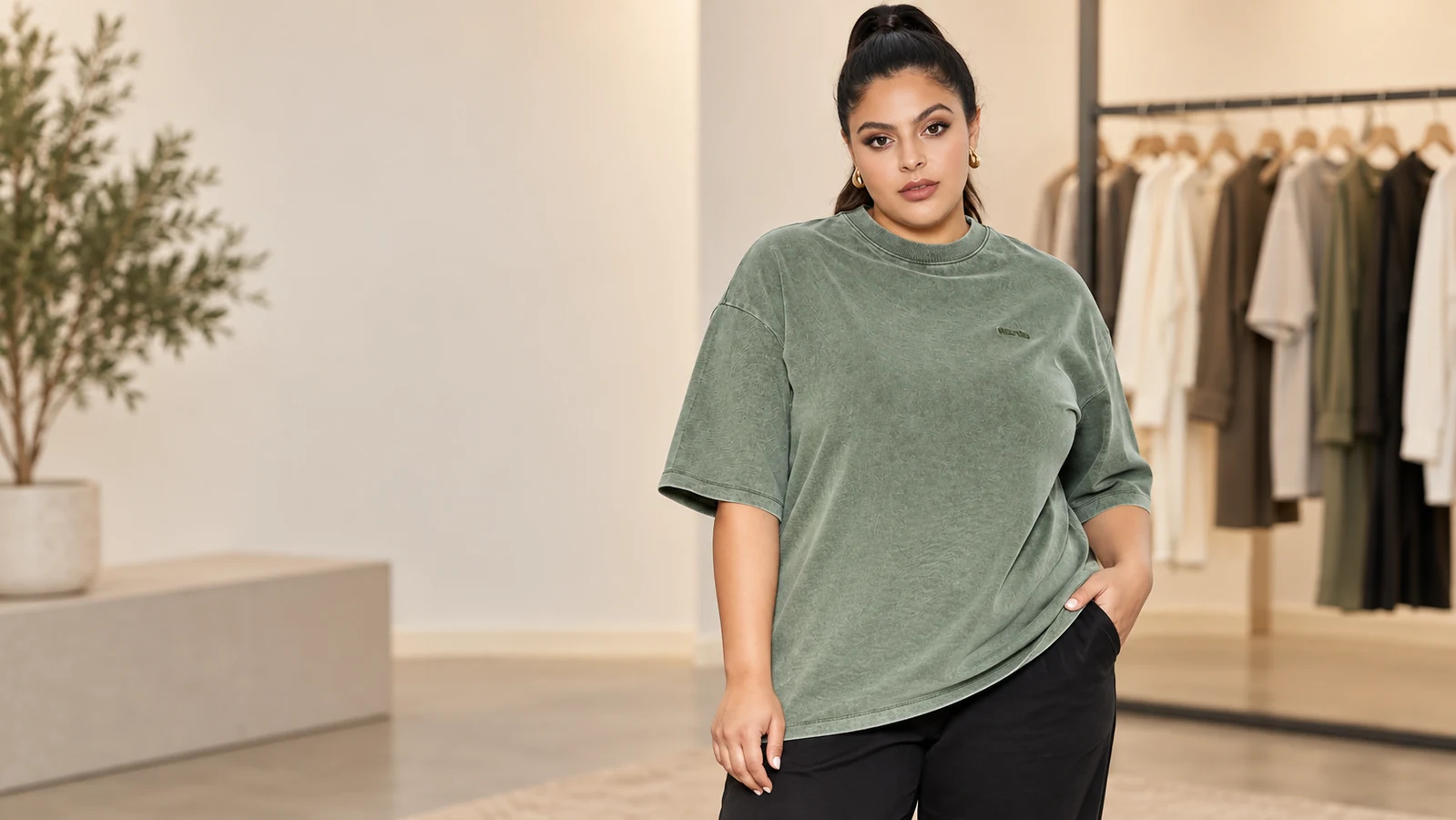
A heavyweight washed oversized T-shirt merits sample review for shoulder placement, garment proportions and wash appearance before buyers approve a streetwear assortment.
FROM ATTITUDE model CS3WSY30 offers a concrete reference for this evaluation. Its product page describes an oversized cut, a faded surface and embroidery customization. These details establish a design direction, while the available measurements help buyers frame sample questions. Selection should connect the intended customer silhouette with an approved physical garment, rather than treating a photograph or a size name as complete fit evidence.
Read the silhouette as a complete set of proportions
The dropped shoulder and generous body need to work together. The page describes a relaxed outline with a structured drape, making this style relevant to a streetwear brief that deliberately shows volume. Buyers should assess the garment at rest and during movement before deciding whether that volume matches the collection.
Check the shoulder and sleeve relationship
A drop shoulder fit should be reviewed on the intended wearer or fit form. Look at where the shoulder seam falls, how the sleeve hangs and whether the opening supports the desired outline. A wider body alone does not establish the same visual effect. The product imagery provides a reference, but it cannot establish comfort for every wearer.
Review the hem alongside the body width
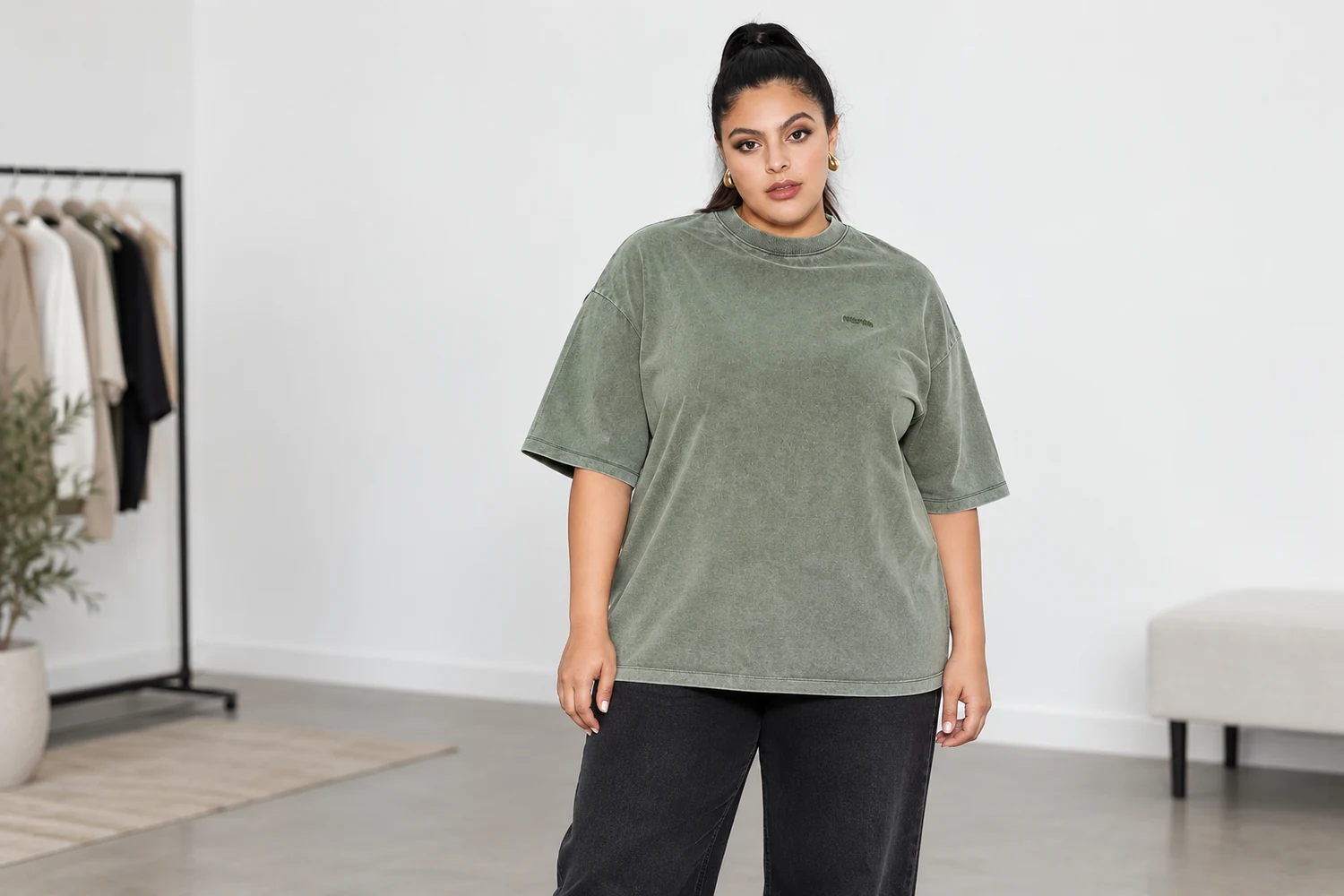
Length changes the balance of the oversized shape. Compare the sample with the bottoms planned for the assortment and inspect the side view as well as the front. A heavyweight washed oversized T-shirt should be evaluated as a complete silhouette; approving a chest measurement without checking the hem can leave an important styling decision unresolved.
Separate washed appearance from measured performance
The source describes a garment-dye process, a faded finish and high-density cotton. These statements explain the intended visual character. They do not supply a numeric fabric weight, a shrinkage limit or a documented durability result. A buyer can use the description to shortlist the style while requesting measurable specifications for approval.
Approve a physical wash reference
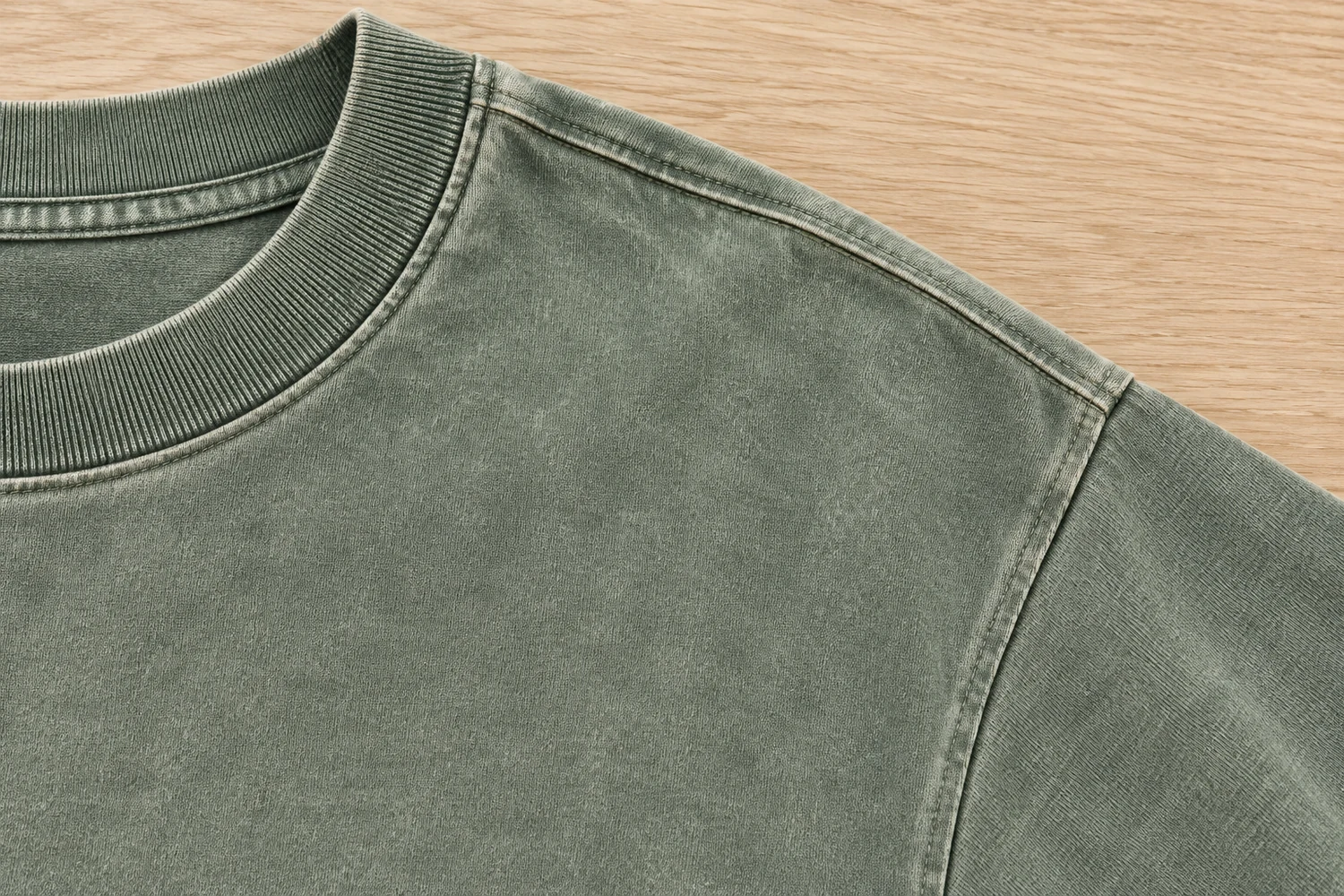
The vintage washed aesthetic is part of the design, so the approved reference should show the desired surface variation clearly. Review the neckline, seams and main body under consistent lighting. Record which variation is intentional and which would be unacceptable. Screen images are useful for direction, but they should not become the only basis for shade approval.
Define the review after laundering
Inspect the sample before and after the agreed care process, paying attention to length, width and overall appearance. AATCC publishes a garment laundering method for measuring dimensional changes; that general testing framework does not demonstrate that this particular tee has passed a test. The buyer and supplier should agree on a suitable procedure and acceptance criteria before relying on performance language.
Use the published size chart without extending it
The page supplies length, bust and sleeve values for M, L and XL. Keeping these dimensions together makes comparisons more useful than relying on size labels alone. The following table reproduces the centimetre entries exactly. It does not convert the published bust figure into a flat width or assume how the supplier measured it.
| Size | Length (cm) | Bust (cm) | Sleeve (cm) |
|---|---|---|---|
| M | 72 | 122 | 24 |
| L | 74 | 126 | 25 |
| XL | 76 | 130 | 26 |
Confirm the measurement method
Ask for the measurement points, the garment condition when measured and the proposed tolerances. Compare those details with the brand specification before interpreting the chart as a fit commitment. The page lists additional size availability, but the extracted measurement table stops at XL. Larger sizes therefore need their own confirmed chart and sample review, with no invented grade increments.
Evaluate customization on the finished garment
The product page lists OEM/ODM service, custom labels, packaging options and embroidery. For private label apparel sourcing, these are starting points for a development conversation. The final artwork, placement and finish still need an agreed sample; the availability of a service does not settle the details of a particular order.
Place embroidery within the wash approval
Review custom logo embroidery on the actual finished tee, rather than approving artwork in isolation. Check the visual scale, placement and surrounding fabric appearance. Document the selected treatment together with the approved wash reference so the two decisions stay connected. The source supports customization, but it does not specify a stitch count, embroidery size or unrestricted design capability.
Packaging should be equally specific in the brief. Individual poly bags and cartons are declared on the product page, with custom packaging available. Buyers should confirm the required presentation and labeling before approval. Lead times and order conditions should be reconfirmed for the actual brief rather than treated as a blanket promise for every customization.
Turn the sample into a clear selection decision
A useful evaluation ends with a small set of accepted references and unresolved questions. The same sample should connect the visual brief, fit assessment and sourcing discussion. This keeps an attractive image from standing in for the checks needed to support a collection decision.
- Define the intended outline: record the desired shoulder position, sleeve balance and hem relationship for the target customer.
- Compare the evidence: check the published measurements against the agreed measurement method and the physical sample.
- Review the finished surface: approve the washed shade, visible variation and branding treatment together.
- Close the open points: confirm fabric weight, care information, tolerances and any required performance evaluation.
- Keep the approved reference: connect the accepted garment, artwork and packaging brief to the final buying decision.
If the sample achieves the intended proportion but the finish remains uncertain, retain the fit decision and resolve the wash reference before approval. If the appearance works but measurements remain unclear, request clarification first. Separating these outcomes gives buyers a practical way to assess the style without assuming that every development point is already settled.
Frequently Asked Questions
Does heavyweight identify an exact fabric weight?
No numeric weight appears in the extracted specifications. The term describes the product positioning and the stated substantial drape. A buyer who requires a defined fabric weight should request it and confirm it against the sample rather than assigning a value from another garment.
Is the tee suitable for every body type?
The source describes a relaxed silhouette, but this does not prove universal fit. The intended customer, shoulder placement, body volume and garment length should guide evaluation. A fit review across the relevant size range is more informative than a broad comfort claim.
Can the listed larger sizes use the same chart?
The declared availability extends beyond the sizes with published measurements. Those missing values should be requested directly. The M, L and XL entries do not establish the dimensions or grading of larger sizes, and buyers should avoid extrapolating them.
Does a washed finish guarantee stability after care?
No. Appearance and measured performance are different questions. Request the applicable care instructions and agreed evaluation evidence. The product description alone does not establish shrinkage, shade retention or other tested outcomes for a particular production order.
What should a buyer send for a customization review?
Provide the target fit, intended wash reference, artwork, placement and packaging requirements. Identify any measurements that still need confirmation. These details let the supplier assess the brief against the listed services and make the sample review specific to the proposed collection.
Build a Sample Brief Around the Intended Fit
Buyers considering a heavyweight washed oversized T-shirt can start with the CS3WSY30 product details, compare the published dimensions with their target silhouette and list the finish questions that remain open. Use those findings to request a focused sample review before approving the style for an assortment.