
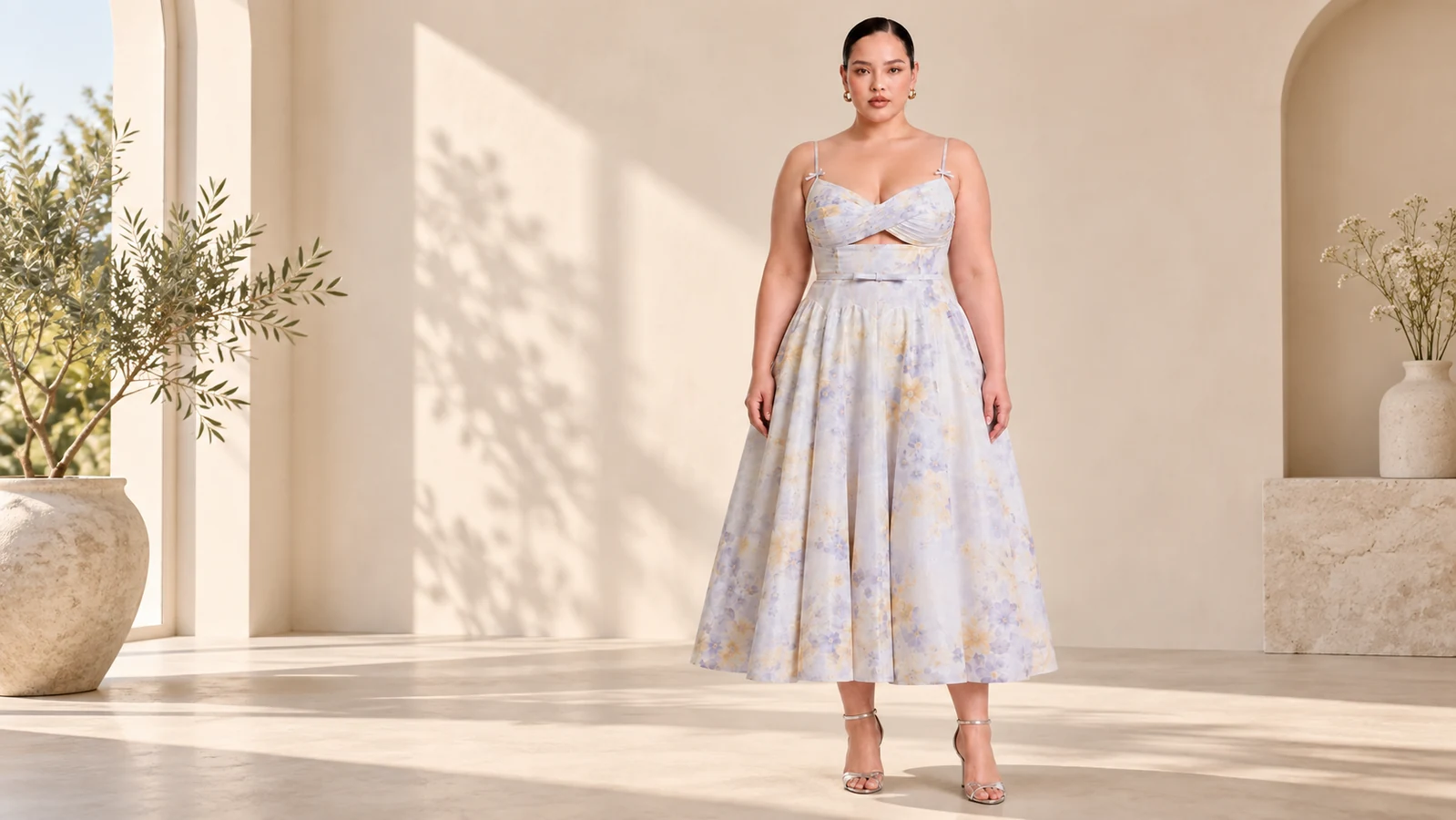
A floral print cutout midi dress should be selected by checking bust coverage, strap position, print balance and skirt movement against the intended occasion.
Start with the occasion and intended wearer
The selection decision begins with a defined occasion and customer. FROM ATTITUDE model ATT13 combines a twist bust, slender bow straps and an A-line midi skirt with a pastel floral print. The product page describes spring and summer positioning, including garden parties and afternoon tea. These references establish a collection direction; they do not replace a fitting or the requirements of a particular event.
Set a clear coverage brief
Within evening and occasion assortments, the exposed shoulders and small under-bust opening need an explicit place in the buying brief. Decide whether that level of coverage suits the intended customer and setting before requesting changes. A retailer can describe the design accurately while keeping event suitability conditional on the wearer’s preferences and the applicable dress code.
Review the complete silhouette
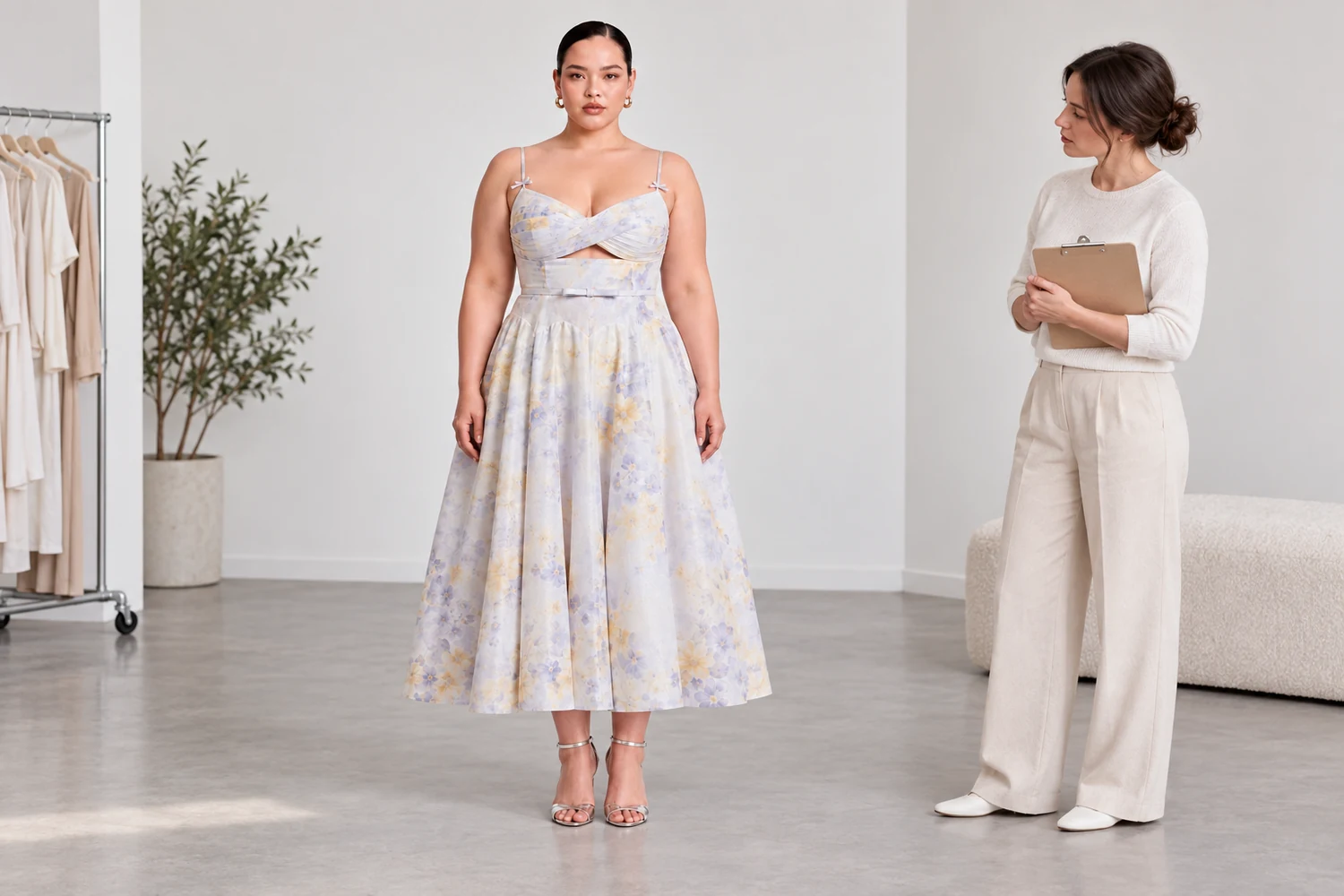
The structured upper shape and fuller skirt should be assessed together. Use the footwear and underlayers planned for the fitting, then observe the front and three-quarter views without holding the dress in position. Record where the waist and hem settle on the wearer. The word midi describes a design category, while the actual hem position depends on the garment and person being reviewed.
Check the bodice and bow details during movement
A floral print cutout midi dress requires a fit review that includes movement as well as the standing photograph. The page’s charming cutout bodice description identifies a twist bust and an opening below it. Buyers should confirm that the sample delivers the intended coverage while sitting and reaching, with the folds and opening remaining consistent with the approved design.
Observe strap position and bust coverage
The shoulder straps connect the upper garment to its intended position, so review them before judging the neckline alone. Ask the wearer to move naturally and note any slipping, pulling or changes in coverage. Do not assume adjustable straps, internal support, padding or specific closures from the front image; request confirmation of construction details that are not established by the product evidence.
Keep the decorative details proportional
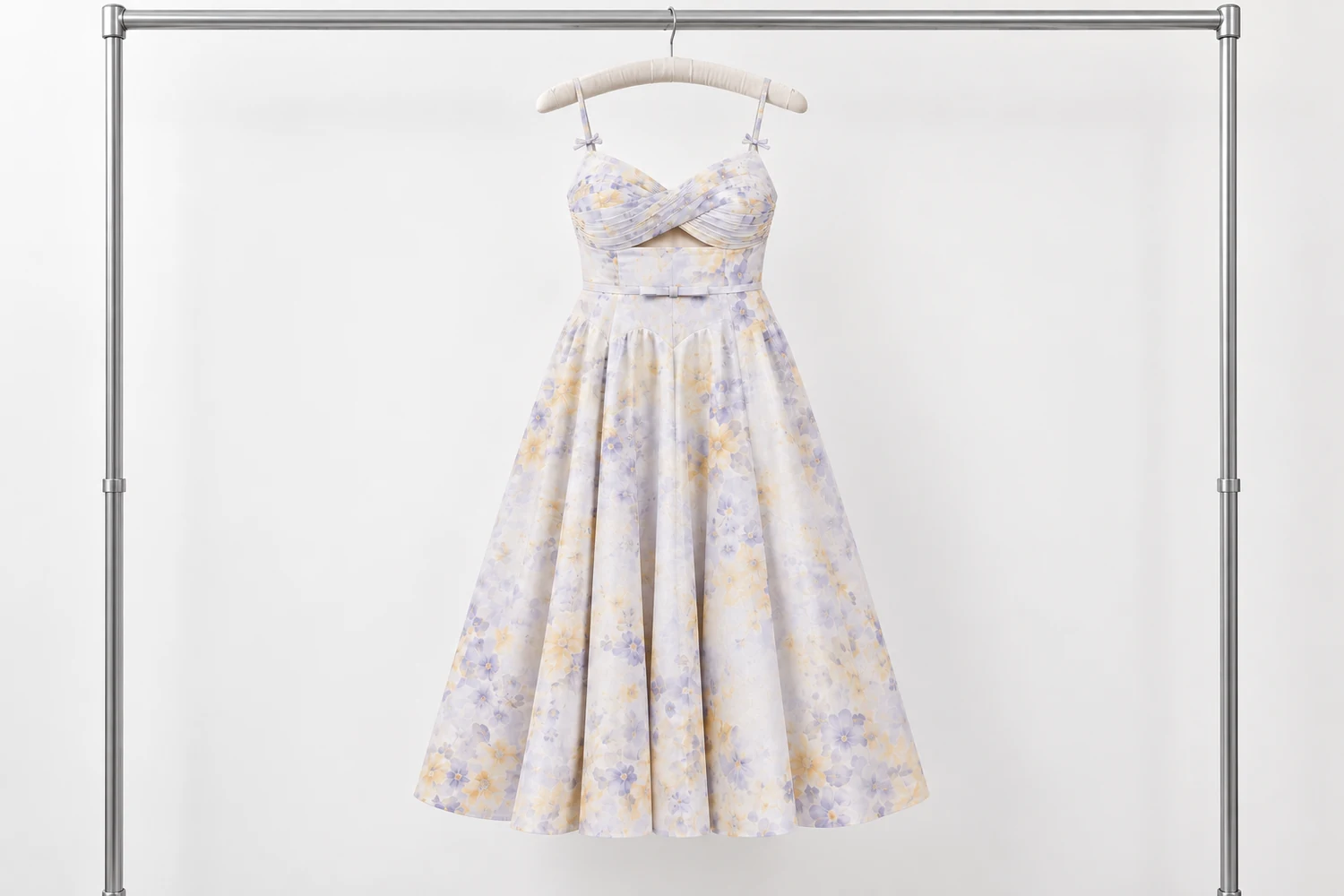
The delicate bow accents appear on the slender straps and at the slim waist belt. Compare their placement and scale with the physical sample reference, including whether they remain neat after ordinary handling. These small features should support the design without obscuring the twist or opening. Approve the actual attachment and finish through inspection instead of assigning unverified durability claims to the photograph.
Treat the size chart as a starting reference
The product page lists centimetre measurements for XL, 2XL and 3XL, reproduced below. Buyers should confirm whether each figure represents a garment or body measurement and where the length is taken. The page also lists broader size availability, but the displayed table does not document every size. Request a complete, corrected specification before using any entry as an acceptance criterion.
| Listed size | Length (cm) | Bust (cm) | Waist (cm) |
|---|---|---|---|
| XL | 135 | 115 | 84.7 |
| 2XL | 137 | 126 | 89 |
| 3XL | 139 | 132 | 95 |
The source’s unit conversions and size listing require clarification, so the centimetre rows should remain clearly attributed to the page. Do not infer a full grading rule from these entries or treat a single fitting as proof for the complete range. Agree the measuring method, tolerances and intended hem position, then assess the relevant sample sizes against those agreed references.
Separate the printed design from performance evidence
The product-specific specification identifies printed cotton fabric and a cotton composition. Its highlights describe a soft lavender and yellow watercolor floral pattern. That combination gives buyers a visible print direction, but it does not establish fabric weight, opacity, lining construction or tested performance. Those details belong in the sample review and supplier clarification record before they appear in customer-facing specifications.
Approve color and print balance physically
Compare the actual garment with an agreed fabric or sample reference under consistent lighting. Look at the flower scale, distribution and overall balance across the bust and skirt, including areas affected by gathering. A physical approval record can distinguish an accepted print layout from a requested change. Avoid promising identical placement on every unit unless that requirement has been specifically agreed and verified.
Ask for care evidence that matches the garment
Cotton Incorporated’s technical guidance explains that color retention depends on processing and use, and that relevant tests depend on the end use. For this style, buyers should request suitable evidence for the intended care conditions and approve the care instructions separately. The published product information does not demonstrate colorfastness or dimensional stability, so no tested result should be inferred from the fiber description.
Build a sample brief that connects the decisions
For private label apparel sourcing, the page lists OEM/ODM, customized samples and custom-label options. A useful inquiry connects those services with the garment version being evaluated. Specify the intended collection, the accepted silhouette and the questions still open. Keep packaging requirements in the written brief because the page’s packaging descriptions differ and should not be converted into a firm order promise.
- Identify the reference: record model ATT13, the sample size and the approved front view so revisions refer to the same garment.
- Review the fit: note strap position, bust coverage, waist placement and hem behavior during the intended movements and styling.
- Approve the visual details: connect the accepted print, bow proportions and skirt volume with a physical sample and consistent photographs.
- Resolve the specification: confirm measurement methods, construction details, care evidence, labeling and packaging before purchase approval.
Use that record when a revised sample arrives. Compare it against the requested changes and check adjacent areas that may have moved with them, such as the neckline after a strap adjustment. This approach keeps the selection decision tied to observable details and avoids treating a new photograph as proof that every outstanding question has been resolved.
Frequently Asked Questions
Which design features are established by the page?
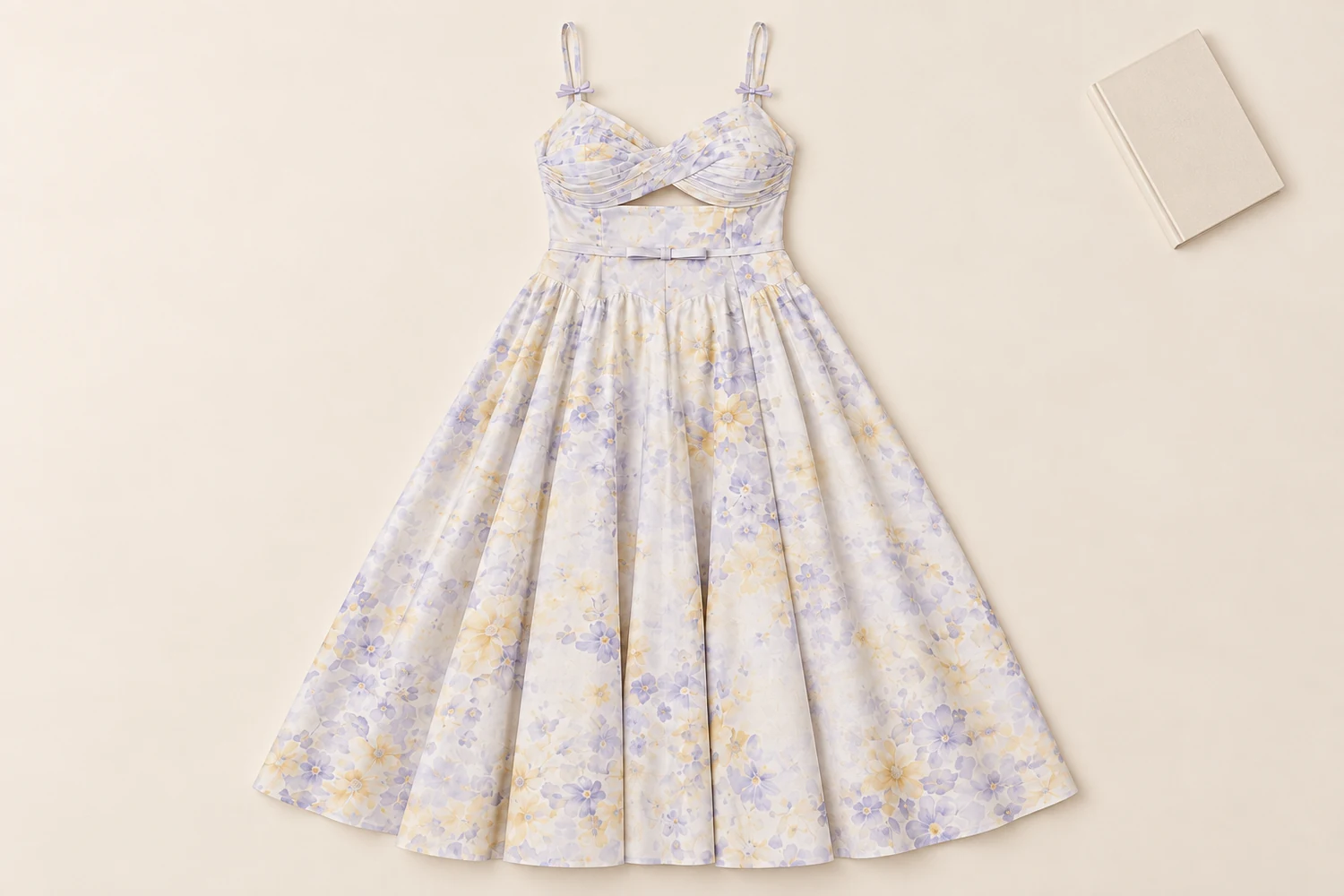
The page describes a twist bust, an under-bust cutout, bow details on slender straps, a slim bow belt and a pleated A-line midi skirt. It also identifies the pastel floral direction. Buyers should review those features on the sample and ask for confirmation of any additional construction details needed for the order.
Can the chart establish fit across the complete range?
No. The displayed chart provides selected size entries, while the wider size listing and unit conversions need clarification. A complete specification, agreed measuring method and appropriate sample review are required before the buyer can judge the intended fit across the requested range. Do not present the displayed entries as universal sizing guidance.
Does cotton composition establish care performance?
No. Fiber composition does not demonstrate the finished garment’s color retention, dimensional stability or care requirements. Buyers should request evidence appropriate to the planned use and agree the care instructions with the supplier. Print approval and performance approval are related purchasing decisions, but each needs its own supporting reference.
What should accompany an initial development inquiry?
An inquiry should identify the intended wearer, occasion, sample size and fit priorities, alongside the print and decorative details that must be retained. Include questions about construction, complete sizing, care and packaging. The listed customization services provide a basis for discussion, while the final agreed specification defines the version being ordered.
Prepare a Floral Occasionwear Sample Brief
Buyers evaluating a floral print cutout midi dress can use the ATT13 page to organize a focused sample discussion with FROM ATTITUDE. Bring the occasion brief, fit observations and accepted print reference together, then resolve outstanding specifications before approving the garment for the collection.