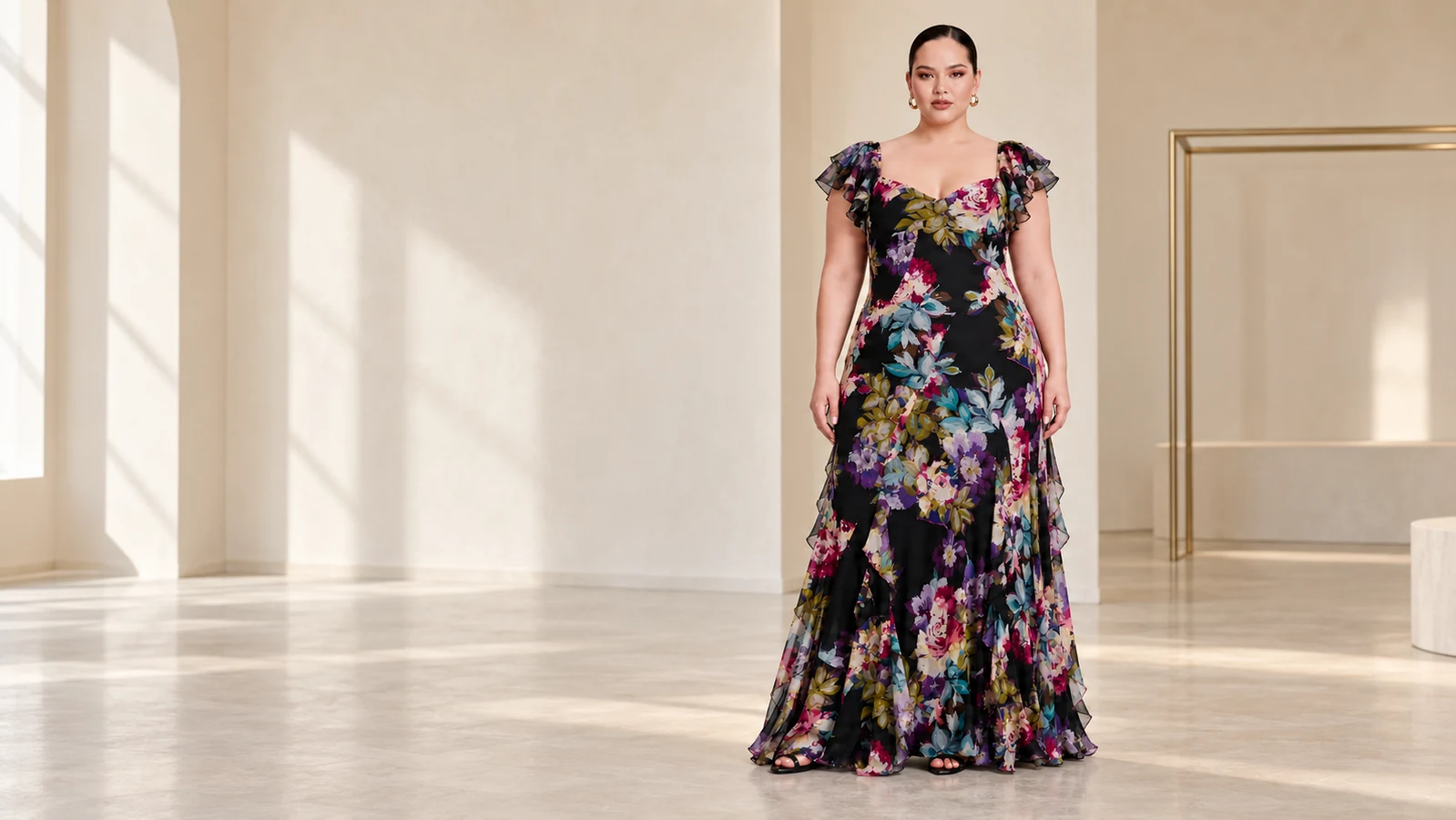
Assess a plus size floral print chiffon maxi evening dress through neckline, movement, fabric and sample checks before selecting ATT10 for an occasionwear collection.
Start with the occasion and the intended customer
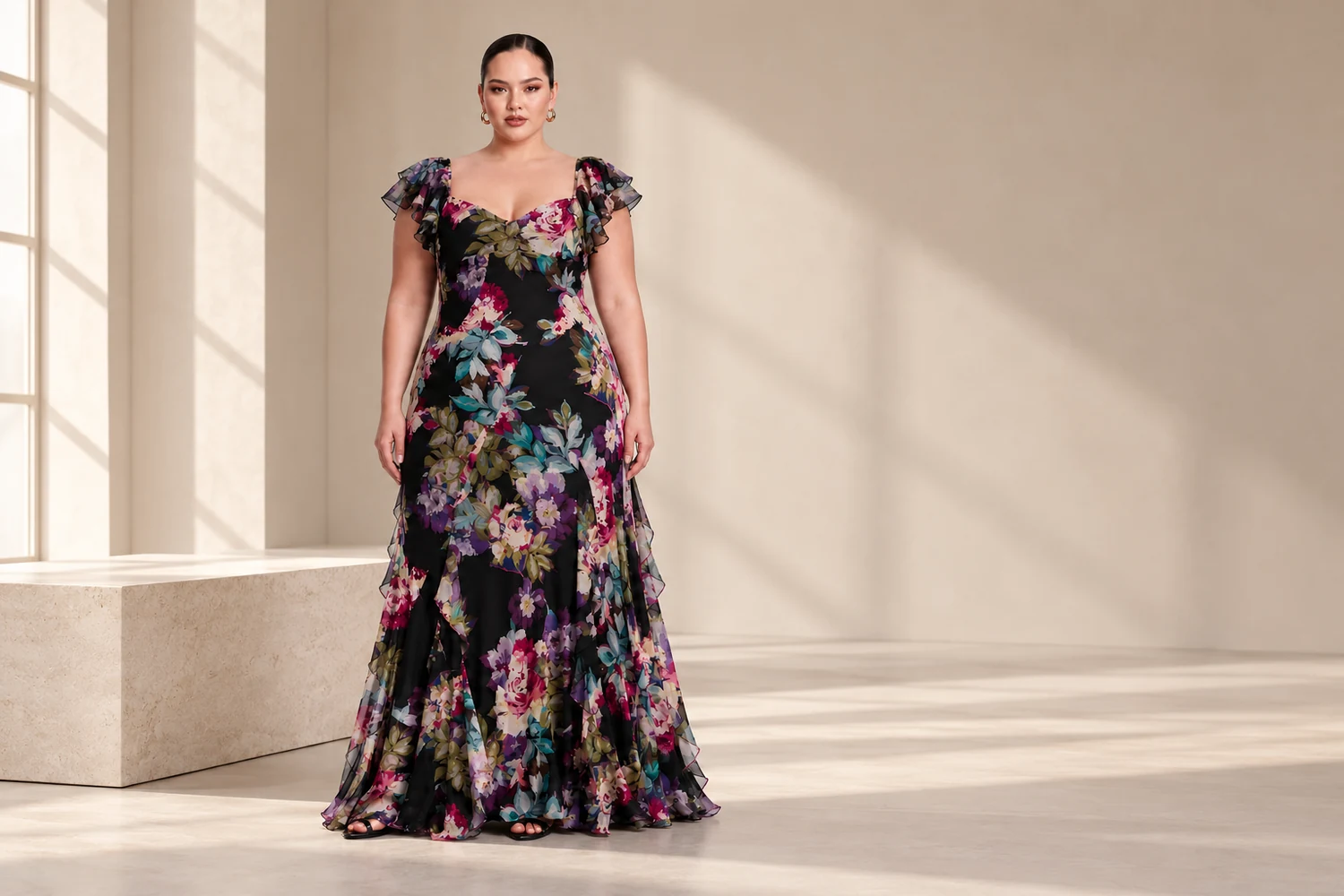
ATT10 is presented by FROM ATTITUDE as a floral chiffon maxi dress for wedding guests and formal parties. Its product page identifies a sweetheart neckline, flutter sleeves and a flowing silhouette. These details give buyers a clear starting point for evaluating evening and occasion assortments, while leaving fit approval to a physical sample. A photograph can communicate the look; it cannot establish comfort across a complete customer size range.
Define the assortment role
The dark ground and multicolor floral print create a different visual proposition from a plain evening dress. A retailer can assess whether that combination fills a documented gap in its occasion offer. Compare the sample with the collection already planned, including other print scales and sleeve shapes. The decision should reflect the intended event and customer brief rather than an assumption that every floral maxi serves the same purpose.
Check movement before styling
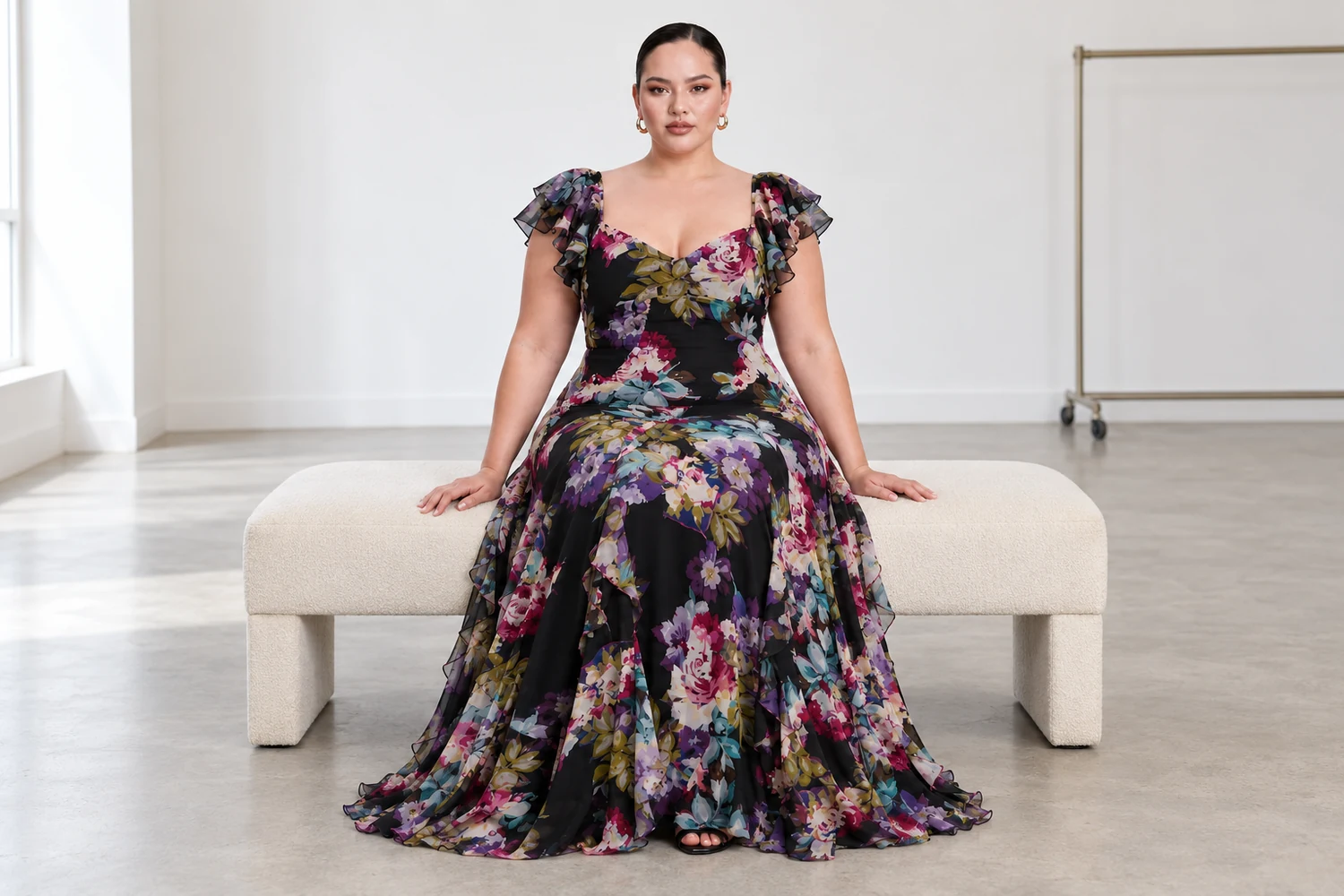
The page describes a flowing skirt and lightweight arm coverage from the sleeves. During a fitting, ask the wearer to sit, walk and reach normally, then observe how the neckline and hem respond. Record any adjustment requested by the fit team. The goal is to establish whether the approved sample suits the proposed use, not to infer unrestricted movement from the fabric name.
Translate the visible design into review points
The useful question for a plus size floral print chiffon maxi evening dress is how its visible design behaves on the intended wearer. ATT10 combines a shaped neckline with flutter sleeves and an all-over floral pattern. Review these features together because a change to one proportion can alter how the complete garment reads.
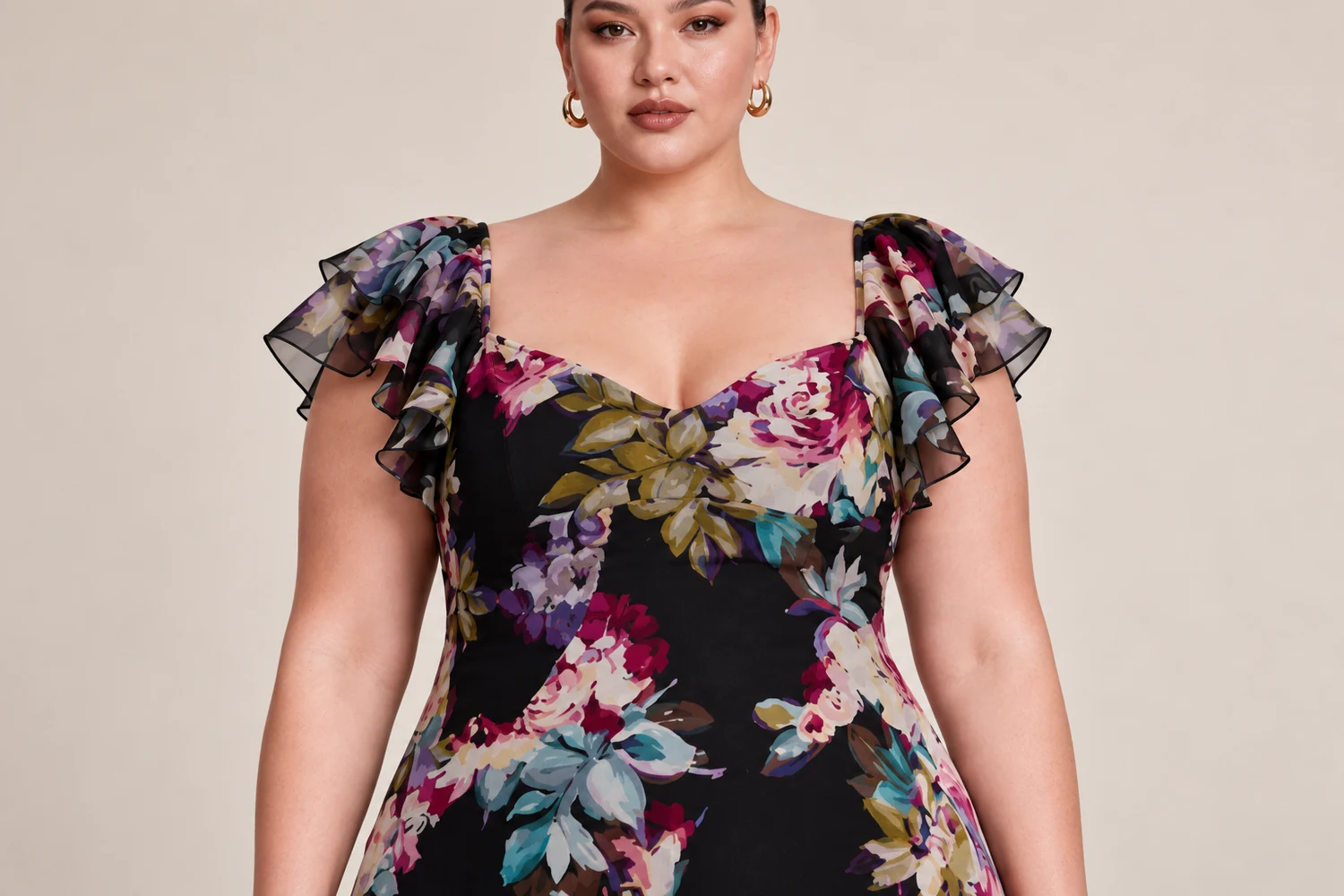
Review the neckline and sleeve balance
The product highlights call out an elegant sweetheart neckline and romantic flutter sleeves. Buyers should inspect neckline position while standing and seated, sleeve fall over the upper arm, and whether the opening remains comfortable during ordinary movement. Record the result on the sample rather than adding a generalized claim about support or coverage. The source does not establish built-in support, fastening construction or a particular undergarment solution.
Approve the print on the garment
The source describes a multicolor floral pattern against a dark background. Review an actual sample under consistent light and compare its appearance with the approved reference. Pay attention to how the print reads across the bodice and skirt, without assuming identical motif placement on every production unit. The approved order specification should state any placement requirement the buyer needs, subject to supplier confirmation.
Use the fabric declaration without filling evidence gaps
The product information identifies chiffon fabric and declares 100% polyester. This supports a material description, but it does not establish stretch, fabric weight, lining composition or an approved care process. Those points require separate confirmation. A disciplined evaluation keeps the source statement, the physical observation and the supplier response distinct so that retail copy does not turn an unanswered question into a product feature.
Inspect the sample as a complete garment
Review the bodice, sleeve edges and skirt in ordinary showroom lighting, then inspect the inside with the supplier or sample team. Note any information needed about seam finishing, opacity and construction. Where a requested feature is absent from the published specification, write it as a question in the development brief. It should become a sales claim only after the relevant construction and evidence are confirmed.
Agree the care evaluation separately
AATCC distinguishes garment dimensional-change evaluation from appearance assessment after laundering. That general distinction is useful when defining a sample review, but it is not evidence that ATT10 has passed a particular test. Ask the supplier to confirm the intended care instructions and suitable evaluation before testing or labeling. The published fiber declaration alone does not justify a machine-wash, shrink-resistance or colorfastness promise.
| Review dimension | Published evidence | Buyer verification |
|---|---|---|
| Fabric | Chiffon; 100% polyester declared | Confirm fabric specification and proposed care separately. |
| Neckline | Sweetheart shape | Observe position and comfort during a fitting. |
| Sleeves | Flutter sleeves with lightweight arm coverage described | Check sleeve fall and reach on the sample. |
| Multicolor floral pattern on a dark ground | Approve appearance and any placement requirement. | |
| Silhouette | Flowing maxi skirt | Review movement and hem clearance for the target wearer. |
| Development | Customized samples and OEM/ODM listed | Document requested changes before sample approval. |
Resolve sizing before selecting the order assortment
A size label is not a complete fit specification. The product page includes a size chart and mentions custom grading, but its displayed information needs reconciliation before it becomes a retail chart. Request a confirmed measurement sheet showing the basis of each dimension, measurement points and agreed tolerances. Keep the supplier confirmation with the approved sample so later decisions refer to the same version.
- Identify the target customer and intended wearing conditions in the fit brief.
- Confirm whether the supplied dimensions describe the garment or the body, and agree the measurement method.
- Check every proposed size against a confirmed chart instead of extending the displayed rows by assumption.
- Review representative samples for neckline position, sleeve movement and skirt clearance.
- Record corrections and obtain an updated approval sample before finalizing the order specification.
The evaluation should also distinguish an approved fit from a preferred styling image. Model height, footwear and pose affect how a long dress appears in a photograph. They do not replace measurements taken under an agreed method. Keeping these records together helps a buyer explain why a sample was accepted and which points still need a response.
Turn the selection into a specific development brief
ATT10 lists OEM/ODM service, customized samples and custom-label options, making a documented development brief relevant to private label apparel sourcing. The brief should name the selected model, approved visual reference, required size assortment and any requested changes. Packaging descriptions on the page differ, so the actual packaging specification should be confirmed directly rather than copied into an order as settled fact.
For a plus size floral print chiffon maxi evening dress, the approval file should connect the chosen print and silhouette to the same sample used for fit review. Ask for written confirmation of the final materials, care information and development scope. Any quotation or schedule should reflect that agreed scope; this article does not replace the supplier confirmation needed for a particular order.
Frequently Asked Questions
What material is stated for ATT10?
The selected product page identifies chiffon fabric and declares 100% polyester. Buyers should request the complete material specification if lining, fabric weight or other components matter to the proposed collection. Those additional details are not established by the fiber declaration alone.
Does the page establish stretch or built-in support?
No verified statement in the extracted product information establishes stretch or built-in support. Assess the physical sample and obtain construction details before making either claim. A shaped neckline and flowing silhouette are design descriptions, not proof of those functions.
Can the displayed sizing be used directly in a retail listing?
A buyer should first obtain a reconciled measurement sheet and confirm whether the dimensions concern the body or the garment. The displayed information needs clarification, so it should not be transferred automatically into a consumer size guide or expanded to other sizes by inference.
Which events does the product page identify?
The title positions ATT10 for wedding guests and formal parties. Suitability for an individual event still depends on its dress expectations and the approved fit. Buyers can use that positioning as an assortment starting point while checking the actual sample against their own customer brief.
Is custom development offered for this model?
The product page lists OEM/ODM service, customized samples and custom-label options. The buyer should confirm the exact requested changes, packaging and sample approval process with the supplier. The presence of those options does not mean an unspecified modification has already been approved.
Prepare the ATT10 sample review
Compare the ATT10 product details with the collection brief, then send the intended size assortment, fit questions and requested development changes to FROM ATTITUDE for confirmation before sample approval.