Choose a plus size floral print chiffon maxi evening dress by reviewing neckline coverage, sleeve movement, fabric appearance and listed measurements against the collection brief.
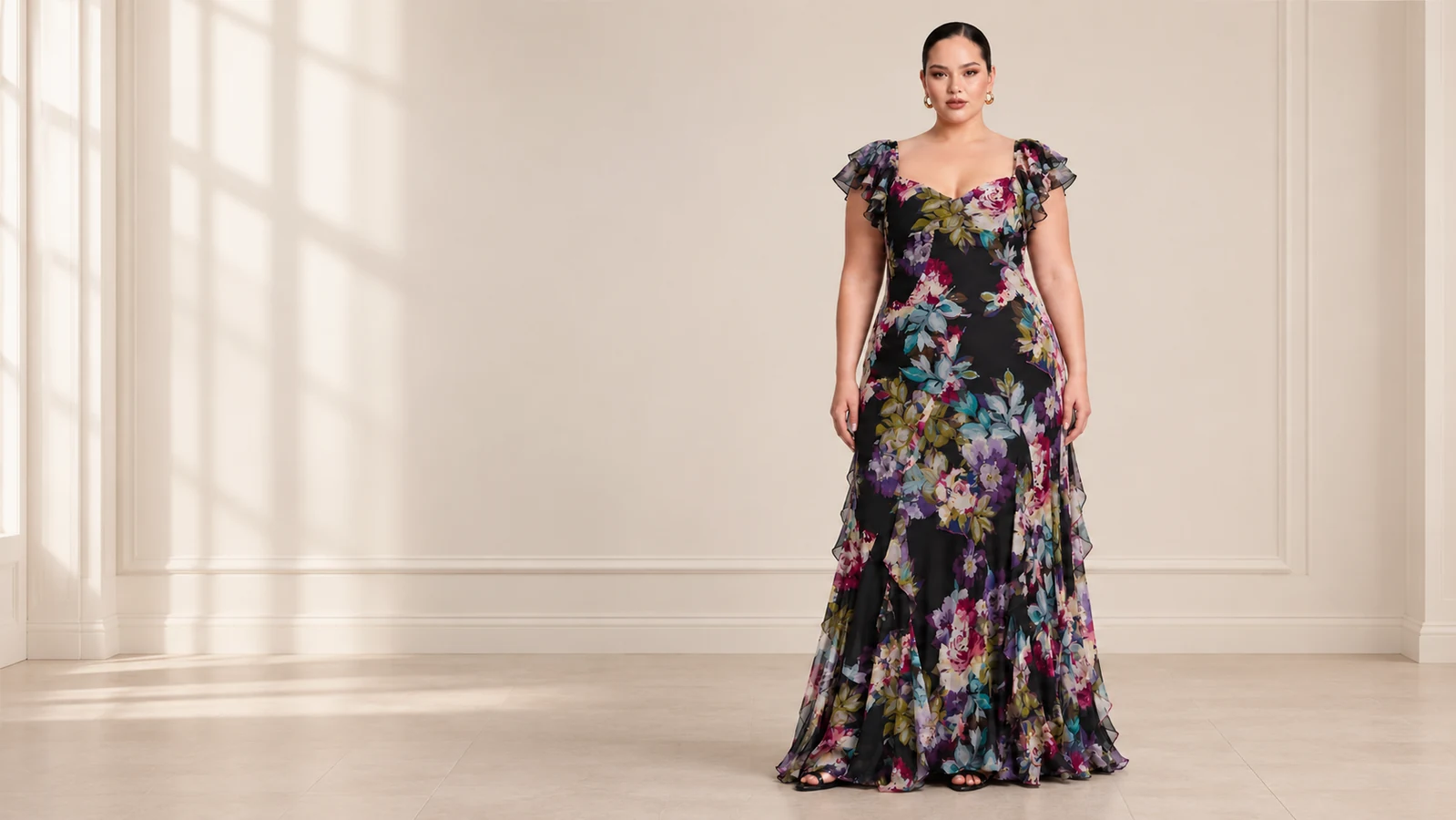
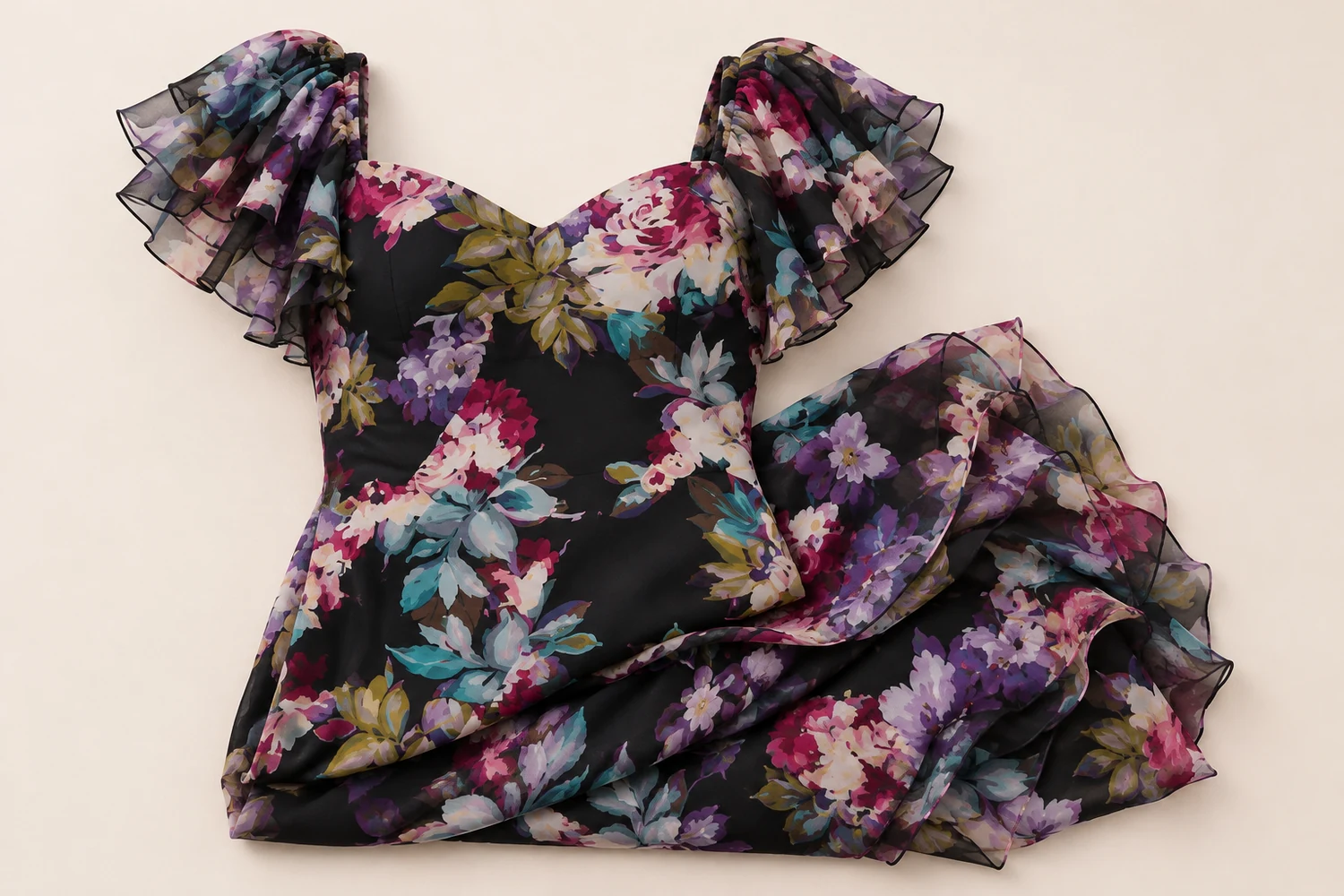
FROM ATTITUDE model ATT10 combines a defined upper silhouette with an all-over floral pattern and a long flowing skirt. For a buying team, the selection decision should connect those visible details to a specific customer and wearing setting. A sample review can identify unanswered questions before a photograph or size label becomes the basis of an assortment commitment.
Define the collection role before choosing a sample
The product title identifies wedding guest and formal party uses. These references support considering the style for evening and occasion assortments, but the intended event still needs a more precise brief. Establish whether the proposed collection calls for a full-length silhouette, visible shoulder detail and a strong floral pattern. Compare the actual sample with that brief instead of treating the product category as a complete approval.
Separate event positioning from dress-code promises
A wedding or formal party can involve different requirements for coverage, movement and presentation. Record the intended setting and any customer expectations that affect the garment choice. Avoid promising that a single dress meets every event convention. If a retailer plans to show the style with another garment or accessory, review that combination separately and keep it distinct from the supplied dress specification.
The specifications list spring, summer and autumn. Those season labels describe the proposed positioning; they do not establish breathability or comfort in a particular climate. Buyers can request a sample and consider its feel under the expected conditions. A useful review record states what was observed, which conditions were used and which questions still require a supplier response.
Review neckline coverage and sleeve movement together
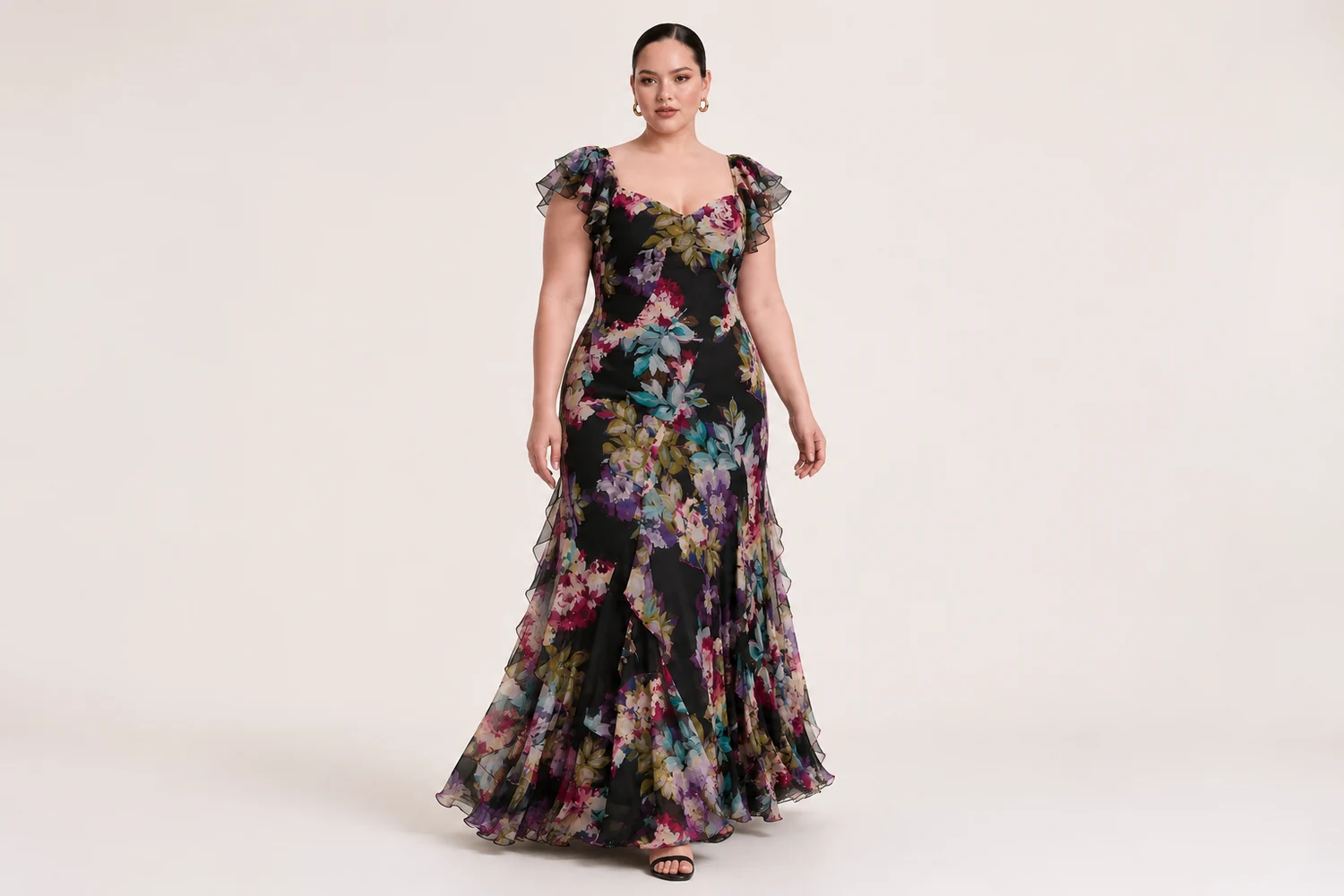
The elegant sweetheart neckline is a named product highlight, and the summary describes the same neckline shape. Assess its position on the proposed sample with the wearer standing naturally. The decision is about the intended coverage and balance for the customer, rather than whether the neckline looks attractive in a single photograph. Record the size and sample version used for the assessment.
Check the upper edge without relying on a pose
Observe the neckline while the wearer sits and turns, keeping the review comfortable and ordinary. Note whether the upper edge changes position and whether the bodice remains aligned with the planned silhouette. These are proposed inspection steps, not performance results for ATT10. If a change is requested, define the area clearly and review the revised sample before changing the retail description.
Inspect the sleeves in relaxed and moving positions
The romantic flutter sleeves are described as sheer and softly moving. Look at their coverage with the arms relaxed, then during a normal reach. Check that the presentation reflects the actual sleeve layers and does not imply opaque coverage. Photographs for the collection should show this detail clearly so customers can judge the design with relevant information rather than an idealized pose.
Assess fabric appearance from print to hem
The specification declares chiffon fabric and a 100% polyester composition. When selecting a plus size floral print chiffon maxi evening dress, use that information alongside the physical sample. Composition alone does not define fabric weight, opacity, care instructions or resistance to visible wear. Ask for the proposed fabric details where those properties affect the collection, and keep any unverified performance claim out of the product description.
Compare the floral pattern under consistent lighting
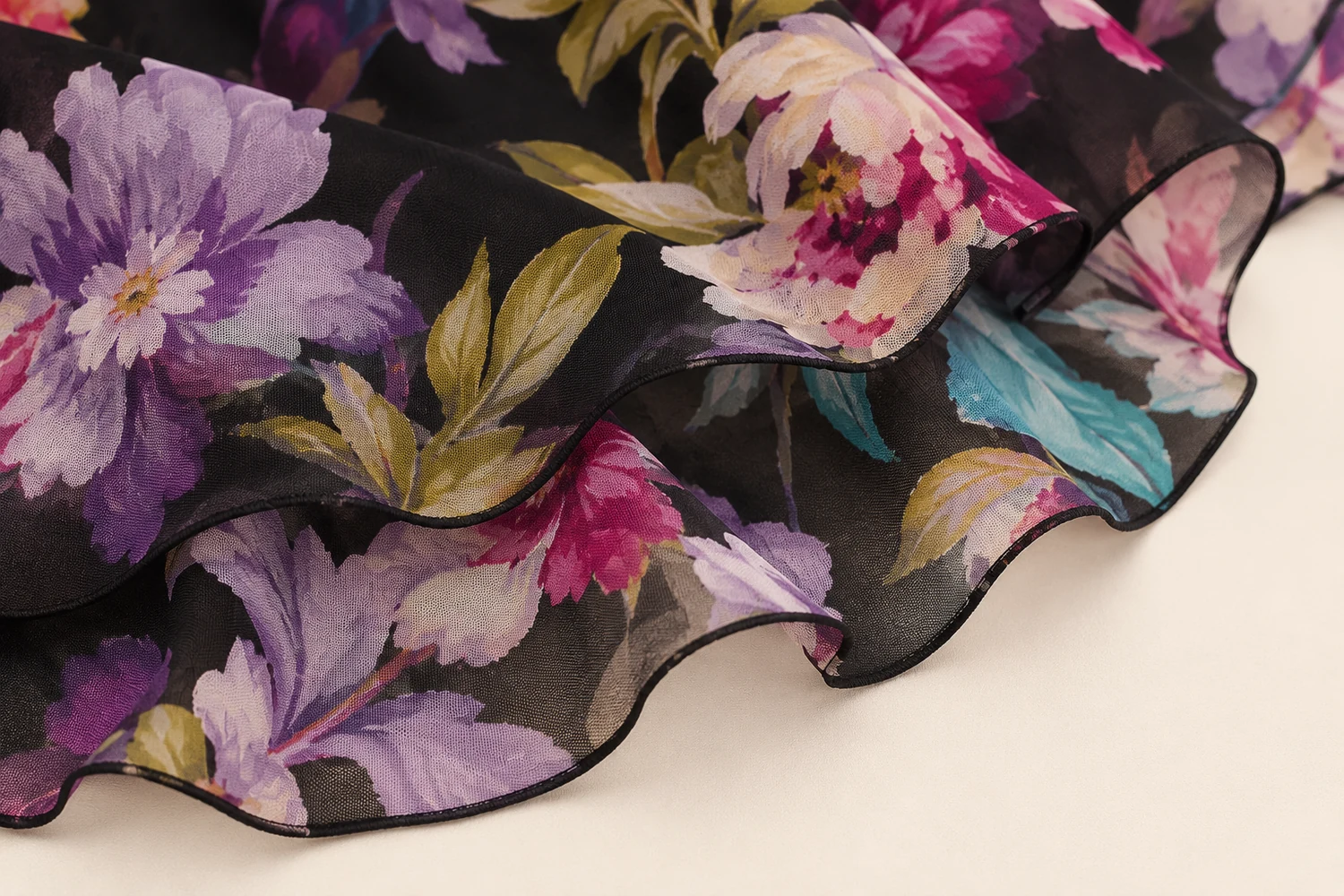
The highlights describe a multicolour floral pattern against a dark background. Review the upper section and skirt under the same light, noting the pattern scale and its appearance near seams and ruffle edges. Screen settings can affect perceived colour. Use an agreed physical sample for approval and record any requested changes; do not assume that every cut garment will have identical motif placement.
Observe the skirt before deciding on presentation
The page describes a flowing floor-length chiffon skirt with subtle tiered ruffles. Inspect how the sample hangs and how its layers settle after ordinary walking. Compare the hem position with the intended wearer and presentation footwear. Do not infer a suitable length from the model photograph alone. A proposed alteration should be checked on a revised sample because it may change the visible proportions.
Care guidance also belongs in the approval discussion. General fit assessment can include a garment in new condition and after care performed according to its instructions. This is a useful review principle, not evidence that this model has been independently tested. Request the intended care instructions and supporting information before making claims about appearance or fit after maintenance.
Use the size chart as a starting point for questions
The published chart provides XL, 2XL and 3XL rows. The table below reproduces their length and bust measurements in centimetres, together with the US labels shown on the page. These are supplier-listed reference values. They do not establish whether the figures describe a finished garment or a body measurement, and they should not be treated as universal size conversions.
| Published size | Listed US size | Length (cm) | Bust (cm) |
|---|---|---|---|
| XL | 14 | 135 | 115 |
| 2XL | 16 | 137 | 126 |
| 3XL | 18 | 139 | 132 |
Confirm definitions and missing entries before allocation
Ask where the length is measured from, how the bust is recorded and which sample condition is used. Request a complete, internally consistent chart for the sizes required by the collection, including confirmed waist information. Do not calculate missing dimensions from neighbouring sizes. Retain the original supplier chart alongside any clarification so the buying and technical teams can identify the approved version.
A size range needs an agreed fit review as well as a list of labels. Select the sample sizes needed to examine the intended customer range and document the observations consistently. If custom grading is proposed, ask for the revised measurement specification. Approval of one photographed sample should not silently become approval of every size or every requested adjustment.
Turn the review into a focused sample request
Private label apparel sourcing is supported by the listed OEM, ODM, custom-label and customized-sample services. Buyers can use these options to discuss a defined collection proposal. The presence of a service on the page does not confirm a particular modification, artwork application or revised delivery arrangement. Keep the current style description and requested development work in separate parts of the sample brief.
- Identify model ATT10 and the intended occasion collection. Include the customer profile and the coverage expectations that affect selection.
- Request the necessary size information and measurement definitions. Record open chart questions before planning the assortment allocation.
- Review neckline, sleeve movement and skirt presentation together. Attach consistent sample views and concise comments for each requested change.
- Confirm fabric and care information before approving retail wording. Record the final sample version and keep the agreed specification with the image set.
Review the resulting sample against the same brief before finalizing product imagery. If an agreed revision changes a visible feature, replace the reference photographs and description together. This keeps the assortment decision tied to the approved garment and helps prevent a development request from being mistaken for a feature already supplied by the current style.
Frequently asked questions
Does the chiffon specification establish opacity?
No. The page names the fabric and composition, but those details do not establish the coverage of every area. Examine the actual sample, including the sheer sleeve layers, under conditions relevant to the intended presentation.
Can the published size labels replace a fit review?
No. Use the chart as supplier information and confirm how each measurement is taken. Match the proposed sample to the intended customer and request missing or unclear details before creating customer-facing size guidance.
Is the dress automatically suitable for every wedding?
No. Wedding guest is a listed use, but the event requirements and customer preferences still matter. Compare the neckline, sleeve coverage, print and length with the particular collection brief before approving that positioning.
Can buyers request a different specification?
Customized samples and OEM/ODM services are listed. Submit the proposed changes clearly, confirm feasibility and examine the revised sample. Do not present a requested detail as an existing product feature before it has been agreed.
Build an occasion sample brief around the wearer
Review the plus size floral print chiffon maxi evening dress with the intended customer, event setting and measurement questions in view. Send FROM ATTITUDE a focused sample brief, resolve the open details and use the approved garment to decide its place in the collection.