Select an off shoulder white cotton shirt dress by reviewing neckline stability, lace details and the size chart against the intended collection brief.
Define the role of the shirt dress in the collection
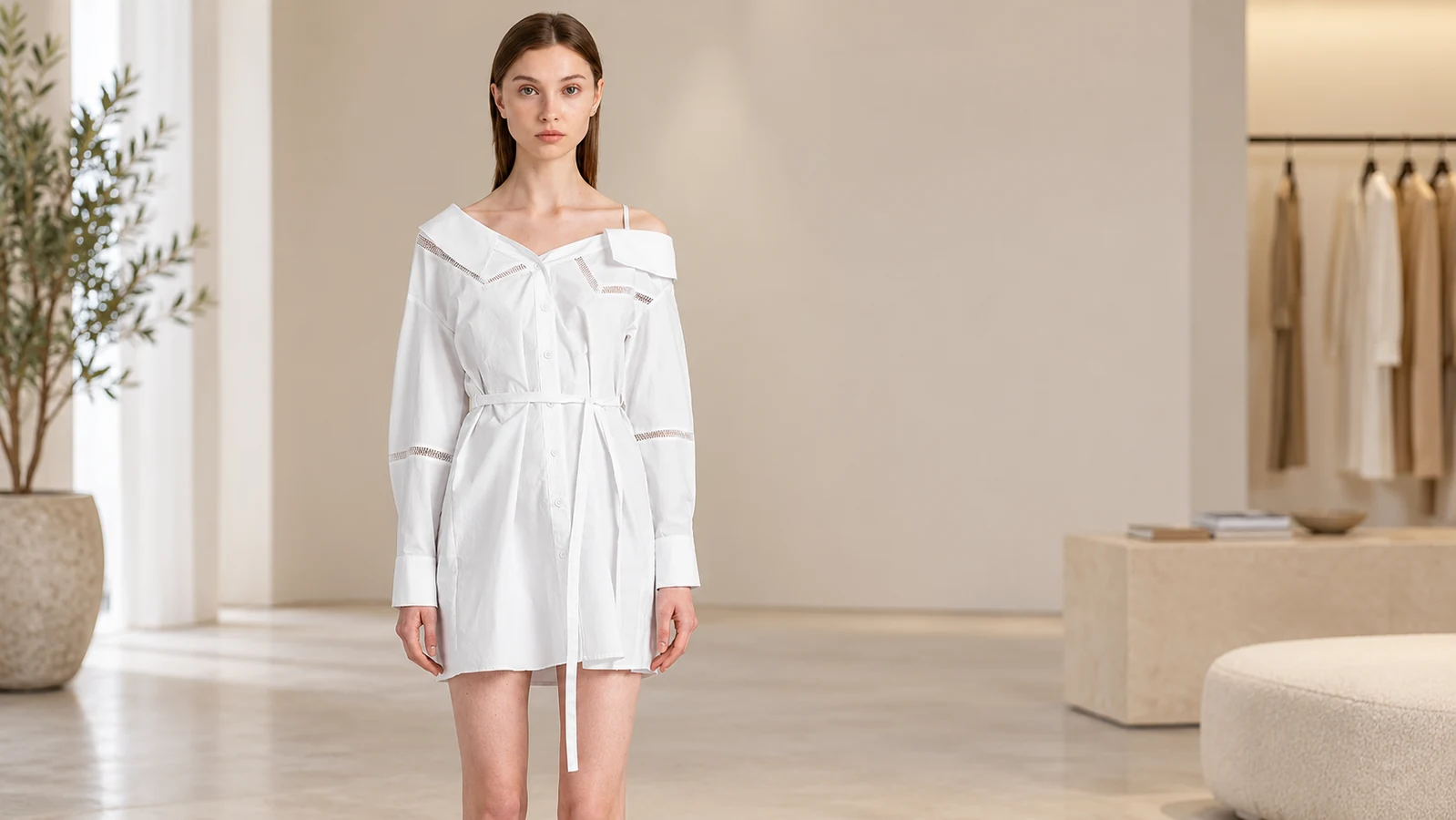
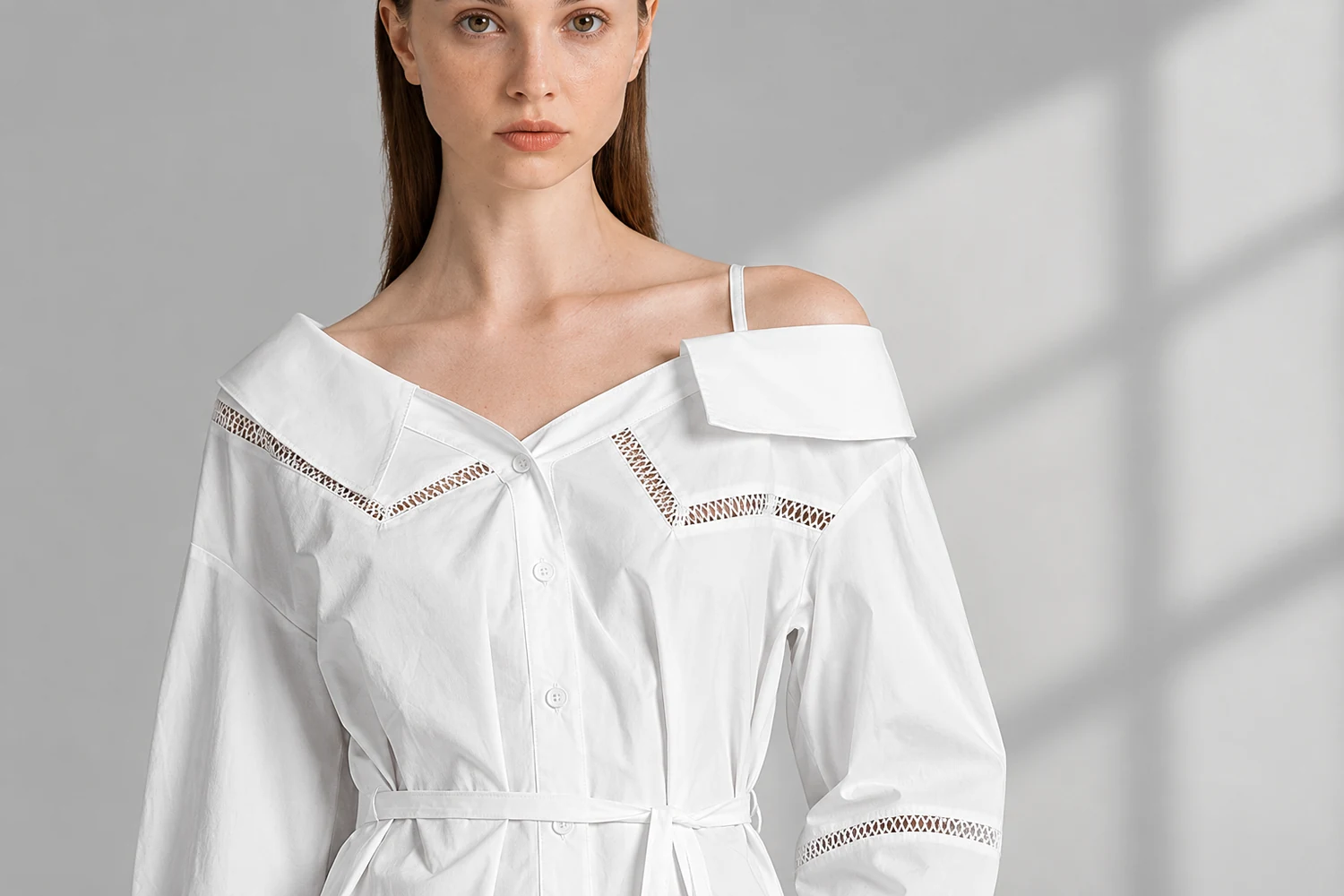
FROM ATTITUDE model QZ8023 combines a white cotton shirt-dress format with a button front, an asymmetric neckline and geometric openwork lace. The product page identifies spring and summer and describes casual or semi-formal wear. Those details provide an initial selection framework for apparel brands and retailers. A buyer still needs to compare the physical sample with the intended customer, coverage preferences and wearing conditions before approving its place in an assortment.
Match the design to the intended customer
For casual and everyday assortments, consider how a short dress and an exposed shoulder fit the collection brief. Review the hem while standing, walking and seated, and discuss whether the neckline serves the intended customer. A seasonal description does not establish suitability for every climate, workplace or dress code. Keep that distinction visible in the buying decision so that the design is selected for a specific use rather than a broad promise of versatility.
Compare tied and relaxed styling on the same sample
The highlights describe a matching fabric belt that can define the waist or allow a looser shirt-like presentation. Compare these options during the fitting rather than treating them as separate garment constructions. Check the front opening, skirt fall and hem position in both presentations. The resulting observations can help a retailer decide how to photograph and describe the approved sample without suggesting that one adjustment creates an unlimited fit range.
Evaluate the neckline and waist as connected fit features
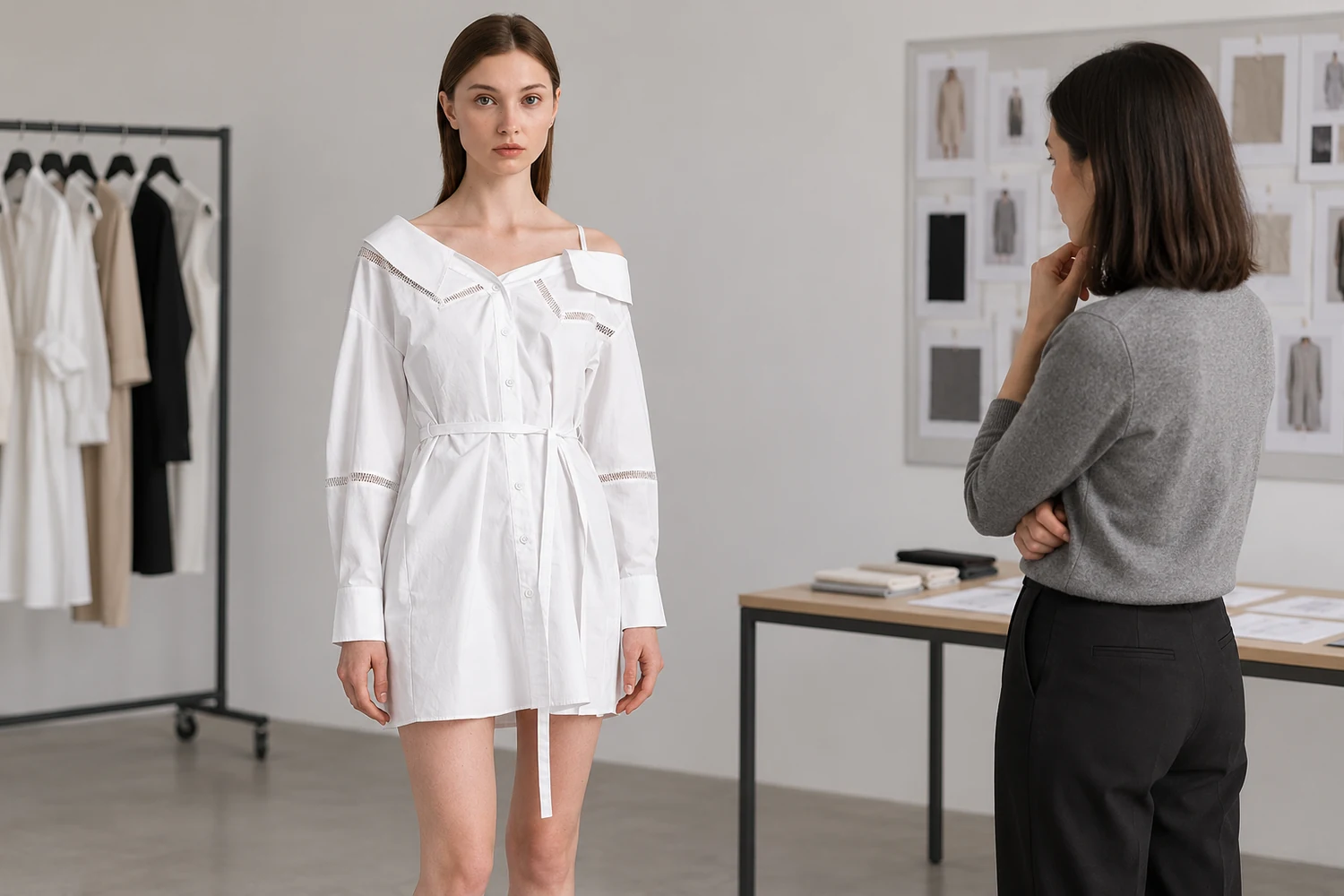
An off shoulder white cotton shirt dress should be assessed as a complete garment rather than as a neckline photograph. QZ8023 has an asymmetric folded collar and a thin supporting strap described in the product highlights. The button front and belt also affect the way the garment sits. A fitting should establish whether those features remain comfortable together through the ordinary movements expected of the intended wearer.
Observe collar position during movement
Ask the sample wearer to stand, sit and reach normally while the buyer observes the collar and strap. Note unwanted shifting, pressure or changes in coverage, then record any requested alteration against the sample version. The source calls the strap supportive, but does not specify an adjustment mechanism, strength test or built-in bust support. Such details should be confirmed separately if they are important to the customer brief or proposed retail description.
Check the belt and button opening
The adjustable waist tie is a styling feature to evaluate on the actual sample. Tie the matching belt at a comfortable tension and check the front opening while seated as well as standing. Look for any change in button alignment or fabric pull that needs discussion. Do not use belt adjustment as a substitute for selecting the appropriate garment size. An agreed fit specification should define the garment before the styling presentation is finalized.
Separate the cotton declaration from performance assumptions
The page identifies cotton in more than one product-specific section and declares a composition of 100% cotton in its specification table. This supports the material description. It does not establish fabric weight, lining, opacity, shrinkage results or an approved wash process. Buyers should request the missing information relevant to their intended use and evaluate the complete garment, including the lace inserts and collar, rather than approving the fabric name alone.
Review white fabric and lace under relevant lighting
The cotton comfort highlight describes breathable fabric and structured drape. Treat those statements as supplier descriptions to examine during sample review rather than measured performance guarantees. Observe the white fabric and openwork panels in indoor light and daylight. Decide whether the intended coverage is consistent with the customer brief, and request confirmation of lining or other construction requirements when needed. Do not infer opacity, stretch or care behavior from the product photograph.
Agree care and appearance checks before approval
Before preparing customer instructions, ask for the proposed care process and the evidence supporting it. A buyer can discuss checks for dimensional change, collar appearance and the condition of the lace after that process. Record the agreed review method and acceptance expectations with the sample documentation. This creates a practical basis for approval without promising machine washing, crease resistance or unchanged fit after laundering where the published specification supplies no such result.
Read the measurement chart with clear definitions
The published chart provides length, sleeve length and bust values for S, M and L in centimetres and inches. Its centimetre rows give a useful starting reference, reproduced below with consistent dimensions. Confirm where each measurement is taken and whether the bust value represents a body dimension or a garment dimension before using it in an order or consumer size guide. A number without its measurement basis cannot establish the intended fit.
| Published size | Length (cm) | Sleeve length (cm) | Bust (cm) |
|---|---|---|---|
| S | 81.5 | 51 | 95 |
| M | 83 | 52 | 98 |
| L | 84.5 | 53 | 102 |
The page also lists XL and custom grading, but the displayed chart does not include an XL measurement row. Request that row rather than extrapolating it from the smaller sizes. Agree measurement points and tolerances with the supplier and compare them with the actual sample. These checks connect the available chart to the buying team’s customer brief while keeping unanswered sizing questions out of a finalized retail listing.
Turn sample observations into a focused development brief
The product page offers customized samples, OEM/ODM service and custom-label options. For private label apparel sourcing, these are routes to discuss a defined proposal; they do not mean that every requested alteration is already available. Begin with QZ8023 as the garment reference, identify the customer and size assortment, and record the specific fit or construction questions that need supplier confirmation before the sample is approved.
- Specify the intended wearer, season and coverage expectations for the collection.
- Review collar position, strap placement, buttons, belt and hem on the physical sample.
- Confirm material details, proposed care and the measurement basis for the required sizes.
- Document requested changes and agree a revised sample specification with the supplier.
When selecting an off shoulder white cotton shirt dress, retain the agreed visual reference and approval comments together. Separate commercial discussions from garment approval, and confirm any labeling or packaging requirements directly with the supplier. The published packaging descriptions are inconsistent, so no packaging format should be assumed from this page. A clear sample record lets the buyer decide whether the proposed style meets the collection brief before proceeding to an order.
Frequently Asked Questions
What material does the product page identify?
The product page repeatedly identifies cotton and declares 100% cotton in the detailed specification. Buyers should still confirm the final fabric specification, opacity and proposed care. The fiber declaration alone does not establish tested performance or the presence of lining.
Can the neckline be approved from the photograph?
The photograph provides a visual reference for the asymmetric collar and supporting strap. Fit approval requires a sample review during ordinary movement. Record collar position, coverage and comfort against the intended customer brief rather than assuming that the photographed fit applies to every wearer.
How should the matching belt be evaluated?
Compare the tied and relaxed presentations on the same sample and observe the front opening and hem. The belt can change the styling presentation, but it does not replace selecting the correct size or confirming the garment measurements before the assortment is finalized.
Does the chart include every advertised size?
The displayed measurement chart contains S, M and L rows, while the page also lists XL. Ask the supplier for a confirmed XL row and a measurement sheet for any additional grading. Confirm measurement points, units and tolerances before using the figures for ordering.
Can buyers request a customized version?
The page lists customized samples, OEM/ODM and custom-label services. Buyers can discuss a specific development brief with FROM ATTITUDE. Requested changes should remain proposals until the supplier confirms them and the buying team approves the resulting sample and specification.
Review QZ8023 Against the Collection Brief
Compare the QZ8023 product details with the intended wearer and assortment. Send FROM ATTITUDE the fit observations, required size chart and specific development questions to resolve before sample approval.