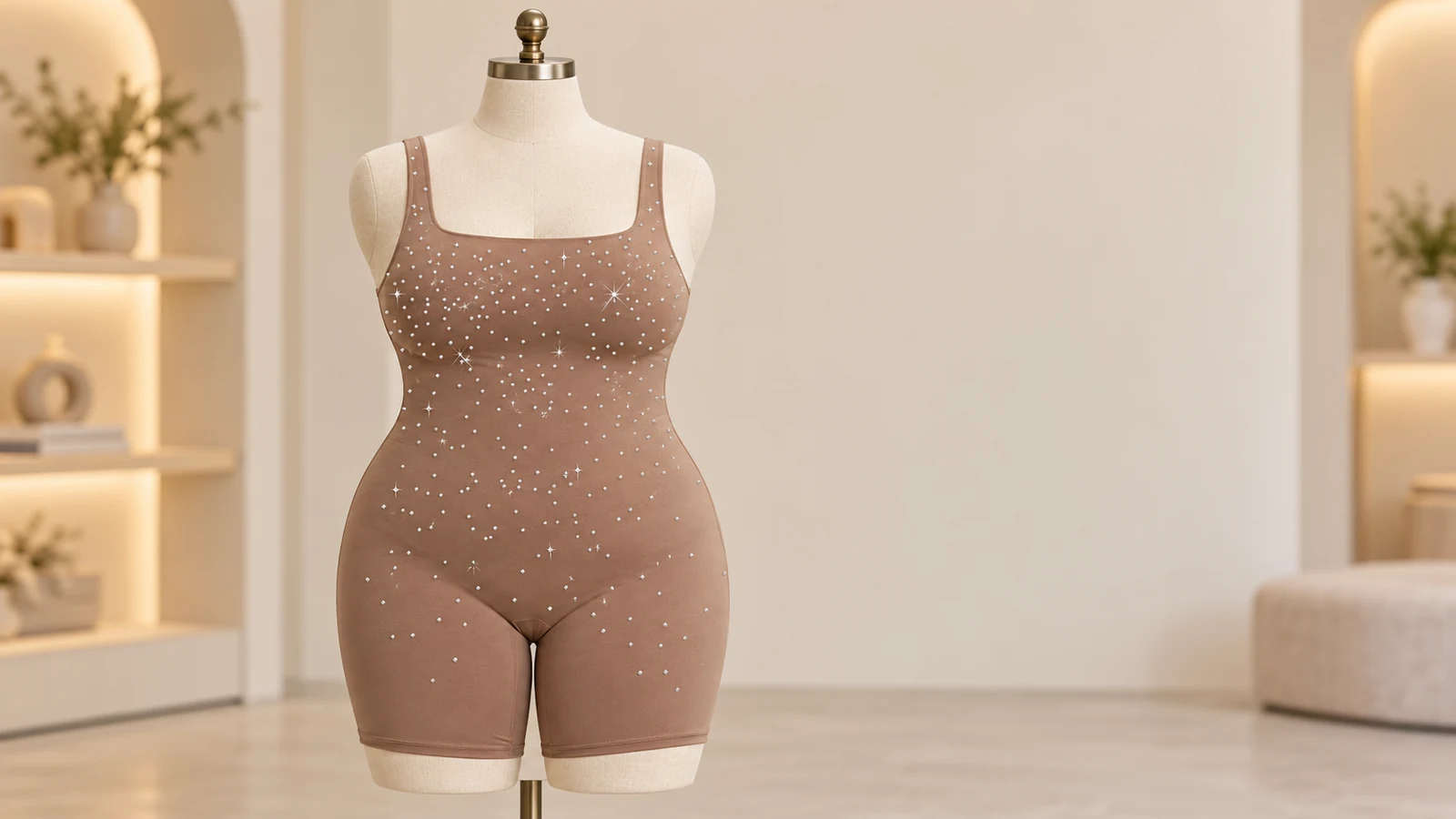
A plus size rhinestone shapewear romper bodysuit needs a sample review of dimensions, fabric, decoration and movement before buyers approve a collection.
Start with one clearly identified sample
A useful evaluation begins with a shared reference for the garment being approved. The product is identified as CS3WLT37-1, with rhinestone decoration repeated in its specifications and highlights. Record that model number beside sample photographs and comments. This keeps questions about fit, material and finishing attached to the same version, especially when several decorated styles are being considered together.
Compare the complete silhouette
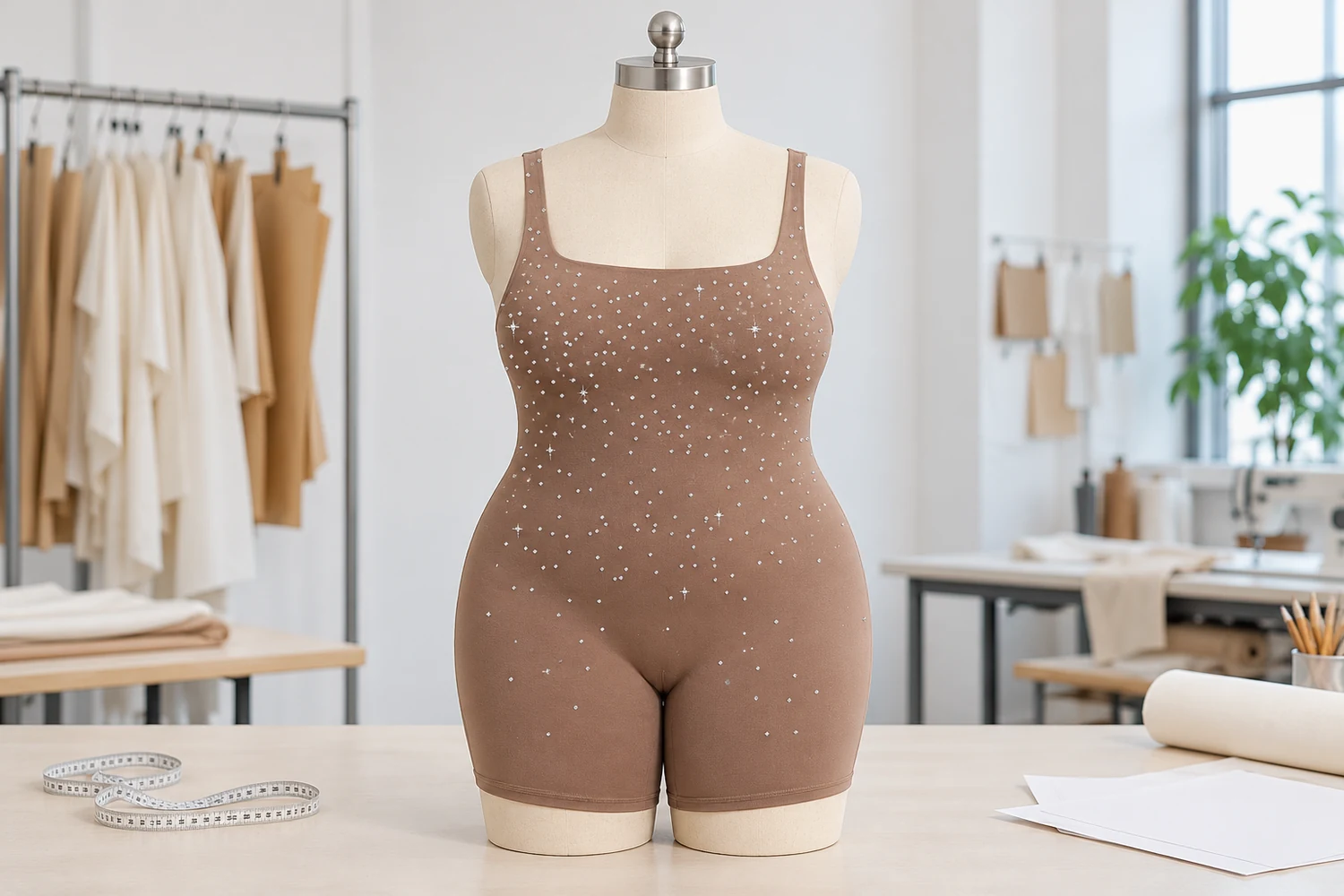
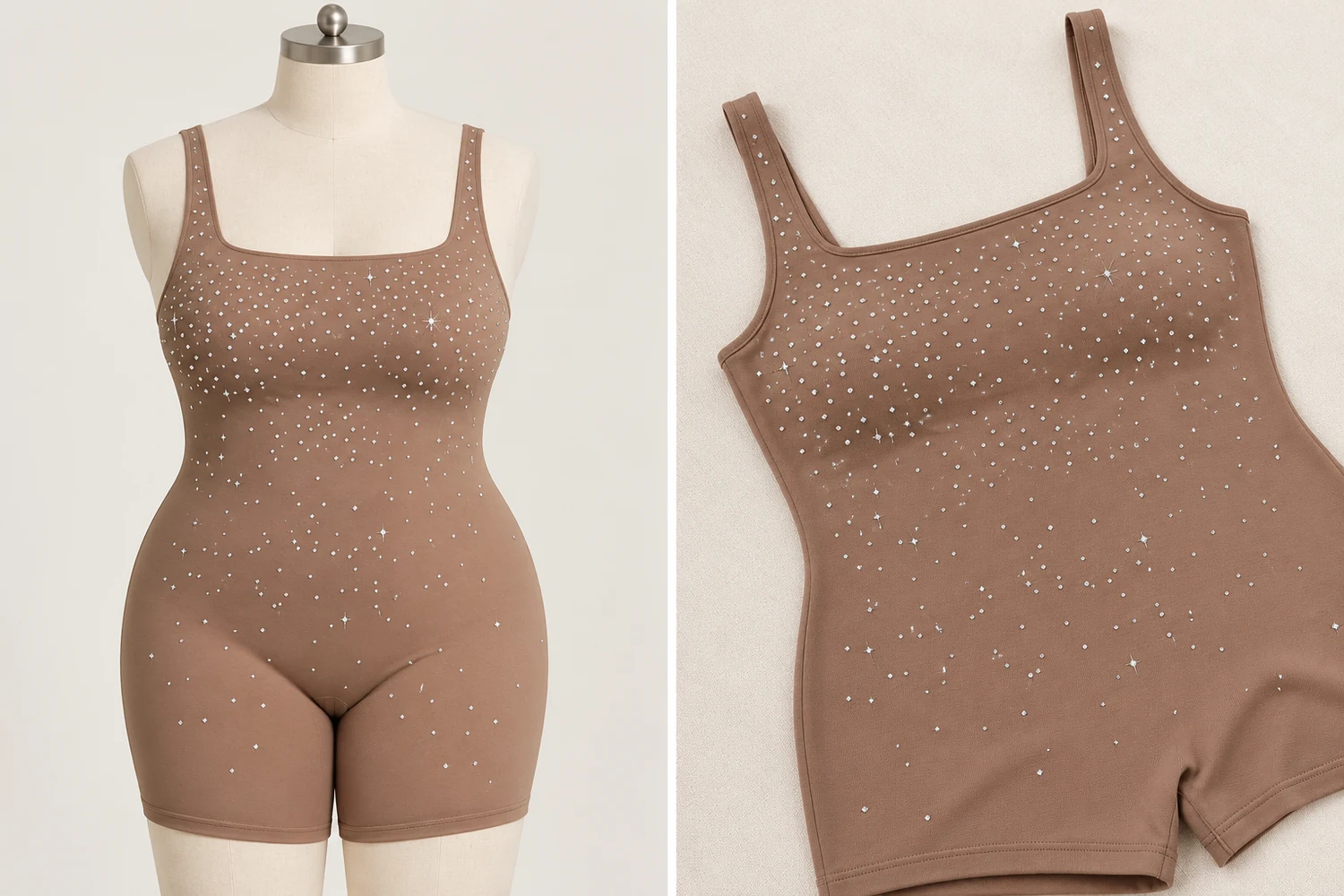
Review the garment as a connected shape before concentrating on individual stones. A front photograph should show the neckline, shoulder straps, torso and both short leg hems without an obstructing pose. Buyers can then compare the sample with the intended presentation and record visible differences. A photograph supports this comparison, but it does not establish how the garment fits every wearer.
Keep requested changes separate
The page lists customised samples, so a development discussion can distinguish the existing product from proposed revisions. Mark each requested change clearly rather than treating it as a feature already supplied. If the buyer wants a different coverage level or finish, the revised sample and its approved description should become the reference for later review and production discussions.
Read the material description as a starting point
For a plus size rhinestone shapewear romper bodysuit, material identity and fit behaviour are separate review questions. The specification lists stretch knit fabric and names the fibres, but it does not give a fibre ratio or a measured shaping level. Buyers should use those declared details to frame sample questions rather than assign a quantified performance result to the garment.
Confirm the fibre specification
The listed spandex nylon blend needs an agreed composition before a final material description is approved. A fibre name alone does not define thickness, support, recovery or hand feel. Compare the sample with the proposed specification and request the information needed for the intended label and selling description. Record any agreed revision together with the sample version to avoid mismatched documents.
Distinguish observation from testing
A review can observe whether the fabric settles after ordinary movement and whether its surface looks consistent under the planned lighting. Those observations should describe the actual conditions used. They do not replace suitable evidence for repeated laundering, decoration attachment or long-term recovery. If such claims matter to the collection, agree the relevant evaluation method and acceptance criteria before approval.
Compare measurements using the same definitions
The public chart supplies centimetre rows for M, L and XL. The table below preserves those figures without converting them or treating them as body measurements. Because the measurement method is not stated, buyers should confirm the starting points, garment condition and intended interpretation before comparing a physical sample. A size name on its own cannot resolve these questions.
| Published size | Length (cm) | Waist (cm) | Hip (cm) |
|---|---|---|---|
| M | 85 | 72 | 102 |
| L | 86.5 | 74 | 106 |
| XL | 87 | 76 | 110 |
The broader size offering should be supported by its own complete measurement information. Do not extend these rows by assumption or derive an unstated grading rule from the differences shown. Request the missing size specifications and identify which sample sizes will be reviewed. This makes the eventual size allocation depend on agreed evidence rather than a familiar label.
Inspect decoration and garment finishing together
Rhinestones provide the visual focus, while garment finishing determines how that surface is presented on the sample. Review both under consistent lighting and at more than one viewing distance. A close image can reveal stone distribution; a complete front view shows whether the arrangement remains balanced across the garment. Keep those views linked to the same approved sample.
Check the decorated surface
Examine whether stones appear consistently positioned and whether the surrounding fabric remains visually even. Record missing or displaced decoration on the sample itself, using photographs that make the location clear. Any request for attachment or care-performance evidence should identify the proposed garment and conditions. A sparkling image alone is not evidence of resistance to repeated washing or rubbing.
Review seams and short hems
The highlights describe flatlock seams and a stay-put hem. Treat these as supplier-listed features to inspect, not as a universal comfort guarantee. Review the sample finish and observe the hem during the planned fit session. Record any rolling, pulling or unevenness that occurs, together with the wearer position and movement, so a requested adjustment has a useful reference.
Use a repeatable fit-review sequence
A structured session makes sample comments easier to compare across reviewers. Begin with the agreed size and measurement definitions, then observe the garment during ordinary movements relevant to the intended wearer. Avoid drawing broad conclusions from a single static pose. The aim is to produce clear acceptance points and a short list of changes for the next sample discussion.
- Identify the version: record the model, sample size and proposed specification before the session. Use the same identifiers on photographs and comments so later revisions remain distinguishable.
- Compare dimensions: measure using agreed points and garment conditions. Note discrepancies for review rather than interpreting an unexplained difference as either acceptable stretch or a production fault.
- Observe movement: check neckline placement, strap position and short hems while standing, sitting and moving comfortably. Describe what occurred without generalising the result to every size or wearer.
- Resolve open points: separate fit changes, visual finishing comments and evidence requests. Record which items are accepted and which need a revised sample or further information before approval.
Turn sample comments into a sourcing brief
For private label apparel sourcing, the listed OEM/ODM and custom-label services provide a basis for a focused inquiry. Buyers can share the intended collection role, required size information and sample priorities. Keep the requested scope explicit: the availability of a service does not mean that every design change, label format or finishing requirement is already agreed.
The brief should identify the accepted sample and the remaining decisions about materials, decoration, care information and presentation. Confirm packaging separately where the public description is inconsistent. This creates a common reference for the commercial discussion while preserving the distinction between an existing product listing and the requirements of a particular order.
Frequently asked questions about CS3WLT37-1
Does the page give an exact fibre percentage?
No percentage is stated in the listed composition. The specification names spandex and nylon. Buyers should confirm the agreed material composition for the proposed sample before approving labels or detailed product descriptions; a fibre list does not establish a shaping level.
Are the published measurements body measurements?
The chart does not identify its measurement method. Confirm whether the values refer to the garment or another measurement basis, and agree the relevant points and conditions. The centimetre values should not be treated as wearer dimensions without that clarification.
Does the seamless wording mean there are no seams?
The title uses seamless wording, while the highlights refer to a seam construction. The sample should therefore be inspected directly. Buyers should describe the observed finish accurately and avoid interpreting the title as proof that every part of the garment is seam-free.
What information helps a custom-sample inquiry?
Include the model, intended size plan, measurement questions and specific changes to be discussed. The page lists customised samples and OEM/ODM services. A clear brief helps separate the current product specification from proposed development work and the evidence still required for approval.
Prepare a focused CS3WLT37-1 sample brief
Buyers evaluating a plus size rhinestone shapewear romper bodysuit can review the CS3WLT37-1 product page and share the required measurements, decoration checks and sample questions with FROM ATTITUDE. Resolve those points before approving the garment for the planned collection.