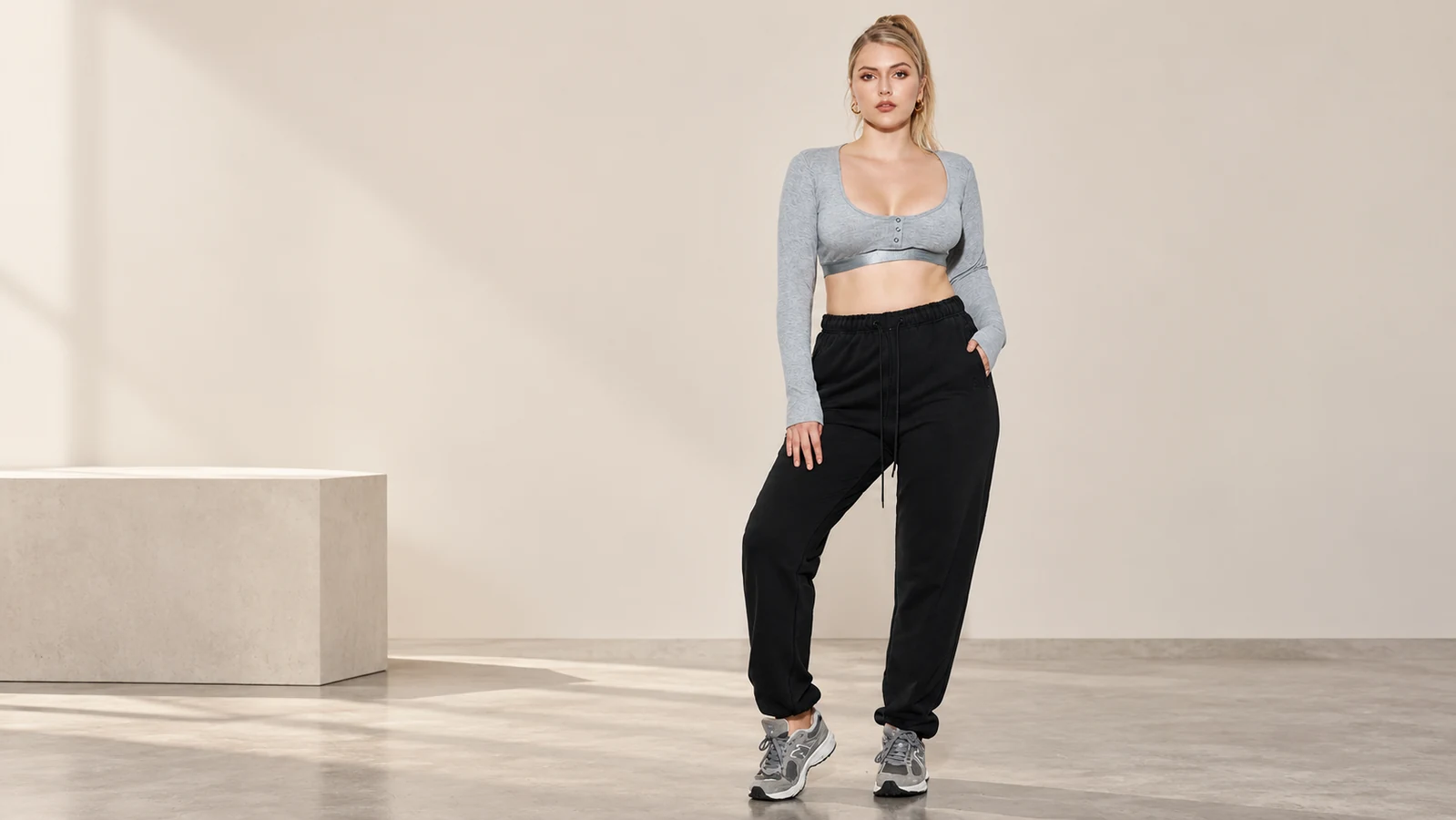
Buyers evaluating plus size fleece jogger sweatpants can compare lounge and everyday uses through waistband fit, cuff placement and confirmed sample measurements.
Match the style to a defined collection role
This style can be considered for lounge and everyday ranges because the product description identifies relaxing at home and running errands as intended contexts. The useful comparison is between those uses, not between unverified performance claims. A home-focused brief may prioritise seated fit and an unobtrusive waistband, while an everyday brief may put more emphasis on pocket access and the way the hem meets footwear.
For casual and everyday assortments, buyers should first decide how relaxed the leg should look within the collection. Compare the sample with the intended tops and footwear, keeping the waistband visible during the initial review. A styled photograph can communicate an outfit, but it cannot establish pressure at the waist, movement through the seat or the feel of the fabric during extended wear.
Review the waistband, pockets and cuffs as one system
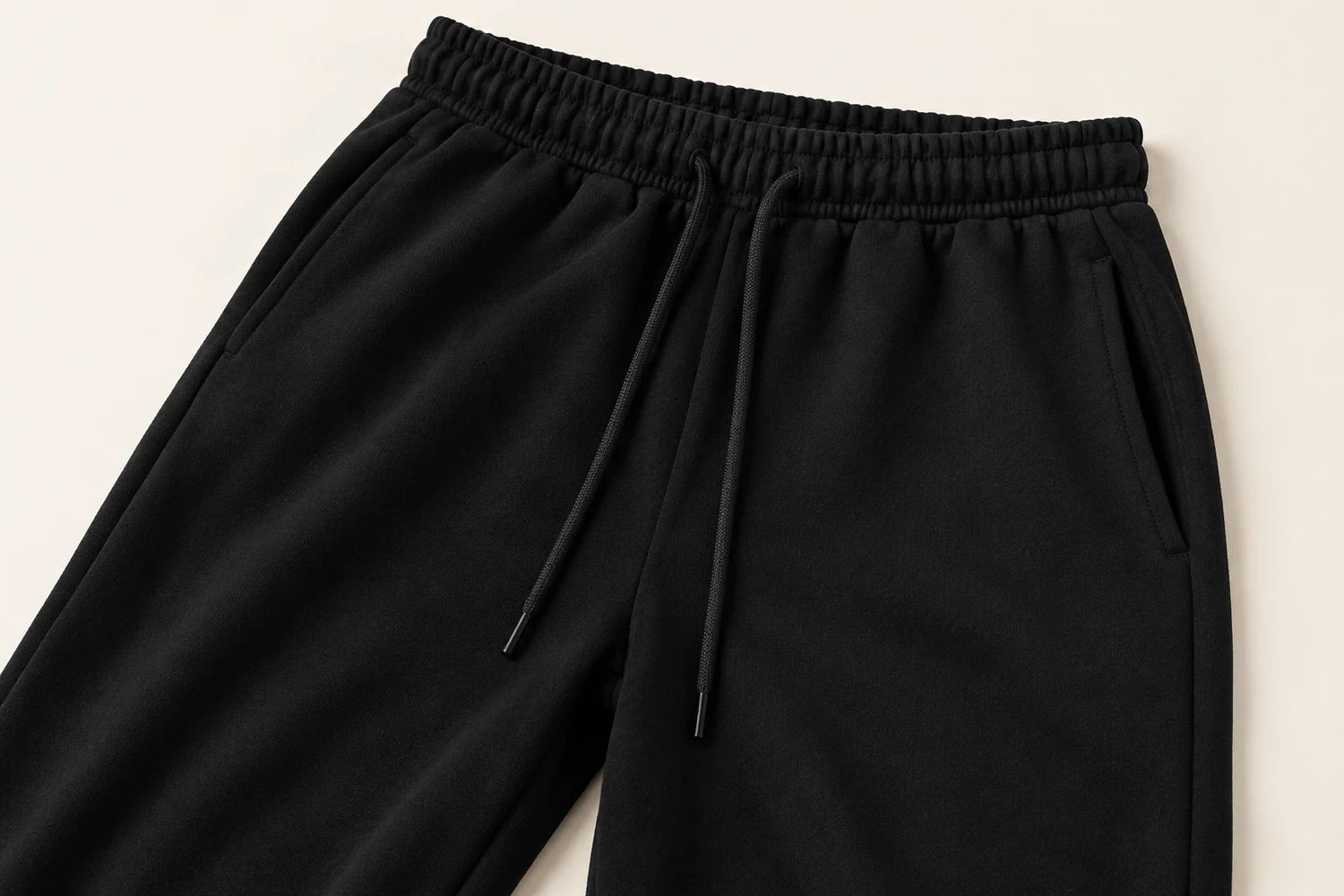
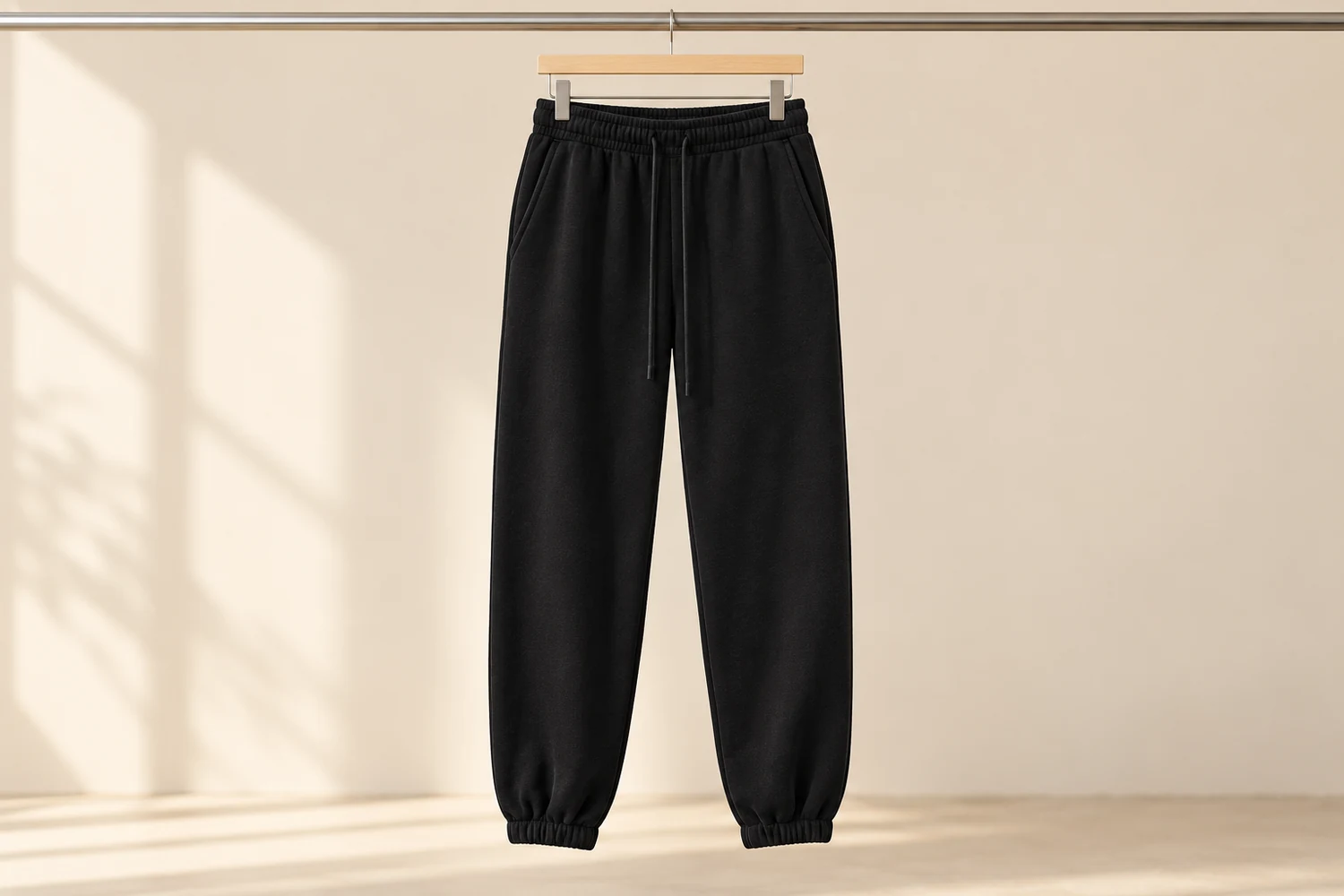
The documented construction combines an elastic waistband, matching adjustable drawstring, side pockets and elastic cinched cuffs. These details should be evaluated together because a change in wearing position can alter the apparent leg length and pocket access. The product page provides starting features, while the sample establishes how those features work for the proposed fit.
Waist position and adjustment
Set the intended wearing height before comparing sizes. Check the waistband both with the drawstring relaxed and with it adjusted, then observe sitting and walking. Record whether the garment remains at the agreed position without excessive tightening. Adjustable fastening should not be treated as a substitute for a suitable pattern or an agreed size specification.
Pocket access and lower-leg shape
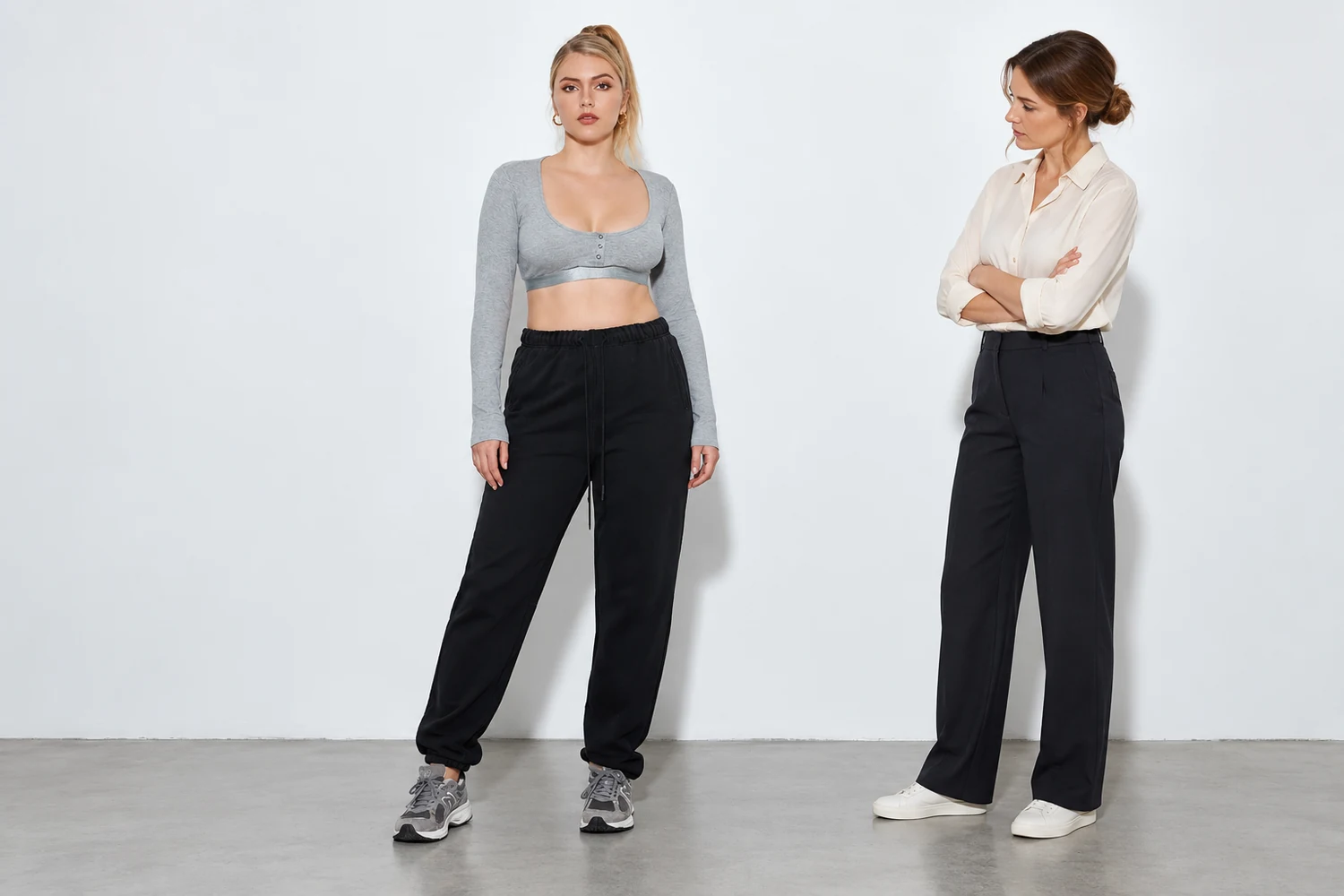
Inspect the pocket openings with the garment worn naturally, rather than relying only on a pose with hands inside them. Check whether ordinary use changes the side silhouette. At the ankle, review cuff position and fabric gathering with the intended footwear. A tapered appearance is a design feature; its suitability still depends on the customer profile and the sample.
Use the published measurements as a starting point
The product page provides the following centimetre measurements for M, L and XL. They are reproduced as listed, without interpreting the waist as a body measurement or assuming whether it was recorded relaxed or stretched. Confirm those definitions with the supplier before using the figures for a consumer size guide or order specification.
| Listed size | Length (cm) | Waist (cm) | Hip (cm) |
|---|---|---|---|
| M | 100 | 74 | 115 |
| L | 102 | 78 | 120 |
| XL | 104 | 82 | 125 |
Define the measuring method
Request the exact measurement points and the condition of the garment when measured. Length needs a defined start and finish; waistband measurements need an agreed state. The same method should be used for the submitted sample, fit comments and later inspection records so that apparent differences are not caused by inconsistent measuring.
Complete the required size range
The listing mentions additional sizes and custom grading, but the visible chart does not provide every corresponding measurement. Buyers planning an extended range should request the missing rows and review the intended fit across that range. The presence of an XL sample does not establish the fit of another size, even when the styling remains unchanged.
Compare lounge and everyday sample requirements
The evaluation of plus size fleece jogger sweatpants should reflect the activities described in the collection brief. A useful sample session includes normal movement and a consistent way of recording observations. It should produce actionable comments about the garment, rather than broad statements that a style feels comfortable or looks oversized.
Seated use and everyday movement
For loungewear assortments, observe the waistband and seat when the wearer sits, stands and changes position. For an everyday presentation, also check walking, pocket access and cuff placement with the planned footwear. Note where any adjustment is needed and whether the issue concerns the pattern, wearing height or styling choice.
Surface and seasonal assessment
For cold weather assortments, request the actual sample and confirmed fabric specification before making warmth claims. The fleece description does not establish a temperature rating or comfort in every environment. Examine the garment surface, handle and proposed care requirements together, and keep those observations distinct from laboratory performance results.
- Set the collection role and intended wearing height before the fitting.
- Compare the sample with the confirmed measurement sheet using one agreed method.
- Record waist, pocket and cuff observations during the same movement sequence.
- Separate requested changes from features already approved on the sample.
Check consistency before approving retail claims
A knit garment should be assessed beyond its initial appearance. Construction, processing and care can affect dimensional stability, so the buyer should agree how sample measurements and appearance will be reviewed after the intended care procedure. That is a general evaluation principle, not evidence that this product has passed a particular test.
Confirm fibre composition and care instructions against the approved sample before preparing labels or consumer descriptions. The public page alone should not resolve details that require supplier clarification. Where durability, shrinkage or surface-performance claims are proposed, request evidence relevant to the actual material, garment and care conditions instead of extending a general fabric description into a guarantee.
Turn sample comments into a sourcing brief
The product page lists customised samples, OEM/ODM and custom-label services. Those options support a focused development discussion, but each requested change still needs confirmation. For private label apparel sourcing, identify model CS3WKZ06, the intended range, required sizes and the sample issues to be reviewed. Keep the specification and approval record attached to the same product reference.
A practical brief distinguishes appearance, fit and commercial questions. Appearance comments address the agreed silhouette and finish; fit comments identify measurement points and wearing conditions. Commercial requirements can then be confirmed directly for the proposed order. If a sample revision is requested, compare the revised garment with the recorded comments before treating it as approved for the collection.
Frequently Asked Questions
Is the drawstring the only waist adjustment?
The product highlights describe both an elastic waistband and a matching adjustable drawstring. Buyers should review their combined behaviour on the sample at the intended wearing height, including seated use, rather than assuming that tightening the drawstring resolves every fit issue.
Which measurements are publicly listed?
The visible chart supplies length, waist and hip values for M, L and XL in centimetres and inches. This guide uses the centimetre rows. The measuring method and missing dimensions for any additional required sizes should be confirmed before purchase planning.
Can the style be selected for different seasons?
The specification lists multiple seasons, but that listing does not establish comfort in every climate. Assess the actual fabric and sample against the intended use, layering plan and care requirements. Any specific thermal claim requires relevant supporting evidence.
Does the page confirm private-label development options?
Customised samples, OEM/ODM and custom-label services are listed. Buyers should present the required changes and obtain confirmation of the agreed development scope. A listed service is a starting point for discussion, not approval of every requested modification.
What should be checked before an assortment decision?
Confirm the measurement method, required size coverage, waistband behaviour, pocket access and cuff placement. Resolve fabric and care details with the supplier, then retain the approved sample and specification together so the buying decision has a clear reference.
Evaluate CS3WKZ06 against the collection brief
Buyers comparing plus size fleece jogger sweatpants can review FROM ATTITUDE model CS3WKZ06 and send a focused sample brief covering intended use, required sizes and fit questions. Confirm the unresolved details before approving the style for the range.