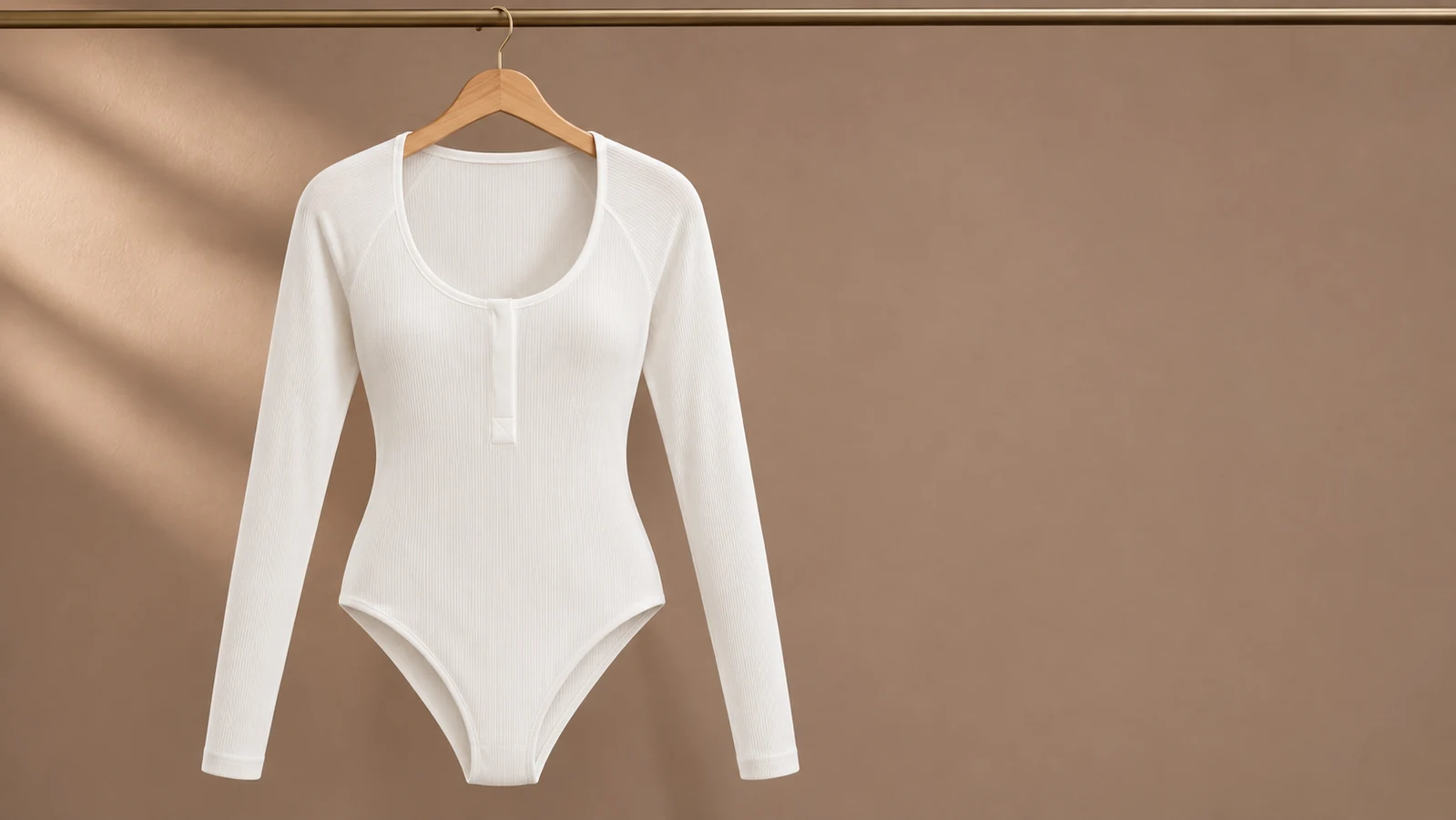
Buyers evaluating the FROM ATTITUDE ribbed long sleeve scoop neck Henley bodysuit should check torso length, neckline position and sleeve movement in the intended outfit.
Decide where the bodysuit belongs in the range
A useful first decision is which outfit the bodysuit needs to complete. A buyer selecting a separate to wear with denim might want the neckline and placket to carry the look. A buyer selecting a base for a jacket may care more about where the scoop sits between the lapels and whether the sleeve shifts when the wearer takes the jacket off. Bring those particular garments to the sample appointment. Small differences in a waistband or armhole can change what the team sees.
The neckline gives the style its identity
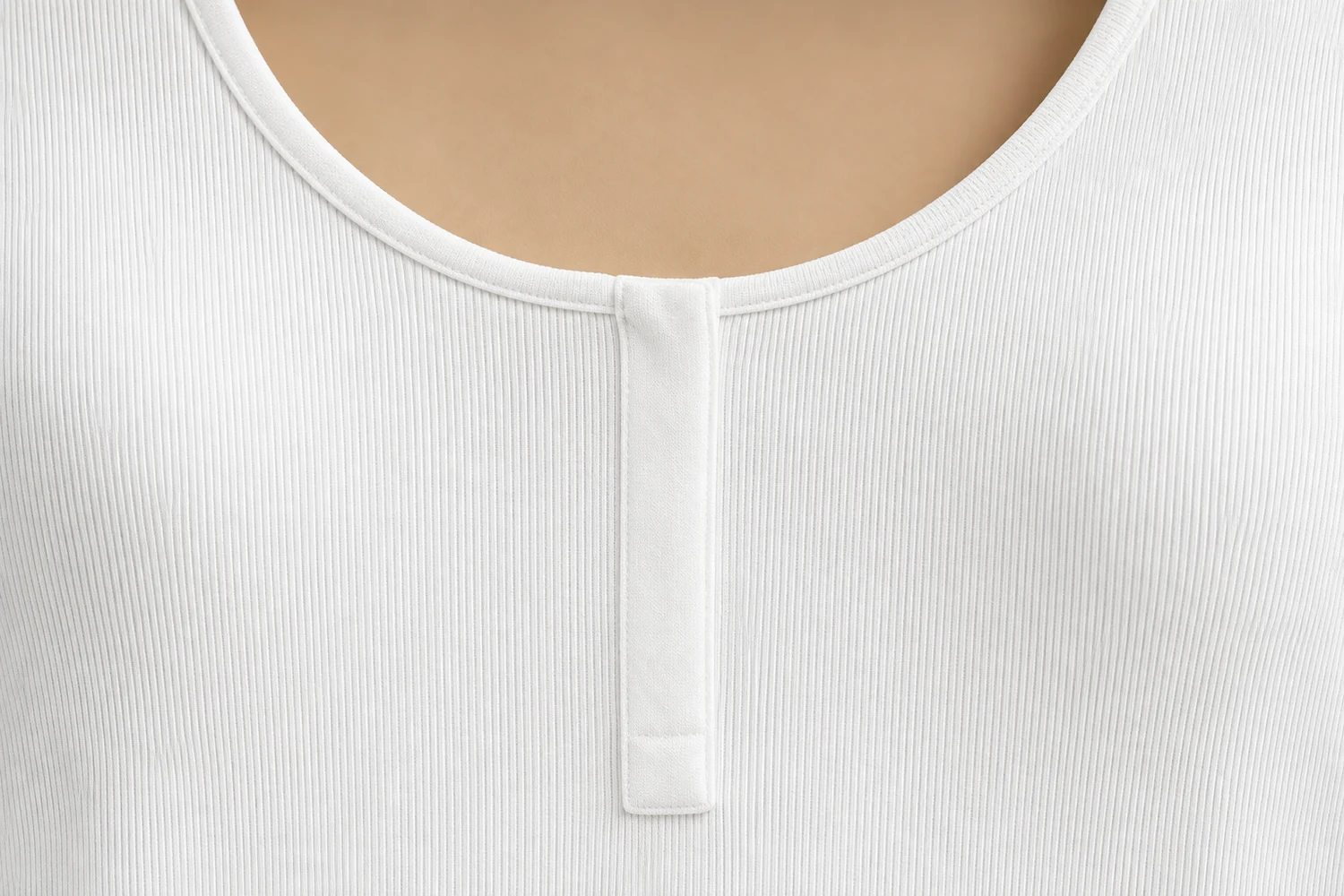
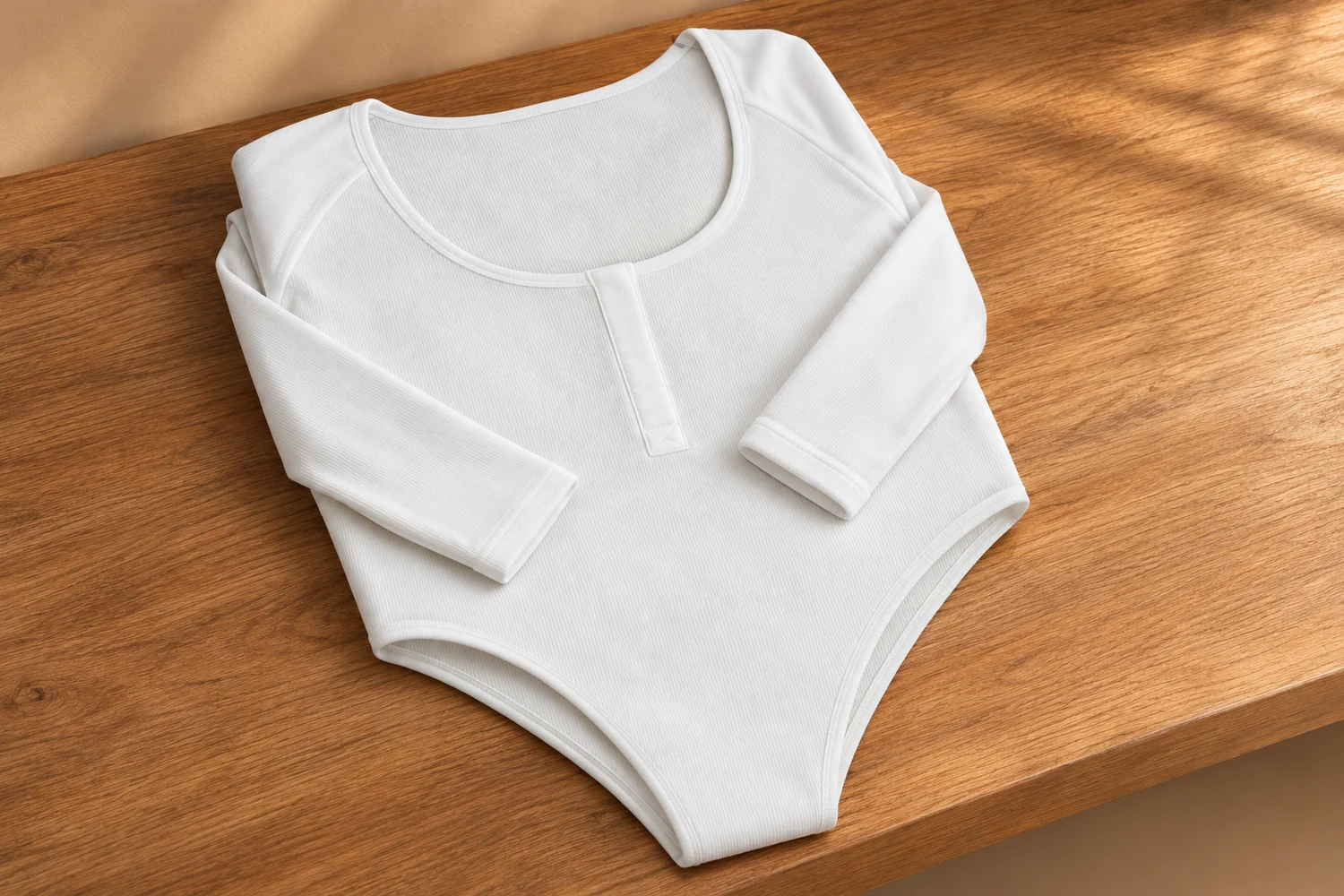
The FROM ATTITUDE ribbed long sleeve scoop neck Henley has a curved neckline and a short front placket. On the white sample pictured, the placket blends into the body. A retail photograph taken from several steps away could easily lose that detail. Include both an outfit view and a closer front view in the shot list. Leave button counts, fastening descriptions and instructions for adjusting the opening until someone has handled the production sample.
Choose a proportion before judging the sample
For casual and everyday assortments, start with the rise of the trousers or skirt planned for the display. A high waistband covers more of the front body than a lower one. Check the space between the waistband and the bottom of the placket when the wearer stands and sits. That simple comparison helps the stylist decide whether the front detail reads clearly and gives the photographer an actual outfit to reproduce.
Read the size chart alongside the sample
The product page lists M through 6XL and offers custom grading. Its chart gives measurements for M, L and XL. The following figures retain the centimetres used by the source. Ask the supplier to identify the start and end points for length and explain how waist and hip were measured before using these figures for a customer size guide.
| Size | Length (cm) | Waist (cm) | Hip (cm) |
|---|---|---|---|
| M | 72 | 72 | 102 |
| L | 73 | 74 | 106 |
| XL | 74 | 76 | 110 |
Track length independently of width
The chart moves from a length of 72 cm in M to 74 cm in XL, while the hip figures move from 102 cm to 110 cm. A fit team drawing up a sample request has a reason to keep those columns separate. If the neckline pulls down when the wearer sits, adding width at the hip may leave the underlying length issue unresolved. Record where the tension starts, then ask the pattern team which measurement would distinguish the possible causes.
Make the missing sizes a specific request
Ask for the proposed measurements of each additional selling size, the measuring method and the supplier's tolerances. For example, a buyer planning to sell 3XL needs its actual proposed length as well as its waist and hip figures. Extending the differences between the published rows would create a number that the supplier never supplied. Reserve the corresponding size-guide entry until the graded specification can be checked against a physical sample.
Evaluate the knit in the finished garment
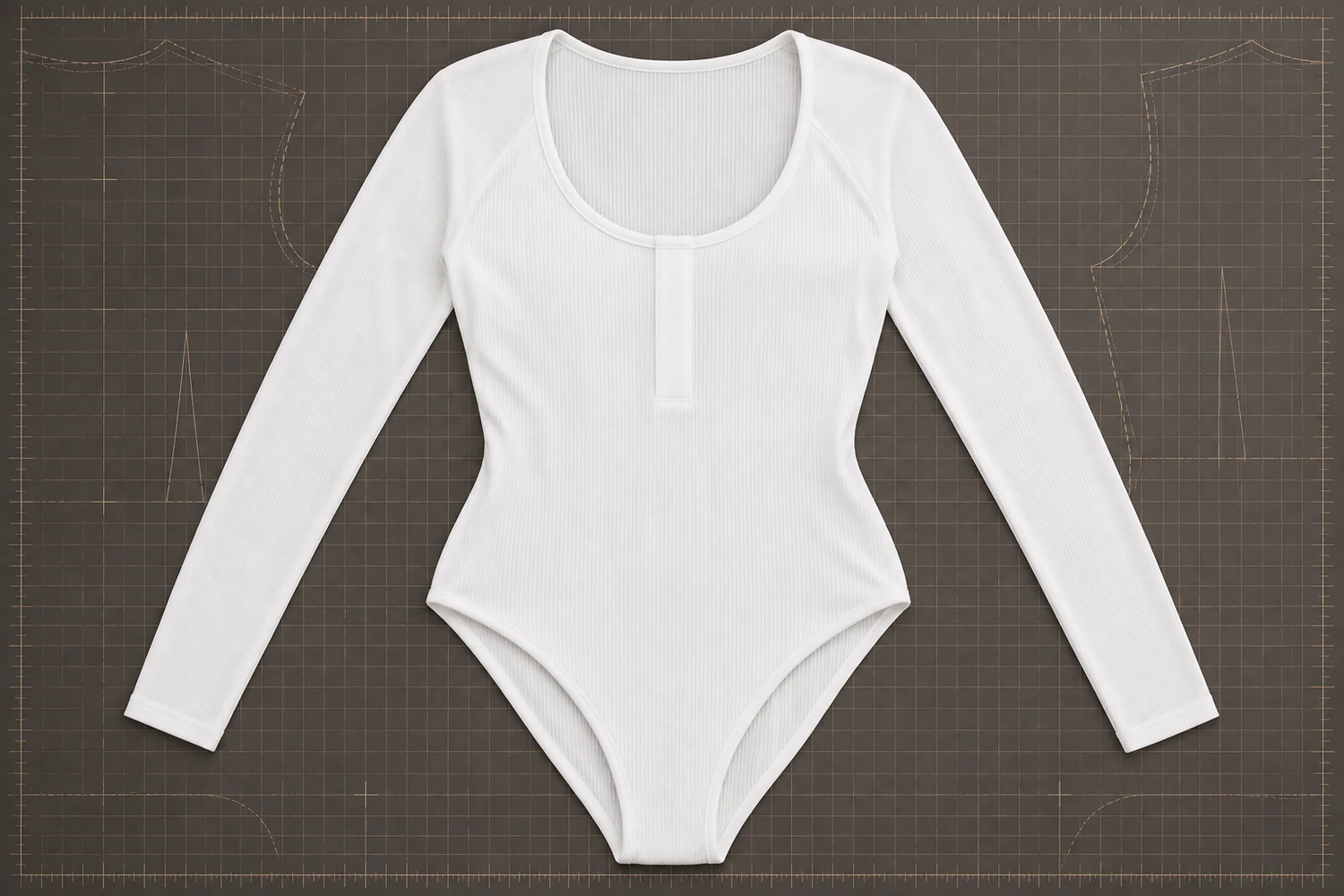
The specification for the FROM ATTITUDE ribbed long sleeve scoop neck Henley lists stretch knit made from 84% cotton and 16% spandex. Ribbing describes the fabric structure. Fibre percentages describe the blend. Neither gives a measured result for how far this particular garment extends, what force it takes to stretch it, or how much it recovers after wear. Phrase the material description around the declared blend and reserve performance wording for the results the supplier can document.
Follow the rib lines through the placket
Inspect the sample lying flat, then on the intended wearer. Straight rib lines can make it easier to see where the front is being pulled off centre. Look at the junction where the scoop meets the placket, the wrist when the elbow bends and the side of the waist when the wearer reaches. Note whether any distortion disappears when the wearer returns to a relaxed posture. A short observation tied to a movement is more useful to a pattern maker than a general instruction to improve the fit.
Compare the white sample under the intended light
Place the garment against the layer it will be styled over and inspect it under the light planned for retail photography. Look again where the knit is stretched across a curve. Save the original images before making exposure adjustments so the team can compare what the camera recorded with what it saw in person. Shade, surface definition and coverage are separate observations. Approval of the white shade alone gives little guidance to a photographer trying to show the fine ribs.
Run a fit session with the intended outfit
For workwear and tailored assortments, use the proposed jacket during the fitting. Check the scoop against the lapel opening while standing, then have the wearer reach for the far side of a table. If the sleeve draws up under the jacket, repeat the motion without the outer layer and compare the cuff position. That comparison gives the team a way to identify whether the next change belongs in the jacket sleeve, the bodysuit sleeve or the styling choice.
For cold weather assortments, decide what the base is expected to do inside the outfit. A long sleeve can provide the visual coverage a merchandiser wants beneath an open cardigan. A claim about warmth requires separate evidence. Evaluate the sample using the same trousers, cardigan and underlayer on each pass so that differences in the fittings can be traced to a specific change.
- Record the sample identifier, outfit and size before dressing the wearer. Mark the shoulder and waist positions in the standing photographs.
- Have the wearer sit and stand again. Ask where pressure changes first and record the answer in the wearer’s own words.
- Photograph the sleeve after the jacket comes off. If the cuff has shifted, note whether it returns to its starting position without adjustment.
- Agree on one change for the next fitting and name the person responsible for checking it. Keep the approved features in the same record.
Turn the sample notes into a buying decision
A private label apparel sourcing brief should identify the style, the sample size, the intended outfit and the changes the buyer wants assessed. FROM ATTITUDE lists customised samples and OEM and ODM services for this style. If the only change requested is the depth of the scoop, mark that position on the front photograph and specify how to measure it. Keep the other accepted features visible in the brief so the next sample can be compared on the same terms.
Ask the person approving the purchase and the person writing the retail description to review the same sample record. One may need a grading decision while the other needs an accurate close-up of the placket. If those are the only open items, the request back to the supplier can be brief and specific. Store the approved front view and labelled size row together, where both teams can find them when the collection goes into photography.
Frequently asked questions
Can the published waist measurement select a size on its own?
Start with the supplier's definition of the measurement and consider it alongside length and hip. A bodysuit spans the torso, so a wearer can have sufficient room at the waist and still feel a pull elsewhere. A seated fitting helps reveal the difference before a retail recommendation is written.
What should go on the first fabric card?
Record the model reference, the declared cotton and spandex percentages, the ribbed appearance and which sample the card accompanies. Keep a space for confirmed care instructions. A sample photograph cannot establish the response to washing, so the label writer needs the supplier's care guidance and any supporting evaluation.
How should the buying team describe the Henley front?
A scoop neckline with a short Henley placket is supported by the listing. For more detailed customer instructions, examine how the supplied placket opens, how it sits when closed and what a customer can see at normal viewing distance. Use the approved sample for the final product photograph.
Which sample should the team request next?
Choose the size or styling combination that leaves the biggest decision open. If the middle size works under the proposed jacket but an extended size has no confirmed length, request that graded sample and its measurement sheet. A second middle-size sample would tell the buyer little about the outstanding fit question.
Prepare the next Henley sample
For a size or neckline still under review, send the supplier the relevant photograph, measurement points and intended outfit alongside the CS3WLT18 product specification. Ask for the proposed change to be identified on the next sample so the fit team can make a direct comparison.