
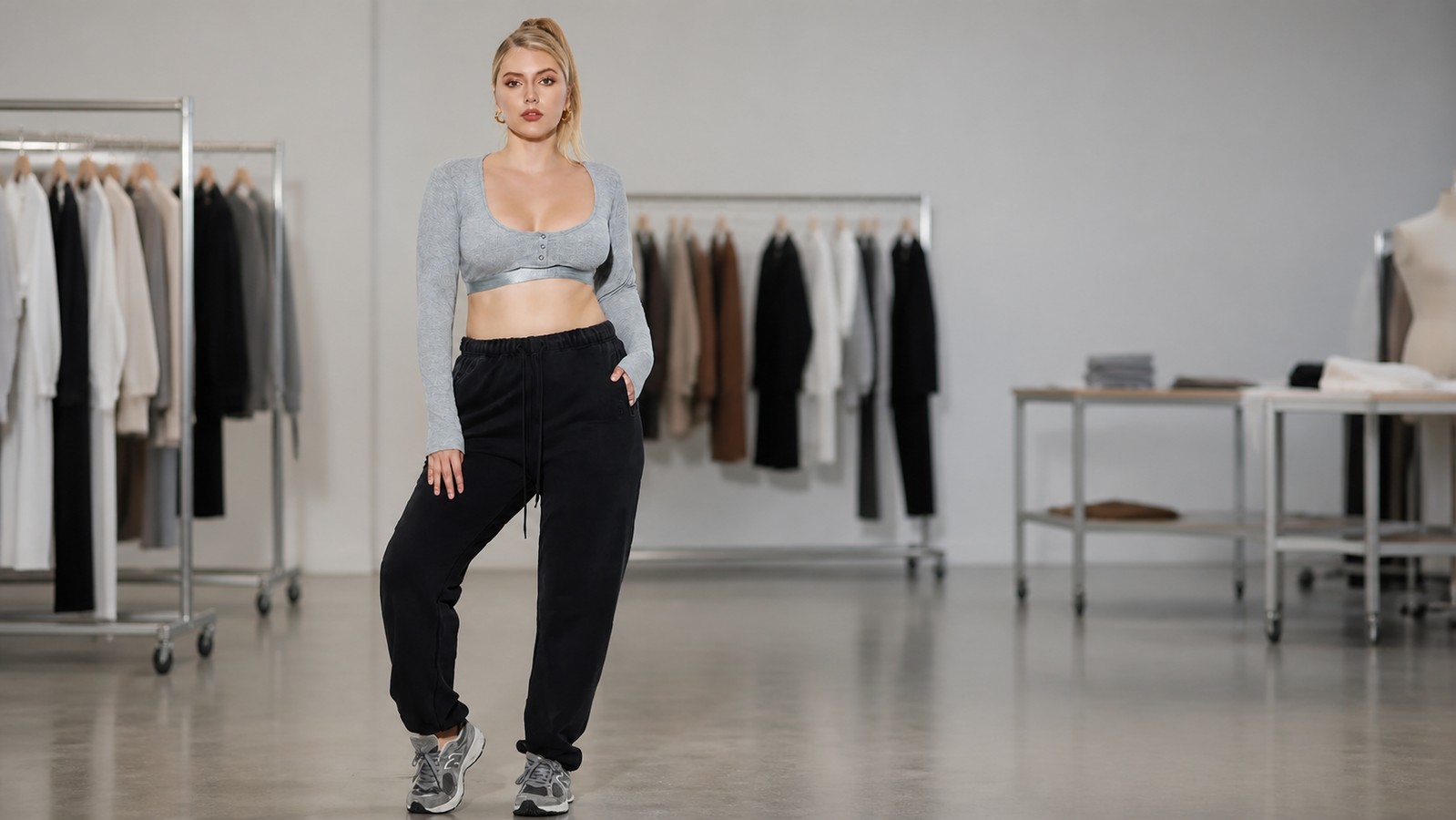
For fashion buyers, an inclusive jogger program works best when a familiar silhouette is supported by usable fit references and a clear development path. FROM ATTITUDE model CS3WKZ06 is a black plus-size jogger sweatpant designed as a practical foundation for casual, loungewear and private-label assortments.
A Commercially Useful Jogger Foundation
A strong core style does not have to rely on complicated decoration. The value of CS3WKZ06 begins with its recognizable black jogger profile: a high elastic waist, a centered matching drawstring, a relaxed leg shape and gathered ankle cuffs. Deep side pockets add a practical feature customers can understand immediately. Together, those details create a product that can sit naturally within everyday, lounge and street-influenced collections without requiring an unfamiliar styling story.
For assortment planners, the neutral color and uncomplicated surface also make the garment easier to position beside hoodies, sweatshirts, fitted tops and casual outer layers. The style can function as a dependable volume piece, a coordinated-set component or an accessible entry point into a wider inclusive range. Buyers can therefore evaluate it not only as a standalone trouser but also as part of a repeatable merchandising framework.
That versatility can simplify the work between merchandising, design and sourcing teams. Merchandising can define the role of the style, design can set the intended proportion, and sourcing can translate those decisions into measurable sample comments. When all three functions agree on the same product objective, the review process becomes more focused and avoids adding features that do not support the planned customer or price position.
Design Details That Support Wearability
The high elastic waistband establishes the fit visually, while the matching drawstring gives the wearer an additional adjustment point. This combination is especially useful in casual programs, where comfort expectations and day-to-day movement influence purchase decisions. During sample review, product teams can assess how securely the waistband sits, how the drawstring exits are finished and whether the front remains balanced when the tie is adjusted.
The side pockets and gathered cuffs deserve the same attention. Pocket openings should remain accessible without pulling the side seam out of alignment, and the pocket bags should sit smoothly inside the relaxed silhouette. At the lower leg, the gathered cuff creates the familiar jogger finish and helps the trouser sit clearly above footwear. Checking cuff recovery, leg balance and hem symmetry during sampling can prevent small construction issues from affecting the finished appearance.
- Waist review: check elastic support, drawstring function and front balance.
- Pocket review: confirm access, bag placement and a clean side seam.
- Leg review: evaluate relaxed ease through the hip, thigh and knee.
- Cuff review: verify an even finish and comfortable opening around the ankle.
Size References for Structured Fit Review
The product page lists sizes M through 6XL and notes that custom grading is available. Its published chart provides specific reference measurements for M, L and XL. Length moves from 100 cm in M to 102 cm in L and 104 cm in XL. Waist progresses from 74 to 78 and 82 cm, while hip progresses from 115 to 120 and 125 cm. These figures give development teams a practical starting point for comparing grade movement across the three documented sizes.
Those measurements should be treated as checkpoints for sample planning rather than a substitute for a complete brand fit specification. Before production, buyers can align the intended wearing ease, waistband behavior, rise, thigh room, cuff opening and full grade with their own customer profile. Because the offered range extends beyond the three charted sizes, confirming the complete M–6XL specification during development is an important step in maintaining consistent proportions.
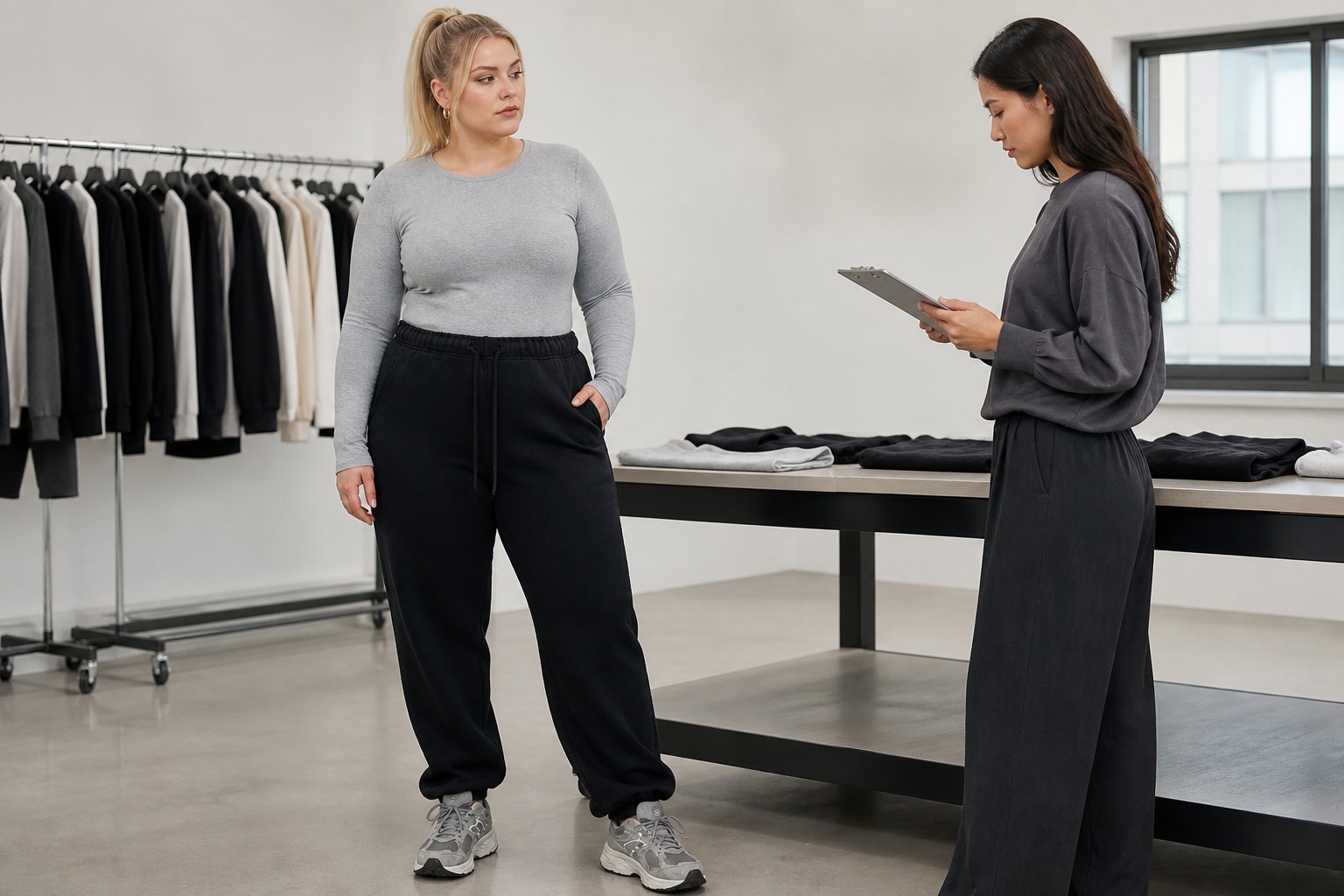
A practical review document can place the supplier chart beside the buyer's target measurements, sample measurements and fit comments. This makes changes easier to trace across rounds and helps teams distinguish pattern adjustments from normal measurement tolerance. Recording the sample size, measuring method and garment condition also reduces ambiguity. The goal is a shared specification that remains clear when the style moves from a reviewed sample to bulk production.
Turning Measurements into an Inclusive Fit Process
Inclusive grading requires more than increasing every dimension by the same amount. A productive review looks at how the waistband, hip, thigh, leg length and cuff interact on the body. The documented M–XL measurements can anchor that discussion, while a fit model and the buyer's target customer data can guide the remaining decisions. Teams should also record whether the intended look is closer to softly relaxed or deliberately oversized, because that choice affects both pattern ease and how the style is marketed.
- Define the fit objective: document the intended waist position, leg volume and cuff placement.
- Compare chart checkpoints: review the M, L and XL length, waist and hip progression.
- Confirm the full grade: agree on every size from M through 6XL before bulk approval.
- Test functional details: assess drawstring adjustment, pocket position and cuff comfort.
- Record sample comments: use clear measurements and photos so revisions remain traceable.
Merchandising the Style Across Casual Programs
CS3WKZ06 can support several verified merchandising contexts, including casual and everyday assortments, loungewear programs, cold-weather groupings and private-label sourcing. In a coordinated story, the black base can connect printed or colored tops without competing for attention. In a core essentials range, it can provide the familiar jogger shape customers use for travel, errands, relaxed weekends and at-home wear.
Retail teams can also decide whether to present the product as a continuous basic or as part of a seasonal delivery. That choice affects photography, color planning, replenishment expectations and the number of companion styles required. For wholesale buyers, a clear use case helps sales teams explain where the jogger belongs in the collection and which customer need it is intended to solve.
- Core loungewear: pair with easy tops and sweatshirts for an everyday comfort offer.
- Street-casual capsule: style with fitted layers and casual outerwear for contrast.
- Coordinated set: align branding and color direction with a compatible upper-body style.
- Inclusive essentials: use the M–6XL offer as the basis for a broader fit-led program.
OEM and ODM Planning from Sample to Production
The product page supports OEM and ODM service, custom labels, custom tags, custom packaging bags and customized samples. It lists a sample time of 7–15 working days and production at 25–35 days after sample approval. The declared minimum order quantity is 100 pieces per style per color. These details give sourcing teams an initial framework for planning, but the final calendar should still be confirmed against the exact grading, branding, packaging and order requirements.
A useful inquiry should identify the target size range, required measurements, planned quantity by color, label and tag needs, packaging direction and desired delivery window. Supplying that information early allows the factory and buyer to focus the sample round on decisions that influence approval. It also makes it easier to separate confirmed product facts from options that still require development.
Material descriptions on the product page are not fully consistent, so buyers should confirm the exact fabric composition, weight, hand feel, surface and performance requirements during sampling. Keeping that specification explicit is important for accurate costing and production alignment. A physical sample, approved swatch and written purchase specification provide a stronger basis for bulk approval than relying on an unresolved material description.
Discuss Your Collection Requirements
Review CS3WKZ06 plus-size jogger sweatpants and contact FROM ATTITUDE to discuss fit, complete grading, labels, tags, packaging options, sampling and order planning for your wholesale or private-label program.