
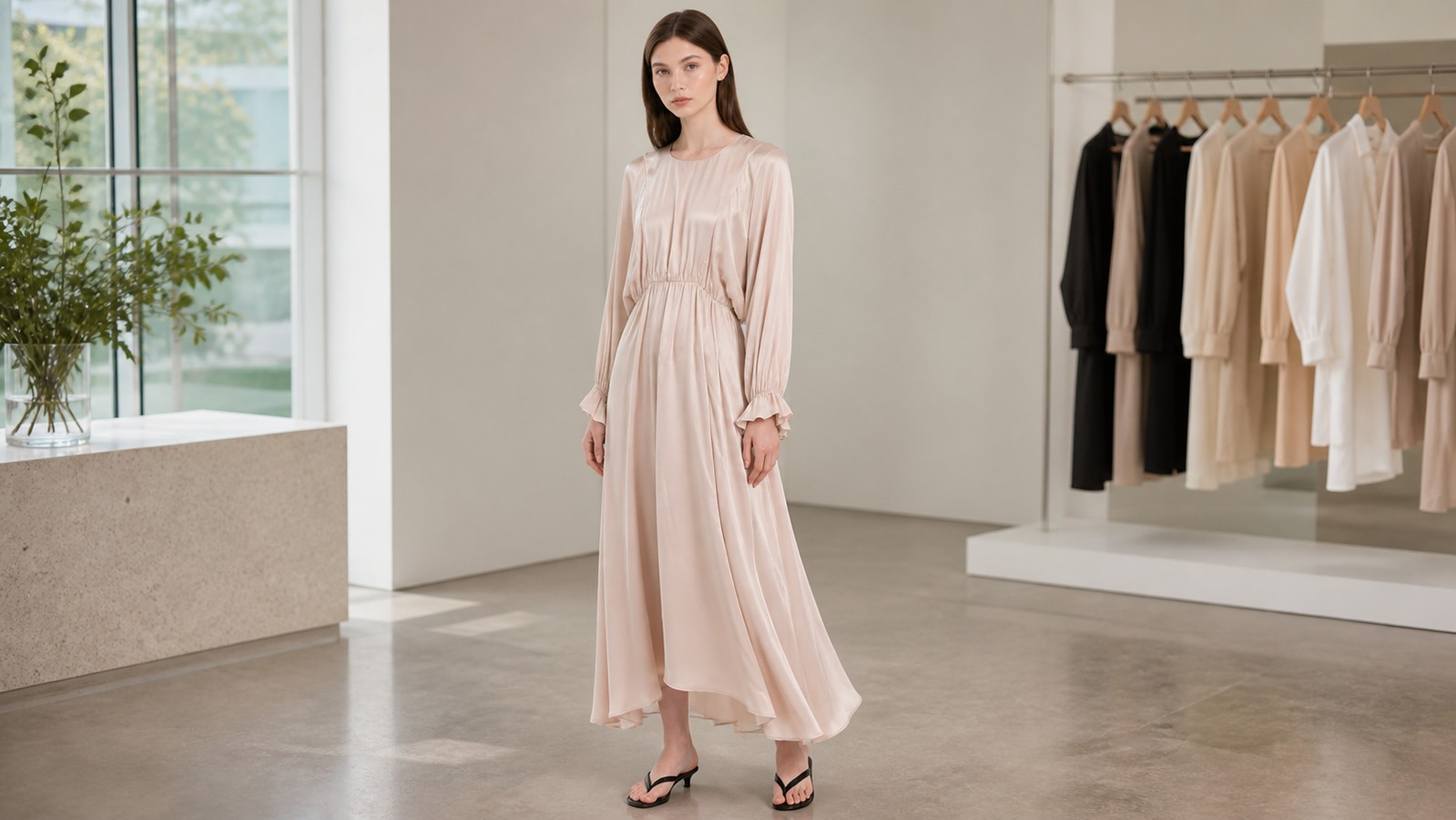
Occasionwear buyers need statement dresses that photograph clearly, support multiple merchandising stories and still give development teams measurable review points. FROM ATTITUDE model SS20202 combines a pale champagne-pink satin look, pleated lantern sleeves, ruffle cuffs, a softly gathered waist and a fluid maxi hem in a spring and summer style designed for B2B sourcing conversations.
A Fluid Silhouette for Occasion and Evening Ranges
A long dress can serve as a visual anchor when a collection needs one refined silhouette that connects daytime polish with evening presentation. SS20202 uses a gently gathered high waist and an A-line maxi shape to create a continuous line from the fitted upper body to the softly moving hem. Its pale neutral color gives buyers a restrained base for assortment planning while the satin-look surface introduces light and movement.
The product page places the style within spring and summer, casual, evening, occasion and workwear-related merchandising contexts. Those references allow different buyers to position the garment according to their own customer and channel. An occasionwear retailer may focus on the sleeve and hem movement, while a broader womenswear brand can present it as a polished long dress within a seasonal capsule.
Because the garment already has a clear tonal identity, supporting products can remain simple. Neutral outer layers, understated accessories and complementary solids can keep the focus on the lantern sleeves, waist gathering and reflective fabric surface. This approach creates a coherent merchandising story without adding unsupported promises about performance or sell-through.
Sleeve, Waist and Hem Details Worth Reviewing
The sleeves are central to the design. The product highlights describe a pleated lantern shape finished with ruffle cuffs, creating volume through the arm and a more detailed finish at the wrist. During sample review, buyers can examine how the pleats fall from the shoulder, whether the sleeve volume remains balanced from front and side views, and how the cuff sits when the arm is relaxed or moving.
At the waist, subtle gathering and a gently elasticized construction define the transition into the skirt. The high-waisted placement affects proportion, so the sample should be assessed together with the bust, waist and total length rather than as an isolated detail. The back view also matters because the gathered line continues around the body and influences the overall drape.
- Sleeve balance: compare pleat direction, lantern volume and cuff placement from multiple angles.
- Waist position: review gathering placement against the intended base size and customer.
- Hem behavior: assess the long A-line skirt while standing, walking and turning.
- Surface appearance: check how the pale satin-look fabric reflects studio and retail lighting.

Use the Declared Fabric Data as a Starting Point
The specification table identifies a woven material and declares the fabric composition as 48% artificial silk and 52% Rayon. The page also describes the dress as soft, lightweight and breathable, with a fluid drape. These product-specific statements provide a documented basis for the first discussion, but the physical sample remains the appropriate place to assess hand feel, opacity, weight, recovery and the way the surface handles light.
Fabric review should connect directly to the design. The material needs to support the pleated lantern sleeves without making them appear rigid, allow the ruffle cuffs to remain visible and fall smoothly from the gathered waist into the long hem. Buyers can record observations under those checkpoints so that sample comments stay tied to the actual style rather than to generic expectations about satin garments.
Color assessment is equally practical. A pale champagne-pink tone can shift under warm showroom lighting, daylight and studio flash. Reviewing the sample in the lighting conditions used for ecommerce photography, line-sheet images or retail presentation helps buyers align the approved visual direction before production.
Translate the Size Table into Fit Checkpoints
SS20202 is declared in XS, S, M, L and XL, with custom grading available. The published table includes S, M and L entries. For the two internally consistent centimeter rows, S lists an 82 cm bust, 70 cm waist and 140 cm length, while M lists an 86 cm bust, 74 cm waist and 142 cm length. These values give development teams clear starting checkpoints for the sample conversation.
The extracted L-length value is not reliable enough to use, so buyers should confirm the complete grade rather than extrapolating it. The page also does not provide extracted XS or XL measurement rows. A responsible fit plan therefore begins with an approved base size, verifies the published S and M points where relevant, and confirms every additional size through the buyer's own grading requirements.
- Select a base size: identify the fit model and the approved sample size before review.
- Check measurable points: compare bust, waist and length with the confirmed specification.
- Review style-specific fit: assess sleeve volume, cuff position, waist gathering and hem movement.
- Approve the full grade: document XS, L, XL and any custom-size requirements before bulk production.
Build a Clear Visual Merchandising Sequence
The dress offers several documented visual angles for buyer-facing content. A front view introduces the long silhouette and gathered waist. A three-quarter view shows the lantern volume and cuff detail. A rear view confirms how the waist and skirt fall around the body. A movement frame communicates the fluid hem, while a close crop can present the fabric surface and sleeve pleats without inventing new construction features.
For line sheets and wholesale presentations, buyers can pair those views with concise measurement and development notes. The goal is not to overload a fashion image with specifications, but to make the campaign sequence consistent with what the product team will later review. This alignment helps creative, merchandising and sourcing teams discuss the same garment identity.
Within a spring or summer capsule, the pale dress can sit beside darker evening options, clean tailoring or quieter separates. The product page supports casual, occasion, evening and workwear-related contexts, giving brands room to select the most relevant story for their customer rather than presenting every scenario at once.
Plan Samples, MOQ and Production Milestones
Customized samples are supported, with a stated sample time of 7–15 working days. Production is listed at 25–35 days after sample approval, and the declared minimum order quantity is 100 pieces per style per color. These values are useful planning inputs, but the final schedule and commercial terms should be confirmed for the buyer's specific order.
A practical timeline should separate sample creation, fit review, written approval and bulk production. For SS20202, approval notes can cover the fabric surface, color direction, lantern sleeve volume, ruffle cuff appearance, waist placement, confirmed size grade and hem behavior. Recording decisions against those points gives both parties a shared reference before the listed production window begins.
The product page lists DHL, EMS, UPS, FedEx, sea and air as available shipping routes. Buyers can discuss the final method against quantity, delivery timing and destination once the order framework is known. Shipping selection should remain part of the project quotation rather than an assumption made from the product page alone.
Coordinate OEM, ODM, Branding and Packaging
The listing supports OEM, ODM, custom-label and private-label services. Packing is declared as an individual poly bag plus carton, with custom packaging available. These options allow fashion brands, retailers, wholesalers and distributors to bring the garment into a defined program, but each project still needs a clear brief covering what will remain standard and what requires customization.
An effective inquiry can identify the selected size range, color direction, branding scope, packaging requirements, quantity per style and color, sample approval process and requested delivery window. Providing that context helps the supplier respond to the actual collection plan rather than to a generic request for price.
- Product scope: SS20202, intended season, assortment role and selected color direction.
- Fit scope: base size, target customer, confirmed measurements and custom grading needs.
- Brand scope: OEM or ODM expectations, labels and private-label requirements.
- Order scope: quantity, packaging, sample timing, approval owners and delivery planning.
Discuss Your Collection Requirements
Review the SS20202 satin-look lantern sleeve maxi dress and contact FROM ATTITUDE to discuss samples, fit, grading, OEM/ODM development, branding, packaging and order planning.