
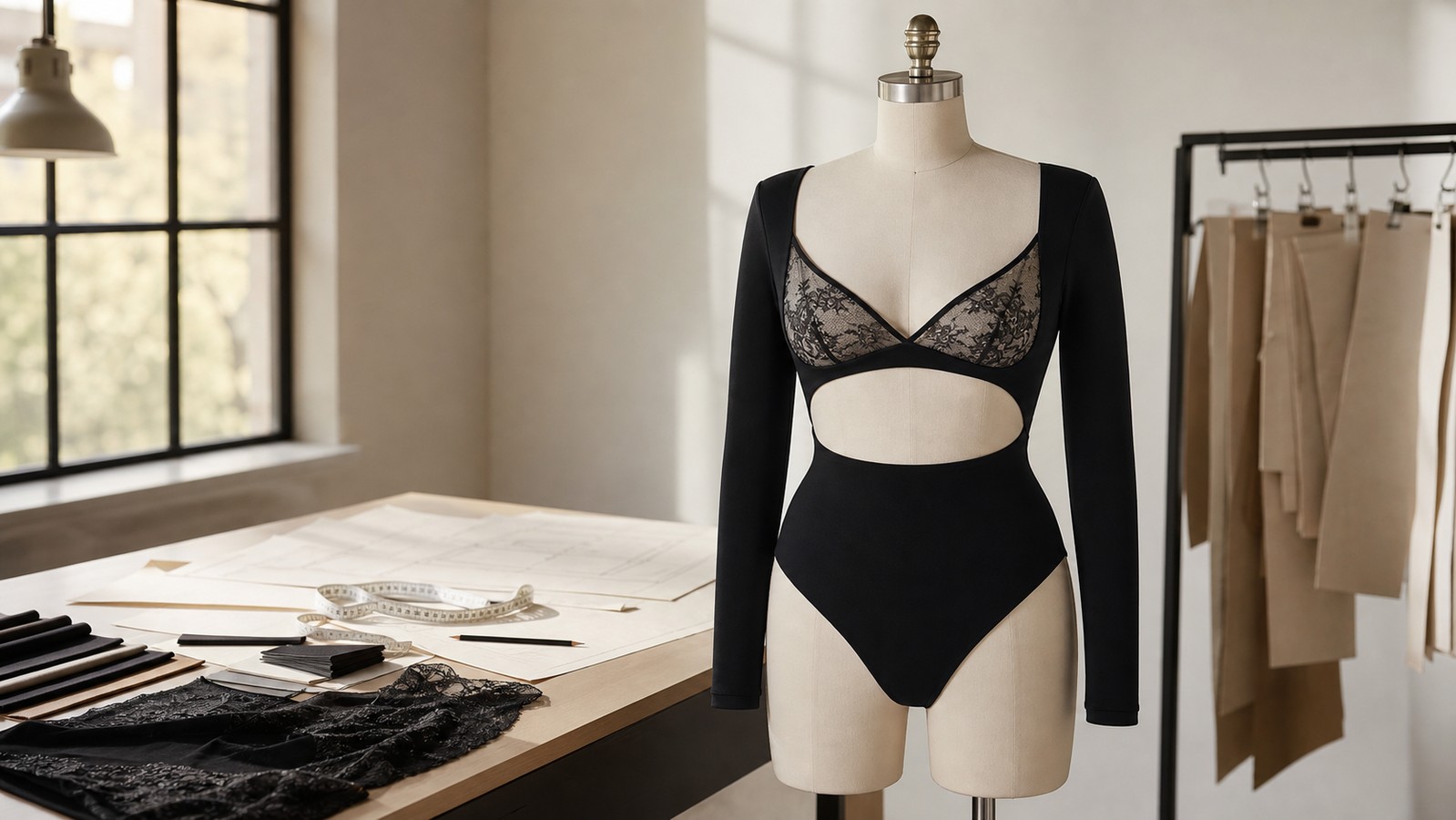
For lingerie and fashion businesses, a successful bodysuit program begins with a clear product direction and a manufacturing brief that covers fit, grading, branding, sampling and bulk production. FROM ATTITUDE model CS3WLT16 offers a defined starting point: a black long-sleeve, high-waist one-piece silhouette with a waist cutout and lace decoration.
A Distinctive Foundation for a Bodysuit Assortment
Bodysuits can work across lingerie, occasionwear and fashion-led layering collections, but the commercial opportunity depends on how clearly the garment is positioned. CS3WLT16 uses a long-sleeve upper body, a high-waist brief shape and an open waist section to create a recognizable silhouette. Lace is the product's corroborated decoration detail, bringing visual contrast to the otherwise black design without requiring an elaborate color story.
For a wholesale buyer, this type of product can serve as a statement piece within a coordinated capsule. It may sit alongside complementary lingerie, lounge or evening separates while maintaining a consistent brand point of view. The product page identifies the base as stretch knit fabric and declares a composition of 55% polyester, 40% acrylic and 5% nylon. Those details give development teams a concrete starting point for sampling conversations.
The design should still be evaluated as a complete branded product rather than only as a visual reference. Buyers can use the sample stage to assess proportion, stretch behavior, ease of dressing, lace placement and the relationship between the upper body and high-waist section. The goal is to align the supplied sample with the intended consumer, size architecture and merchandising context before bulk approval.
Build the Size Strategy into the Brief
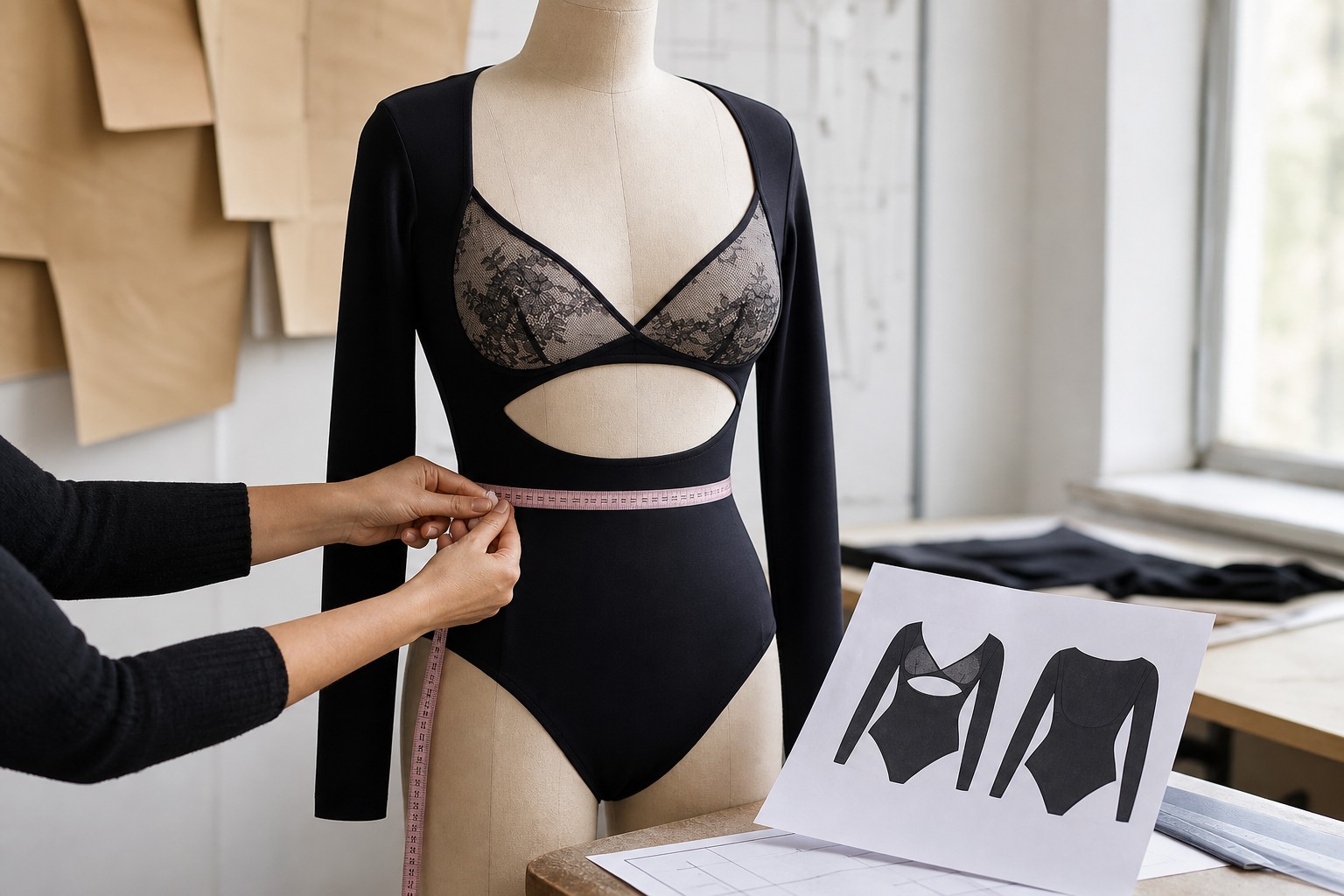
Inclusive sizing works best when it is planned at the beginning of development. The product listing names sizes M, L, XL, 2XL, 3XL, 4XL, 5XL and 6XL, and it also states that custom grading is available. That range can help a brand frame its initial assortment, but final size specifications should be agreed through the buyer's own measurement requirements, target-customer data and sample approvals.
The published size chart provides reference measurements for M, L and XL. For size M, it lists a 72 cm length, 72 cm waist and 102 cm hip. Size L is shown at 73 cm length, 74 cm waist and 106 cm hip, while XL is shown at 74 cm length, 76 cm waist and 110 cm hip. These numbers are traceable to the product page, but they should be treated as source data for discussion rather than a replacement for a signed specification sheet.
A practical development brief can identify the brand's base size, intended fit, grading increments, priority fit points and tolerance expectations. It can also clarify whether the product is being merchandised as lingerie, a fashion top or a crossover piece. That positioning influences how buyers review coverage, support, layering potential and the overall presentation of the finished garment.
Connect Product Development with Brand Presentation
The product page lists OEM and ODM service together with custom labels, custom packaging bags and custom tags. This combination allows a sourcing team to discuss the garment and its market presentation within the same development program. A private-label plan can cover label placement, required tag information, packaging dimensions and any artwork supplied by the buyer.
Before sampling, brands should prepare a concise brand pack with approved logo files, label copy, color references, care-information requirements and packaging instructions. Supplying these assets early helps prevent a visually strong garment from reaching the final stage with unresolved branding details. It also gives both parties a shared reference for approving trims and presentation components.
Individual poly-bag and carton packing is listed as the standard arrangement, with custom packaging available. Buyers can therefore begin with the stated packing method and specify any changes needed for wholesale distribution, e-commerce fulfillment or retail-ready presentation. Packaging requirements should be confirmed alongside carton marking and shipping plans, not left until the end of production.
Turn Sampling into a Decision Process
The listing states that customized samples are supported and gives a sample time of 7–15 working days. A sample is most useful when the buyer defines the decision it must support. That may include confirming the overall silhouette, checking lace appearance, reviewing measurements, evaluating label placement and approving packaging components that are ready at the same stage.
An organized sample review reduces ambiguity. Comments can reference measurement points, photographed areas and the corresponding line on the specification sheet. For this bodysuit, the review should address the complete relationship among sleeve length, neckline, upper lace section, cutout position, waist and hip. Each requested change should be specific enough to verify on the next sample.
Brands should also separate aesthetic preferences from objective specification changes. A comment such as “adjust the waist measurement to the approved chart” is easier to execute than a general request to “improve the fit.” Clear approvals create a stronger foundation for grading and bulk production, especially when a program extends across the M–6XL range or uses custom grading.
Plan the Commercial Path to Bulk Production
The product listing specifies a minimum order quantity of 200 pieces per style per color. It also states a production lead time of 25–35 days after sample approval. These figures give buyers a planning baseline for launch calendars, but the final schedule should be confirmed for the approved specification, order quantity, branding package, material availability and delivery arrangement.
A disciplined bulk order handoff brings all approved information into one controlled package. The product page lists DHL, EMS, UPS, FedEx, sea and air shipping options. The buyer and manufacturer can choose among appropriate routes after considering order volume, destination, timing and commercial terms. Shipping decisions should be documented separately from the garment approval so that the product and logistics milestones remain clear.
- Confirm the approved sample and signed measurement specification.
- Record color, fabric, lace and trim decisions for the bulk order.
- Approve labels, tags, packaging and carton-marking instructions.
- Align quantity, size breakdown, timing and shipping requirements.
What to Include in Your First Inquiry
A focused inquiry helps move the conversation from product discovery to an actionable development plan. Reference model CS3WLT16 and explain your market, intended use, target size range and preferred launch timing. If custom grading is required, identify the size architecture and measurement resources you can provide. If the listed range is suitable, state which sizes and estimated quantity mix you want to evaluate.
Include branding expectations as well. A buyer seeking a custom label, packaging bag or tag should describe the required format and share artwork when available. Ask which details are needed for a quotation and sample plan. This approach gives the manufacturer enough context to address garment development and brand presentation together, while keeping every requirement traceable to a written brief.
It is also useful to identify the decisions that remain open. A first inquiry does not need to solve every technical question, but it should distinguish fixed requirements from items that need manufacturer input. For example, the brand may have a fixed target size range and label system while remaining open to recommendations about the sampling sequence or shipping route. Clear priorities make the response more relevant and help the parties build a realistic approval timeline around the listed sample and production periods.
Discuss Your Bodysuit Development Program
If CS3WLT16 matches your assortment direction, contact FROM ATTITUDE with your target sizes, estimated quantity, branding requirements and sampling goals. The product page provides the design reference and listed sourcing details needed to begin a structured B2B conversation.