
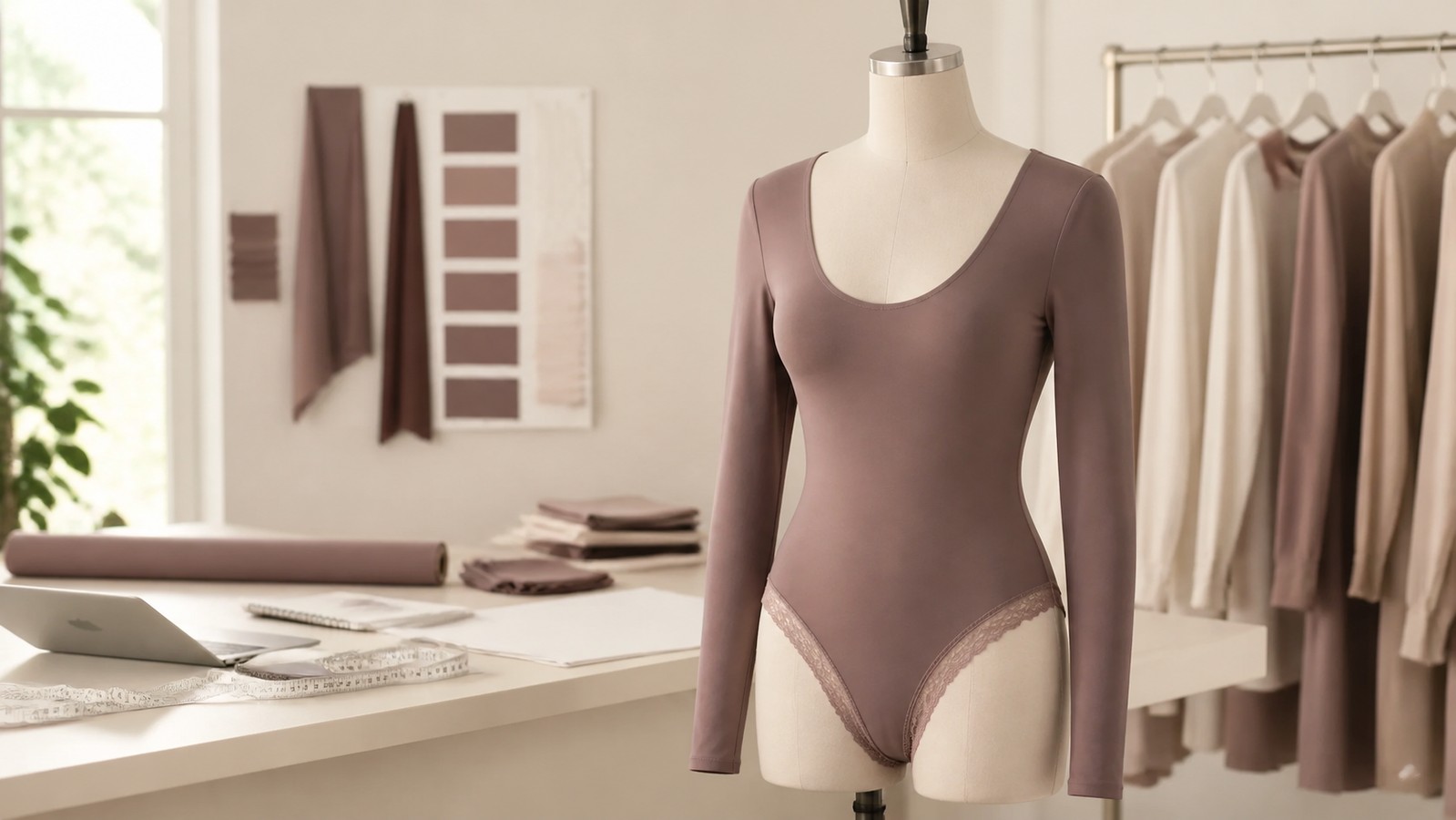
For fashion, shapewear and intimates buyers, an inclusive bodysuit program needs a clear connection between consumer benefit, size architecture, sample approval and private-label presentation. FROM ATTITUDE model CS3WLT15 offers a practical starting point with its second-skin sculpt concept, double-layer smoothing fit, deep scoop neckline and lace-trim high-cut design.
A Versatile Foundation for Inclusive Assortments
A bodysuit can serve several merchandising roles within one collection. It may be presented as a smoothing base layer, a sleek standalone top or a styling foundation beneath tailoring and knitwear. CS3WLT15 is positioned around a body-hugging shape designed to smooth the tummy, contour the waist and enhance natural curves while moving comfortably with the wearer.
The product highlights describe a double-layer smoothing fit and a lightweight second-skin finish intended to stay in place. They also identify a deep scoop neckline that supports layering or standalone styling. These details give buyers a clear creative direction without requiring unsupported performance claims. Each benefit should still be reviewed on an approved sample for the target customer and intended wearing occasion.
Lace is the product's corroborated decoration detail. The listed high-cut design uses lace trim to add a softer visual finish while elongating the silhouette. For brands, this combination can bridge functional base-layer positioning and fashion-led presentation. It also creates opportunities to coordinate the bodysuit with broader lingerie, lounge, tailoring or seasonal capsule stories.
Translate the Published Size Data into a Fit Brief
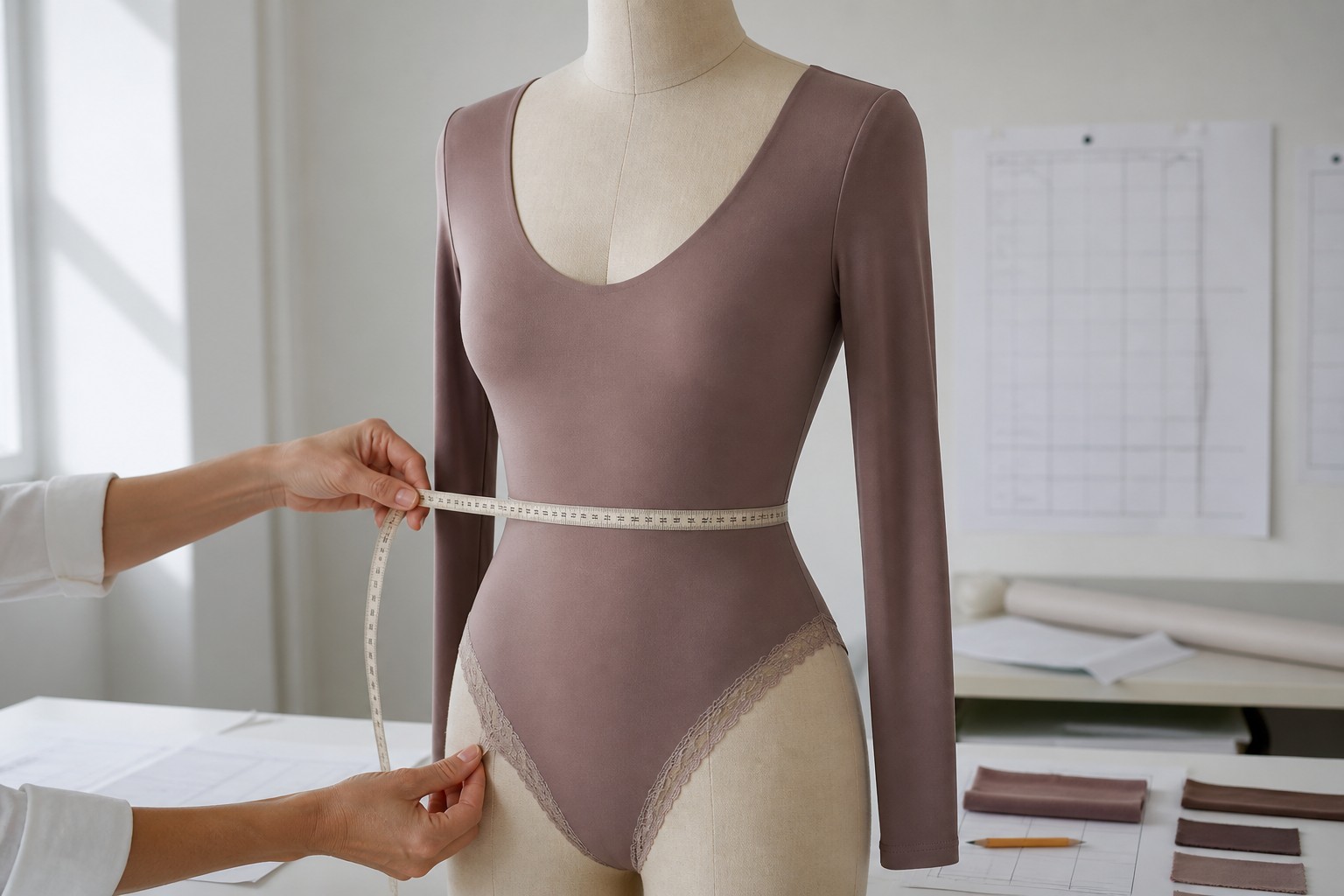
The product listing names sizes M, L, XL, 2XL, 3XL, 4XL, 5XL and 6XL, with custom grading also available. That range can support an inclusive assortment strategy, but the development process should begin with a written fit brief. Buyers can define their base size, priority measurements, intended compression level, neckline position, leg opening and target use before requesting a sample.
The published chart supplies reference measurements for M, L and XL. Size M lists a 72 cm length, 72 cm waist and 102 cm hip. Size L lists a 73 cm length, 74 cm waist and 106 cm hip, while XL lists a 74 cm length, 76 cm waist and 110 cm hip. These checkpoints are useful source data for sample review, but they should not replace a signed specification sheet.
Custom grading can be discussed when the brand's measurement architecture differs from the listed range or when additional sizes need development. A good grading conversation includes the intended customer, base-size approval, measurement increments and the points where the silhouette must remain visually consistent. This is especially important for a close-fitting product whose neckline, waist and leg opening interact across the size range.
Use Sampling to Validate the Product Promise
The listing states that customized samples are supported and gives a sample time of 7–15 working days. Sampling should convert the marketing direction into observable approval points. For CS3WLT15, buyers can review the double-layer construction, overall smoothing effect, scoop-neck proportion, lace placement, high-cut leg line and the garment's ability to remain in position during normal movement.
A structured sample review separates objective measurements from subjective preferences. Measurement comments can reference the approved chart and exact points of measure. Aesthetic comments can identify the desired neckline depth, lace presentation or balance of the silhouette. Clear photographs, numbered notes and an updated specification sheet make each revision easier to verify.
The product highlights describe the garment as suitable for comfortable everyday wear and as a layering or standalone option. Buyers should test those intended scenarios during review. The goal is not to assume an outcome from the product description, but to confirm that the approved sample supports the brand's fit standard, styling direction and consumer communication.
Connect the Garment with Private-Label Presentation
The product page lists OEM and ODM service together with custom labels, custom packaging bags and custom tags. This allows the development brief to address both the garment and its final brand presentation. A buyer can specify label artwork, required tag information and packaging objectives while the product sample is being reviewed.
Preparing brand assets early reduces late-stage uncertainty. The initial pack can include approved logo files, label copy, care-information requirements, tag dimensions and packaging artwork. Any branded component should be reviewed for legibility, placement and consistency with the intended sales channel before bulk approval.
Buyers should state their preferred presentation and ask the supplier to confirm the final packing specification for the order. The brief can cover individual garment protection, carton marking, retail preparation and any packaging artwork supplied by the brand. Documenting these points during development keeps presentation decisions connected to the commercial agreement.
Plan MOQ, Timing and Delivery as One Workflow
The product listing specifies a minimum order quantity of 200 pieces per style per color and a production lead time of 25–35 days after sample approval. These figures provide a planning baseline for launch calendars and order allocation. The final schedule should still be confirmed against the approved specification, size breakdown, branding components and delivery requirements.
Shipping options listed on the page include DHL, EMS, UPS, FedEx, sea and air. The appropriate route depends on order volume, destination, required timing and agreed commercial terms. Buyers can keep product approval and logistics milestones separate while ensuring both are complete before the order moves forward.
A practical order calendar can work backward from the required delivery date. It should allow time for sample review, revision if needed, branding approvals, size allocation, bulk production and the chosen shipping route. The listed periods are planning references rather than a substitute for a confirmed order schedule. Recording the owner and approval date for each milestone gives the buyer and supplier a shared view of progress.
- Approve fit: confirm the sample, measurements and grading direction.
- Approve presentation: finalize labels, tags and packaging requirements.
- Confirm allocation: document color, size breakdown and total quantity.
- Align delivery: confirm the production window and shipping plan.
The size breakdown deserves its own final review because it affects both production planning and commercial allocation. Buyers can compare the approved demand plan with the listed M–6XL range, identify any custom-graded sizes and confirm the quantity assigned to each size. The same record can link each size to the approved measurements and sample status, helping prevent assumptions from entering the bulk handoff.
Prepare a More Actionable First Inquiry
A focused first inquiry helps the manufacturer respond with the right development questions. Reference model CS3WLT15 and explain the intended market, target size range, styling role and estimated order quantity. If custom grading is required, identify the available measurement resources and the size architecture the brand wants to develop.
Include the commercial details that are already known. Buyers can state their target launch timing, branding components and preferred delivery destination. They can also distinguish fixed requirements from items that need supplier input. This makes it easier to build a realistic sample and approval timeline around the listed 7–15 working-day sample period and the stated production window after approval.
A written inquiry should request the exact approved material specification and final packing method for the proposed order. Buyers can also ask which files, measurements and branding assets are required before sampling begins. Converting open questions into a checklist protects claim accuracy and gives both parties a clearer basis for quotation, development and approval.
Discuss Your Inclusive Bodysuit Requirements
Review Second Skin Sculpt Bodysuit model CS3WLT15, then contact FROM ATTITUDE with your target sizes, estimated quantity, grading needs, branding assets and sampling priorities to begin a structured B2B development conversation.