
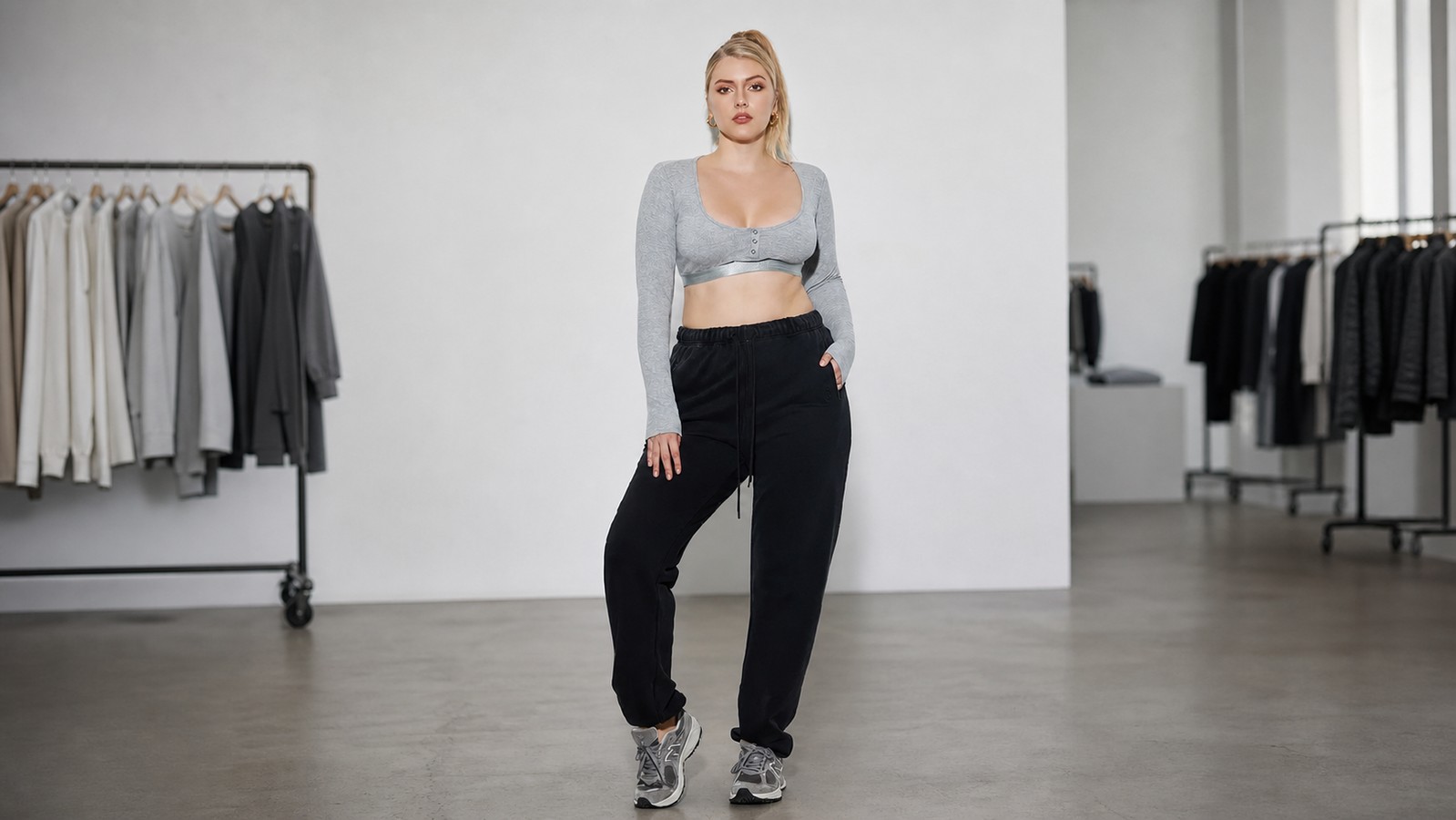
Inclusive casualwear buyers need more than a familiar silhouette. They need a style that can be reviewed against measurable fit points, organized across a broad size range, and connected to a practical sampling and production plan. This black plus-size fleece jogger brings those elements together for brands, retailers, wholesalers, and private-label teams building lounge, streetwear, or everyday assortments.
A Versatile Foundation for Inclusive Casualwear
A black jogger can support several commercial stories without asking a merchandising team to create a complicated styling system. The relaxed high-waist shape works naturally in loungewear, active-inspired casualwear, travel capsules, and streetwear collections. A matching drawstring, side pockets, and elastic ankle cuffs keep the product visually recognizable as a jogger while leaving room for buyers to coordinate it with sweatshirts, knit tops, jackets, or seasonal layers.
For assortment planning, that versatility can simplify color and outfit decisions. Black provides a neutral anchor for coordinated sets and mixed separates, while the loose leg line supports an easy, casual presentation. Buyers can position the style as a core replenishment item, a foundation for a capsule, or a companion bottom within a broader inclusive range. The important step is to preserve the intended silhouette through sample review rather than treating every size as a simple numerical enlargement.
Verified Details That Shape the Product Brief
The product-specific information identifies an adjustable high-waist design with a high-density elastic waistband and a matching drawstring. It also describes deep side pockets with double-stitch reinforcement and elastic cuffs that create the tapered jogger finish. These are useful briefing points because they affect both appearance and daily wear: the waistband establishes the top line, the pockets add practical storage, and the cuffs control how the leg finishes at the ankle.
During development, each of those details deserves a visible checkpoint. A team can review whether the drawstring sits centrally, whether the pocket openings remain smooth, and whether the cuff holds the intended shape without changing the relaxed character of the leg. The product is listed under model CS3WKZ06. Keeping that model reference attached to comments, revised measurements, and approval notes helps prevent information from different styles being mixed during a multi-product sourcing program.
Build the Size Architecture from Measurable Checkpoints
The declared size range runs from M through 6XL, and custom grading is available. The published chart supplies garment measurements for M, L, and XL. Length progresses from 100 cm in M to 102 cm in L and 104 cm in XL. Waist moves from 74 to 78 to 82 cm, while hip moves from 115 to 120 to 125 cm. Those figures give product teams concrete points to compare across the listed chart sizes.
Because the declared commercial range continues beyond XL, buyers should use the available chart as a starting reference and request the complete grading plan for the intended order. The goal is not to infer missing measurements. It is to establish a controlled review process in which every approved size has its own documented targets. A practical size-review checklist can include:
- Length progression: confirm how the leg length changes across the planned range.
- Waist behavior: review the elastic waistband and drawstring together, not as separate components.
- Hip ease: compare the garment measurement with the intended relaxed silhouette.
- Pocket position: check access, opening shape, and visual balance on each sampled size.
- Cuff finish: verify that the ankle remains secure while the leg still reads as relaxed.
Turn Measurements into a Focused Fit Review
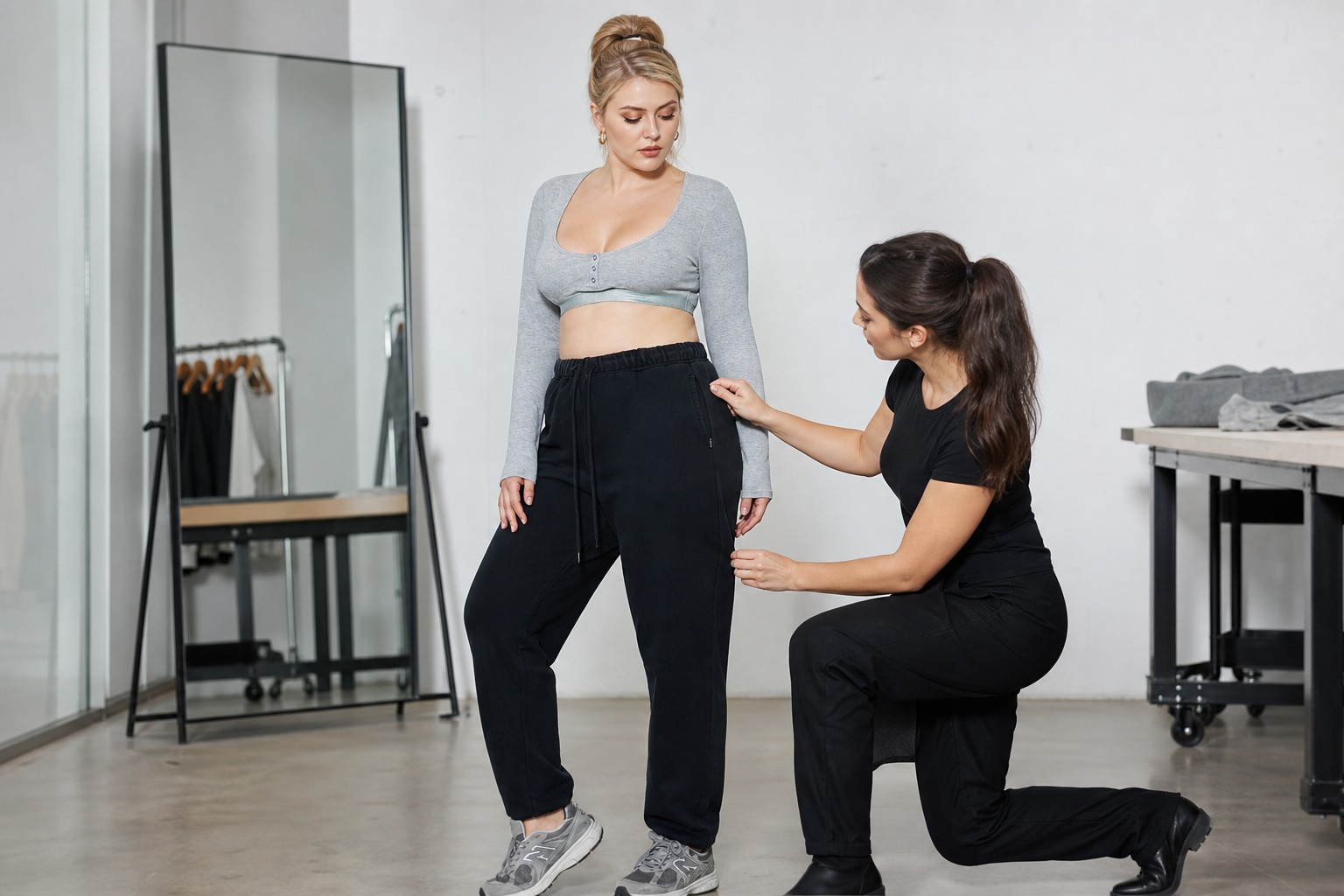
A useful fit review connects numbers to how the garment presents on the body. Start with the waistband level, then observe the front rise area, hip ease, side seam, pocket opening, leg volume, and cuff placement. Comments should describe a specific location and the desired change. That approach is more actionable than broad notes such as making the whole garment larger or smaller, especially when the collection covers an extended range.
The black color also makes lighting and surface inspection important. Review the sample under even light so seam alignment, pocket edges, and the silhouette are visible. Photograph consistent front, side, and back positions for the approval record. The objective is a repeatable decision trail: the measurement target, the observed result, the approved correction, and the final confirmation should all point back to the same model and sample stage.
Plan Private-Label Decisions Before Sampling
The product listing supports OEM and ODM service, custom labels, custom tags, and custom packaging bags. These options let a buyer connect the jogger to a brand system, but each selection adds information that should be settled early. Label placement, tag content, packaging presentation, color choices, and the complete size breakdown should appear in one controlled brief so the sample can represent the intended commercial product.
A concise development sequence helps keep the project reviewable from first request through bulk approval:
- Define the assortment role: decide whether the jogger is a core separate, a coordinated set component, or part of a seasonal capsule.
- Confirm the target range: list every required size and request the matching graded measurements.
- Prepare brand inputs: organize label, tag, and packaging requirements before the sample request.
- Review one comment set: consolidate fit and construction feedback so revisions do not conflict.
- Approve the reference: record the accepted sample and measurements before bulk timing begins.
Use the Stated Timeline as a Planning Framework
Custom samples are supported, with sample time stated as 7–15 working days. Bulk lead time is listed as 25–35 days after sample approval. For a buyer, the phrase after sample approval matters: the production clock should be planned around a clear approval milestone, not the date of the first inquiry. Internal review time, revision decisions, size confirmation, and brand-material readiness all sit before that milestone.
A realistic calendar should therefore reserve time for receiving the sample, conducting the fit session, consolidating comments, and confirming any revision. If a launch depends on several tops, outerwear pieces, or colorways arriving together, align their approval gates before committing to a campaign date. The stated windows provide a useful planning baseline, while the final schedule should be confirmed against the exact specification, quantity, customization, and shipping plan for the order.
Translate the MOQ into a Clear Order Structure
The declared minimum order quantity is 100 pieces per style per color. That unit matters when planning a program: quantities should be organized by style and color first, then distributed across approved sizes. A buyer considering more than one color should calculate each color as its own minimum rather than assuming a combined total. This creates a clearer basis for budget, size allocation, and packaging preparation.
The listing also names DHL, EMS, UPS, FedEx, sea, and air as shipping options. Each route has a different operational role, so the final choice should follow the confirmed quantity, carton plan, destination, and required arrival date. Keep transport assumptions out of early promotional promises until the order details are fixed. A disciplined sourcing brief separates product approval, production timing, and logistics confirmation while keeping all three visible in the same launch plan.
Discuss Your Collection Requirements
Review the full product page for the plus-size fleece jogger, then share your target sizes, quantity by color, branding inputs, and sample priorities. FROM ATTITUDE can use that information to discuss a wholesale, private-label, OEM, or ODM program grounded in a clearer product brief.