
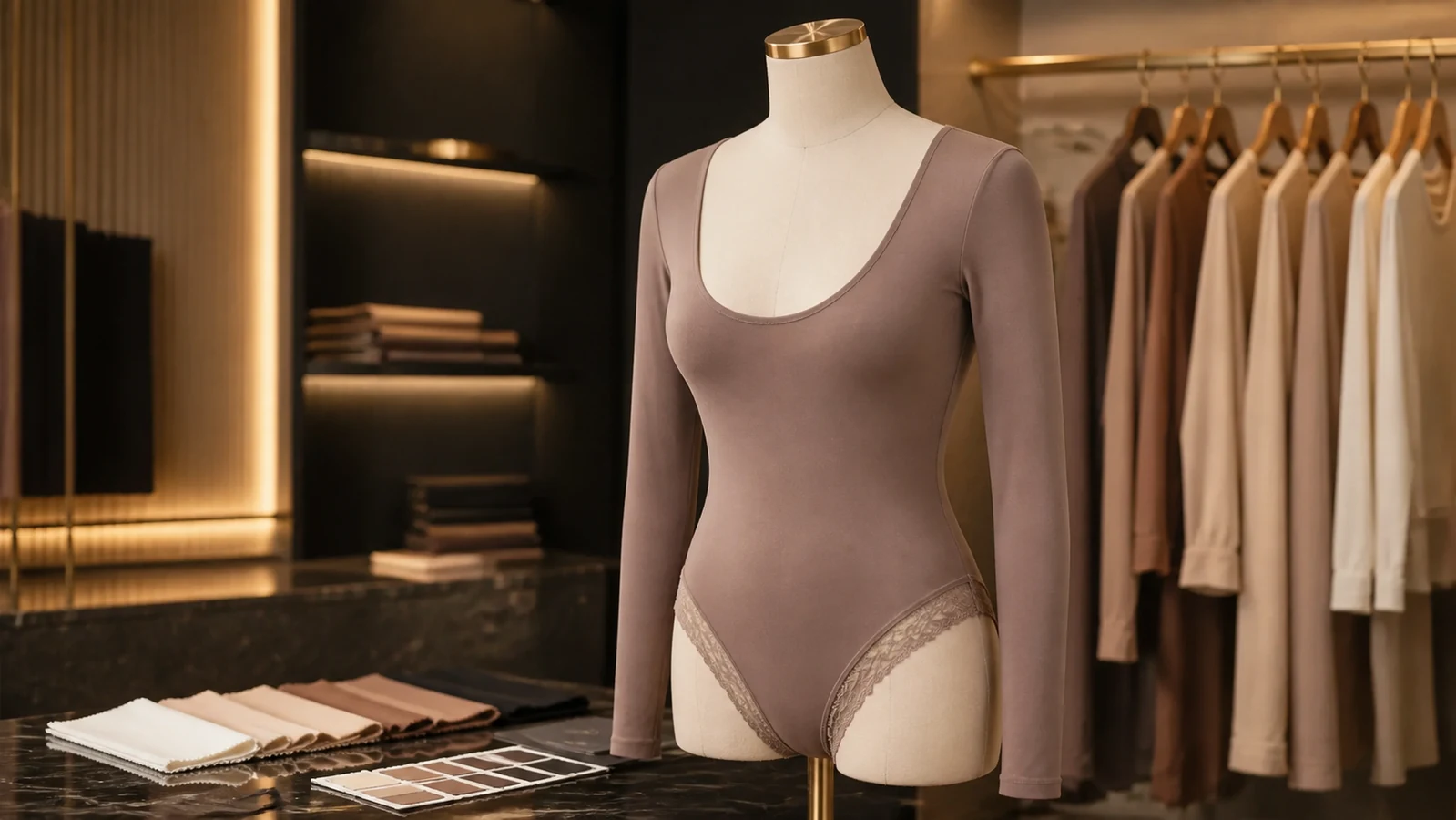
Buyers reviewing a second skin sculpt bodysuit should verify garment measurements, fabric declaration, trim execution, stretch behavior, and sample consistency.
Read the Verified Silhouette Before Reviewing Claims
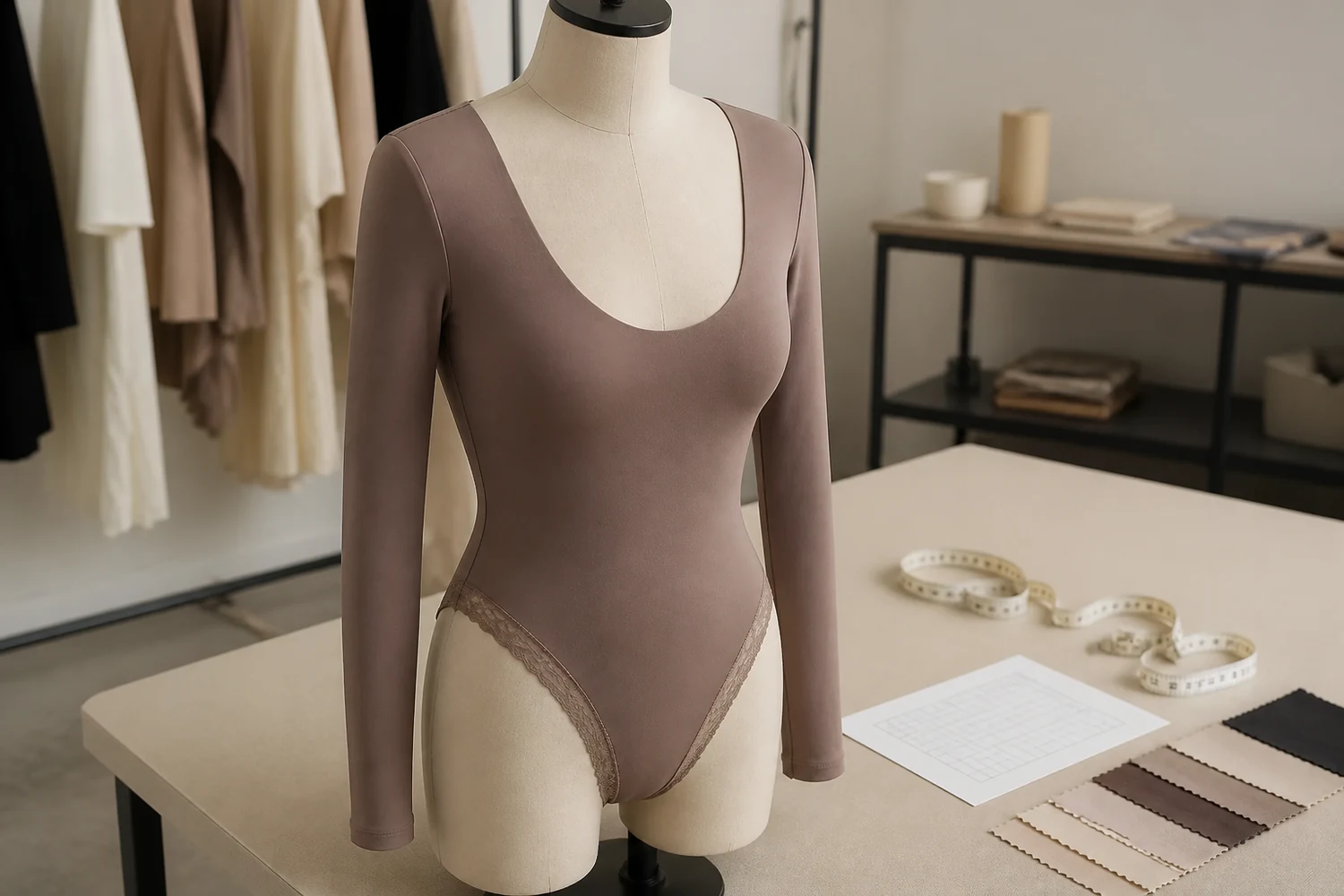
The selected style is model CS3WLT15, presented as a long-sleeve, body-hugging bodysuit with a deep scoop neckline, a high-cut leg, and lace decoration. Those elements define the visible silhouette that a sample should reproduce. The page also describes a double-layer smoothing fit and a lightweight, breathable, no-roll feel. These are supplier-declared performance descriptions, so buyers should translate them into observable sample checks rather than treating them as unconditional outcomes for every wearer.
Separate Construction from Wearer Outcomes
Construction can be checked through neckline shape, sleeve balance, torso length, seam placement, leg opening, and lace application. Perceived smoothing, comfort, support, and stay-in-place behavior depend on size selection, body shape, stretch, recovery, movement, and wear duration. A useful review therefore records what the garment does on the intended fit models under defined conditions. The result becomes a repeatable approval note rather than a broad promise.
Keep the Styling Direction Consistent
The source supports layering and standalone presentation, plus casual and everyday assortments, cold weather assortments, and workwear and tailored assortments. Each context places different demands on coverage, neckline exposure, sleeve mobility, surface smoothness, and compatibility with outer garments. A buyer can approve one core silhouette while documenting how the bodysuit should be styled in each channel. That distinction helps merchandising teams avoid presenting one sample as proof of every use case.
| Size | Published garment measurements | Buyer implication |
|---|---|---|
| M | Length 72 cm, waist 72 cm, hip 102 cm | Confirm the measurement method and compare the physical sample. |
| L | Length 73 cm, waist 74 cm, hip 106 cm | Check grade movement and fit-model results at the next size. |
| XL | Length 74 cm, waist 76 cm, hip 110 cm | Use the listed point as a sample baseline, not a body-size claim. |
Use the Size Chart as a Sample-Control Starting Point
The published chart covers M, L, and XL with length, waist, and hip values in centimetres and inches, while the declared available range extends from M through 6XL with custom grading available. The chart values should be treated as finished-garment references because the page does not define them as body dimensions. International sizing guidance distinguishes body measurements from garment measurements, so a buyer should request the supplier's measurement diagram and tolerances before comparing the chart with a target customer profile.
Build a Consistent Measurement Method
A practical inspection sheet identifies the garment state, measurement points, tape path, closure position, and whether stretch is relaxed or extended. The reviewer should then record torso length, waist, hip, sleeve, neckline, and leg-opening observations on every sample size relevant to the launch. Because only three sizes have numeric values on the page, measurements for additional sizes need supplier confirmation rather than mathematical inference.
- Confirm the chart basis: determine whether every value is a flat, circumference, or route measurement.
- Record sample conditions: measure the garment relaxed and under the agreed inspection method.
- Review the grade: compare movement between M, L, and XL before approving larger custom grades.
- Fit on intended bodies: assess coverage, mobility, neckline position, and leg opening on suitable fit models.
- Freeze the record: retain the accepted chart, measurement diagram, tolerance, and approved sample reference.
Assess Fabric, Stretch, and Lace as One System
The page declares a stretch-knit fabric composed of 55% polyester, 40% acrylic, and 5% nylon. It also lists lace as the decoration. The separate material field conflicts with the fabric-type description, so buyers should not repeat the conflicting phrase as a confirmed specification. Instead, the declared composition should be checked against the sample documentation and the applicable destination-market labeling requirements.
Test Recovery Alongside Visual Appearance
A second skin sculpt bodysuit relies on fabric behavior and pattern shape working together. During development, a buyer can review hand feel, opacity, extension, recovery, seam response, surface change, and shape after movement or laundering under an agreed method. These checks do not assume a particular test result. They create evidence for whether the approved sample supports the intended close fit without distorting the neckline, sleeves, torso, or leg opening.
Inspect Lace Where It Meets Stretch Fabric
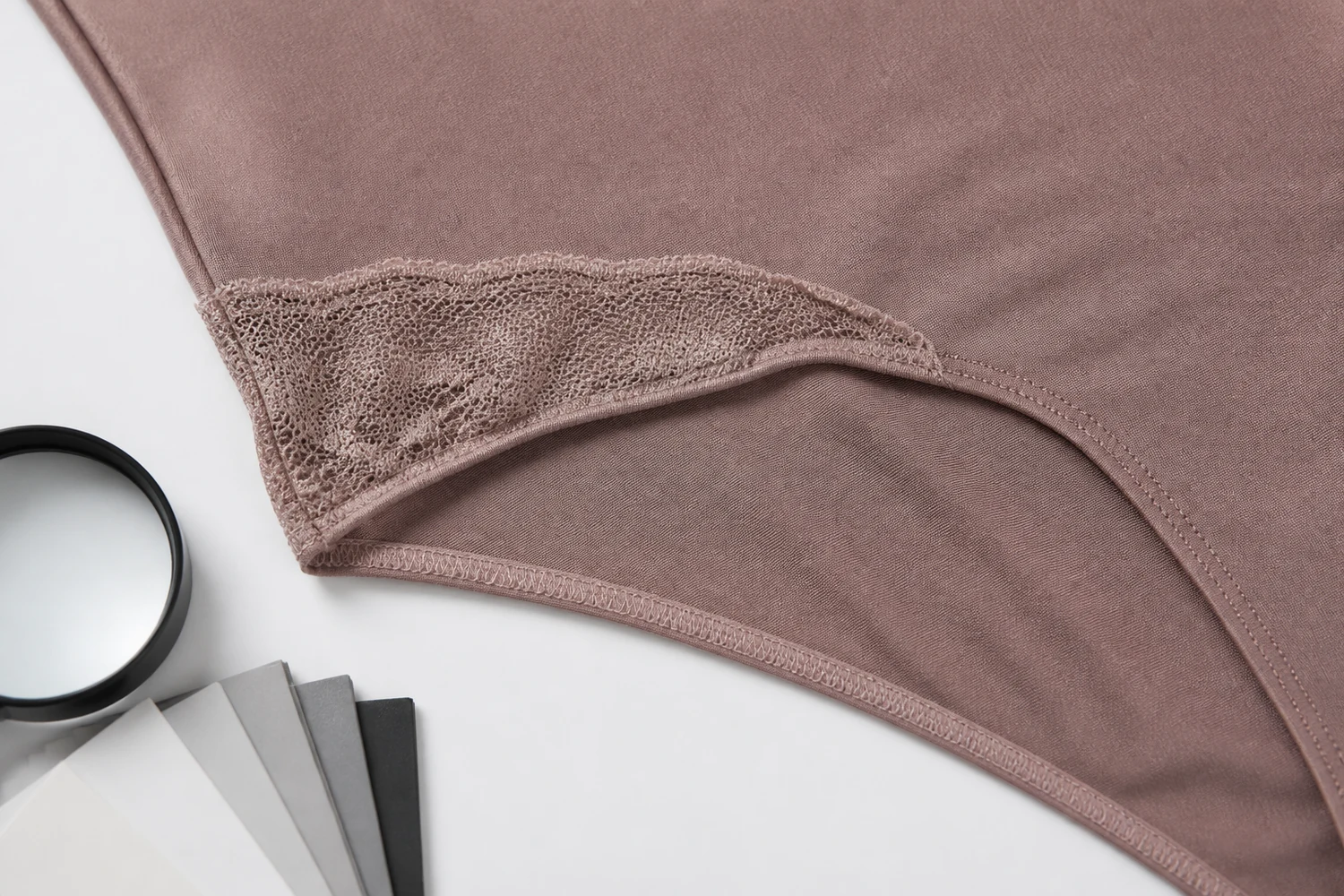
Lace placement should be even, secure, and visually consistent with the approved sample. The attachment seam should lie smoothly when the garment is relaxed and when it follows the intended fit. Reviewers can compare left and right sides, look for puckering, inspect edge continuity, and check whether the trim changes the leg-opening response. Any acceptance tolerance belongs in the buyer's specification because the product page does not publish one.
Plan the Assortment Around Verified Use Contexts
The verified contexts give merchants several directions without forcing them into one presentation. A neutral color can support layered styling, while the scoop neckline and close silhouette can also be shown as a standalone look where coverage and channel standards are appropriate. Retail teams should create imagery, copy, and size guidance for the actual intended audience rather than extending supplier descriptions into unsupported guarantees.
Match the Sample to the Merchandising Story
For layering, inspect surface smoothness beneath the planned jackets, trousers, skirts, or knitwear. For standalone presentation, review neckline balance, opacity, sleeve appearance, and leg coverage from relevant camera angles. The page names all four seasons, but that declaration does not establish comfort in every climate. Buyers should assess fabric weight, breathability, and styling at the conditions expected for the intended launch.
Build a Controlled Private-Label Approval Path
The source lists OEM/ODM, custom labels, custom packaging bags, custom tags, custom grading, and customised samples. It declares a 200-piece minimum order per style per color, a 7–15-working-day sample time, and a 25–35-day lead time after sample approval. These are planning inputs for private label apparel sourcing, not substitutes for a written quotation. Teams should confirm the exact configuration, timing basis, color count, size ratio, labeling, packaging, and shipment terms for the specific order.
- Define the brief: record target consumer, colors, size range, styling context, and required labels.
- Confirm the specification: align fabric declaration, trim, chart, measurement method, and tolerances.
- Approve physical samples: document measurements, fit, movement, recovery, workmanship, and appearance.
- Lock packaging and labels: verify artwork, mandatory market information, placement, and packing method.
- Retain production evidence: keep the approved sample and inspection record for bulk comparison.
Frequently Asked Questions
Which garment details are verified?
The page supports a long-sleeve, body-hugging silhouette with a deep scoop neckline, high-cut leg, stretch-knit construction, and lace decoration. Physical samples should confirm execution.
What sizes have published measurements?
M, L, and XL have published length, waist, and hip values. The page declares availability through 6XL and custom grading, but additional measurements require confirmation.
What fabric composition is declared?
The declared composition is 55% polyester, 40% acrylic, and 5% nylon. Buyers should verify sample and labeling documentation for the intended market.
How should smoothing and no-roll descriptions be reviewed?
Treat them as supplier descriptions to test on intended fit models. Record size, movement, duration, coverage, comfort, recovery, and any garment shift under agreed conditions.
Can the second skin sculpt bodysuit be customized?
The source lists custom grading, customised samples, labels, tags, packaging bags, and OEM/ODM service. Confirm every option in the quotation and approved sample record.
Discuss Your Collection Requirements
Review the verified second skin sculpt bodysuit details, then discuss target measurements, sample checks, grading, trim, labels, packaging, colors, and the intended retail channel.