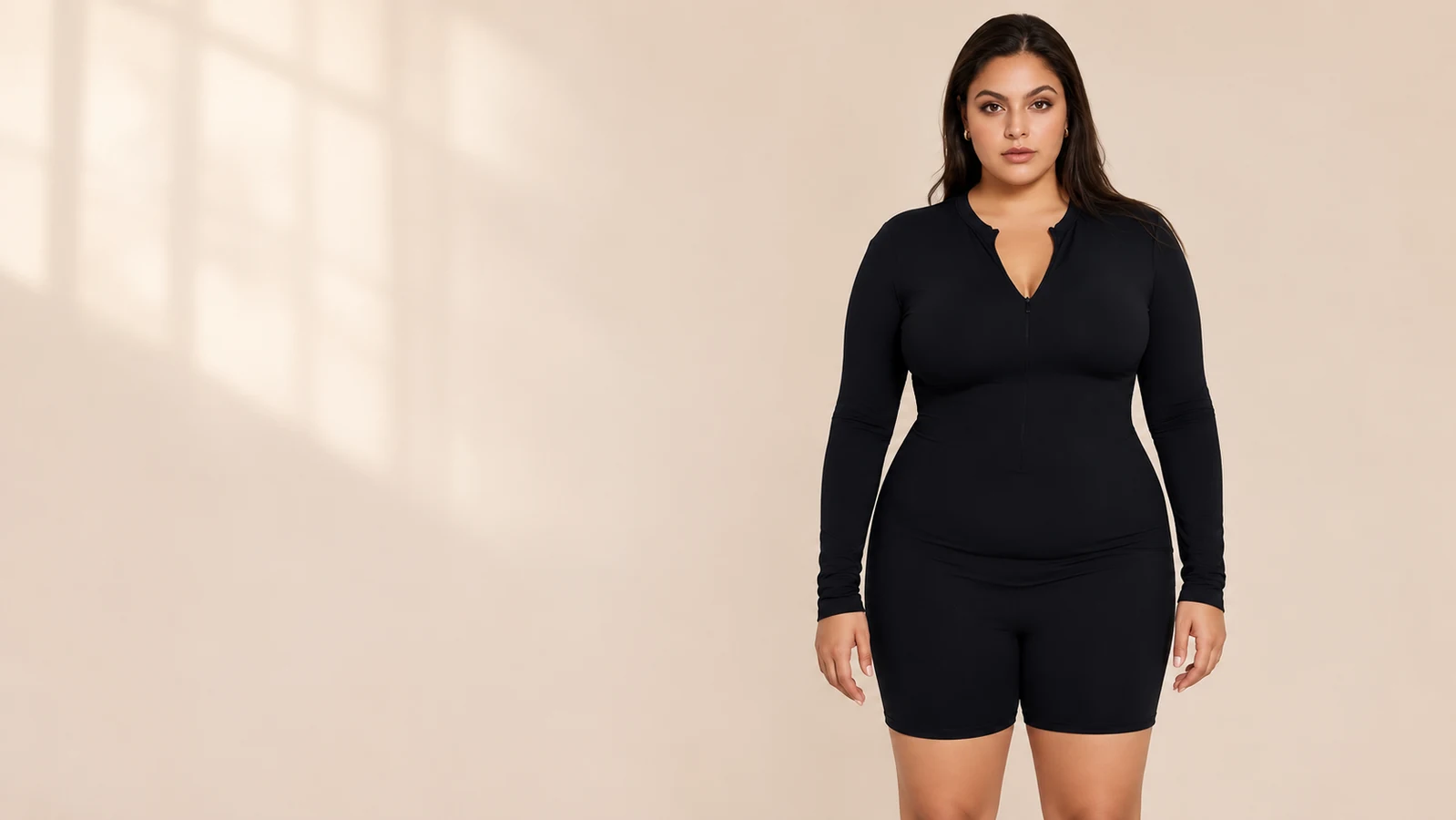
Assess a long sleeve one piece sports jumpsuit by reviewing its front zipper, stretch fabric and published measurements against a clearly defined sample brief.
FROM ATTITUDE model CS3WLT37-1 combines long sleeves, a close-fitting shape and a front closure. Its product page gives buyers useful starting information, while leaving several sample questions open. The selection task is to connect those details with the intended wearer, collection and presentation, then record what the proposed garment actually demonstrates.
Start with the silhouette and intended use
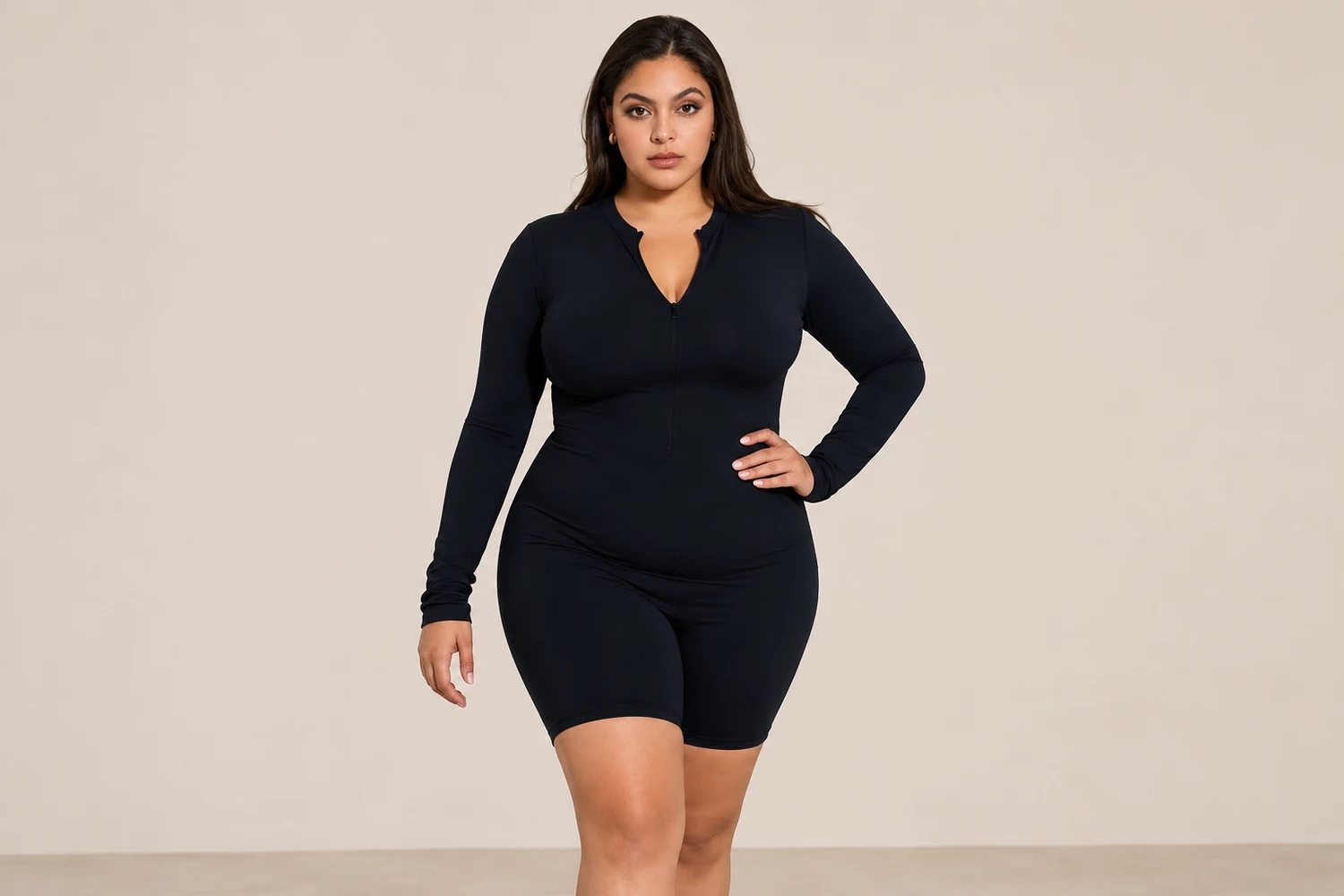
The product highlights position this garment for gym, yoga and casual wear. That establishes a potential athleisure style direction for a collection, rather than a guarantee that every wearer or activity will suit the same fit. Define the intended customer and wearing situation before reviewing the sample. A close-fitting one-piece needs attention to the relationship between the upper body and the shorts, not just the appearance of either part.
Check the torso during ordinary movement
Observe the garment while the wearer stands, sits and reaches forward. Note whether the neckline pulls, the waist shifts or the short hem moves beyond the planned coverage. These observations are sample review questions, not reported test results for this model. Use the same movements when comparing a revised sample so the comments remain useful.
Review sleeves and hem together
Check where the sleeves finish with the arms relaxed, then review their position when the elbows bend. Look at the shorts from the front and a modest side angle while preserving the intended styling. Record pulling, twisting or uneven hem position against the specific sample size. A smooth studio photograph cannot establish comfort or coverage for a complete customer range.
Assess the front closure as a functional detail
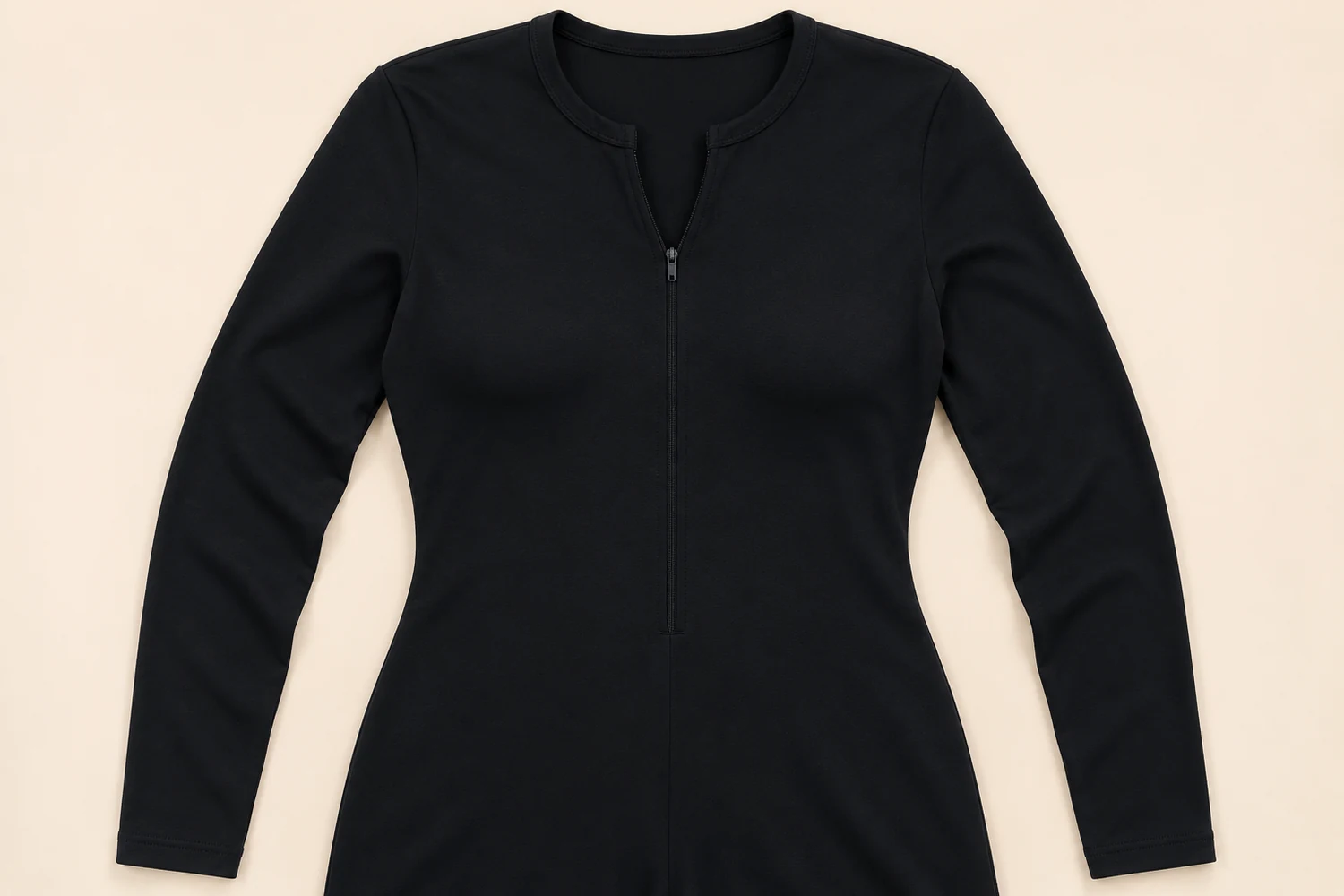
The documented front zipper design provides an adjustable neckline. The highlights describe a more closed sporty presentation and a lower, casual neckline when the zip is opened. Buyers should decide which presentation belongs in the assortment imagery, then check that the proposed sample supports that styling without requiring repeated adjustment.
Inspect operation and contact points
Open and close the zipper on the sample and observe the surrounding fabric. Check whether the closure lies as intended and whether its upper end feels comfortable at the neckline. Review the garment with the zip in the proposed wearing position, rather than assessing an isolated hardware photograph. Confirm the actual zipper specification before describing durability, fastening strength or other performance properties.
Distinguish fabric information from proven performance
The specification lists stretch knit fabric and a spandex / nylon composition, without supplying fibre percentages in the extracted details. The highlights describe four-way stretch. These statements support a fabric discussion, but they do not establish a numerical stretch value, recovery result, opacity rating or compression level. Ask for the proposed fabric specification and evaluate the sample used for the order.
Review surface, stretch and recovery
Assess the hand feel and appearance alongside the planned fit. Observe how the fabric sits around the closure and at the hips during ordinary movement, then inspect its appearance after the wearer relaxes. If recovery or opacity is important to the collection, agree an appropriate evaluation and acceptance criteria. Avoid converting a descriptive product phrase into a tested performance promise.
Include the proposed care process
Request the intended care instructions and relevant evidence about appearance and dimensions after care. General fit assessment can include both new garments and garments after the specified washing process. This is a useful review principle, not evidence that this model has undergone independent testing. Keep any supplier reports tied to the actual fabric, construction and sample version under consideration.
Use the published size chart without filling its gaps
The page lists M through 6XL with custom grading available, while the measurement table provides M, L and XL rows. The following values reproduce the centimetre entries. They are reference data for clarification; the labels alone do not explain every measurement point or whether a value represents a garment dimension or a recommended body dimension.
| Published size | Length (cm) | Waist (cm) | Hip (cm) |
|---|---|---|---|
| M | 85 | 72 | 102 |
| L | 86.5 | 74 | 106 |
| XL | 87 | 76 | 110 |
Request a complete measurement method
For a long sleeve one piece sports jumpsuit, confirm where the listed length begins and ends. Ask how waist and hip are measured, how the garment is prepared and which tolerances apply. Request missing size rows and useful additional dimensions, including sleeve and torso measurements, before making a size allocation. Do not extrapolate larger sizes from the limited chart or assume that a named size matches another brand.
Keep the supplier chart, proposed changes and approved sample measurements separate in the development record. That prevents a requested revision from being mistaken for an existing product specification. When preparing retail guidance, use the confirmed measurements and explain the intended fit in plain language, supported by the approved sample rather than a generic sizing convention.
Build a practical sample approval brief
Private label apparel sourcing for this model can begin with the listed OEM, ODM, custom label and customized sample services. The exact development arrangement still needs agreement. A concise brief should identify the current product and distinguish it from requested modifications, so neither the buyer nor supplier treats a proposal as an already available feature.
- Identify model CS3WLT37-1 and the intended collection role. Describe the wearer profile and the activities or casual settings the sample should be reviewed against.
- Confirm the required sizes and measurement method. Ask for missing chart entries and record any proposed changes to sleeve, torso or short length.
- Inspect the closure and garment during ordinary movement. Capture clear observations with the sample size and zipper position attached to each comment.
- Agree fabric and care checks relevant to the collection. Keep descriptive stretch claims separate from any evidence needed for retail performance wording.
- Review the proposed custom label and approved sample together. Confirm the final garment details before moving from selection into order discussions.
An effective review ends with decisions: accept a detail, request a revision or seek missing information. Maintain one current approval record with clear photographs and supplier responses. This makes the next sample review focused and helps the merchandising team describe the garment accurately without relying on assumptions from unrelated sportswear.
Frequently asked questions
Does the page provide exact fibre percentages?
No percentages appear in the extracted composition field. It lists spandex / nylon. Ask for the proposed blend and supporting specification before preparing a detailed fibre description or comparing fabrics by composition.
Does four-way stretch establish recovery or opacity?
No. It describes the stretch direction claimed in the highlights. Recovery, opacity and comfort need their own agreed review. Avoid presenting any of those properties as independently verified from this listing.
Can the wider size list replace missing measurements?
No. The published chart has M, L and XL rows. Request the remaining measurements, their definitions and the proposed grading before approving an extended assortment or publishing customer sizing advice.
Is the garment limited to a gym collection?
The highlights also describe yoga and casual athleisure use. Buyers can consider those settings while checking the proposed sample for the intended wearer and styling. The listed uses do not establish universal suitability for every activity.
What should a first development inquiry include?
Include the model, intended collection, required sizes and unresolved fit questions. Add a label proposal when relevant. The listed customization services are a starting point for confirmation, not proof that a particular modification is already approved.
Make the sample review specific
Review the long sleeve one piece sports jumpsuit with a defined fit and closure brief. Share the required measurements, label proposal and outstanding fabric questions with FROM ATTITUDE, then use the reviewed sample to decide whether the model belongs in the collection.