
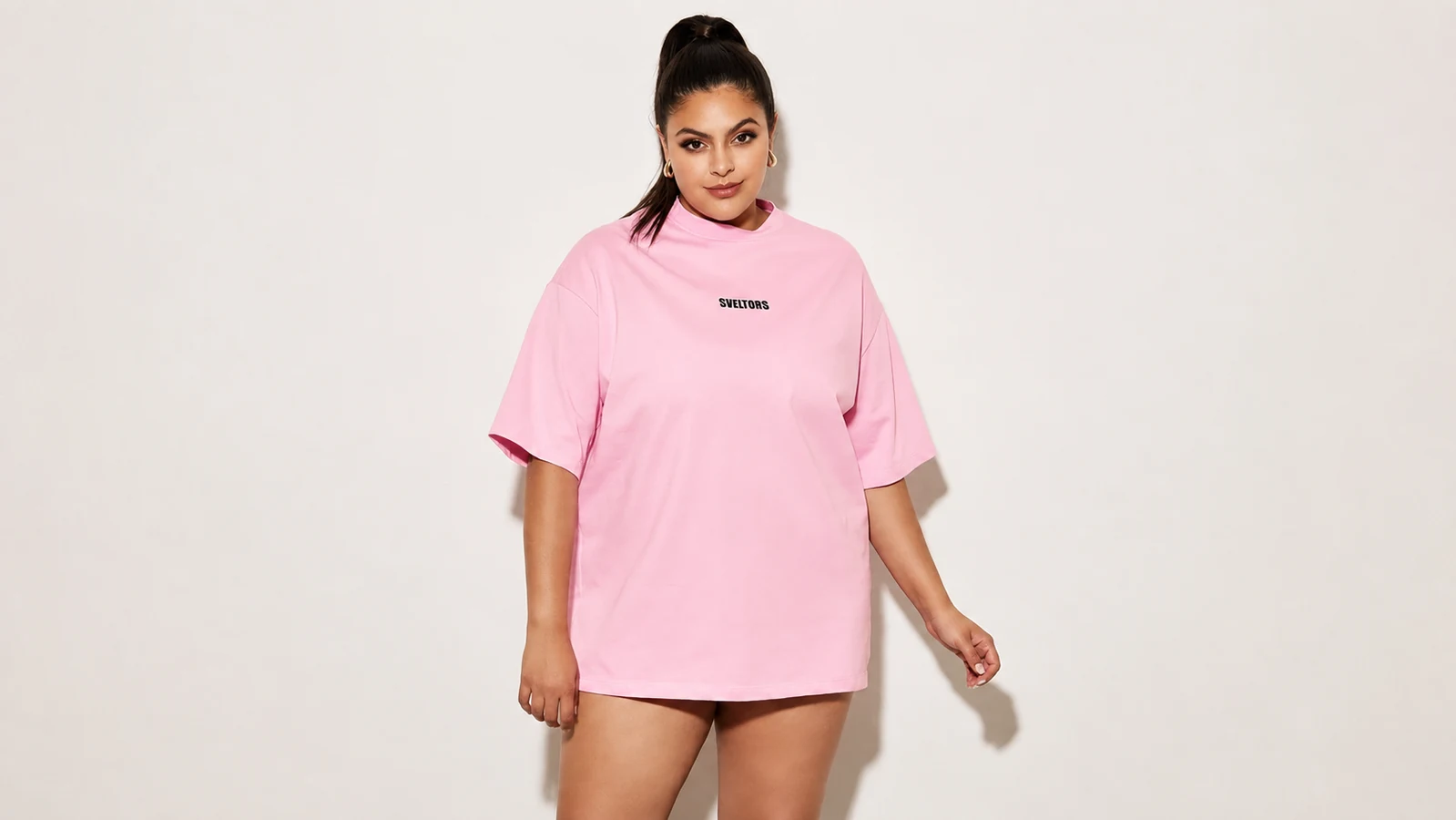
Reviewing a women's oversized mock neck graphic cotton t shirt starts with neckline balance, measured ease and a sample that matches the intended retail use.
Model CS3WSY29 provides a documented starting point for fashion brands, retailers and wholesale buyers, but collection approval should connect the published silhouette and measurements with a physical garment review.
Start with the intended silhouette
The oversized shape is a design choice, not a substitute for a fit specification. This product is described as a loose T-shirt dress with a modern mock neck and a relaxed, streetwear-inspired profile. A buyer should decide whether the assortment needs a long top, a layered styling piece or dress coverage before interpreting the chart. The same garment length can serve different purposes on different customers.
Check neck balance and shoulder position
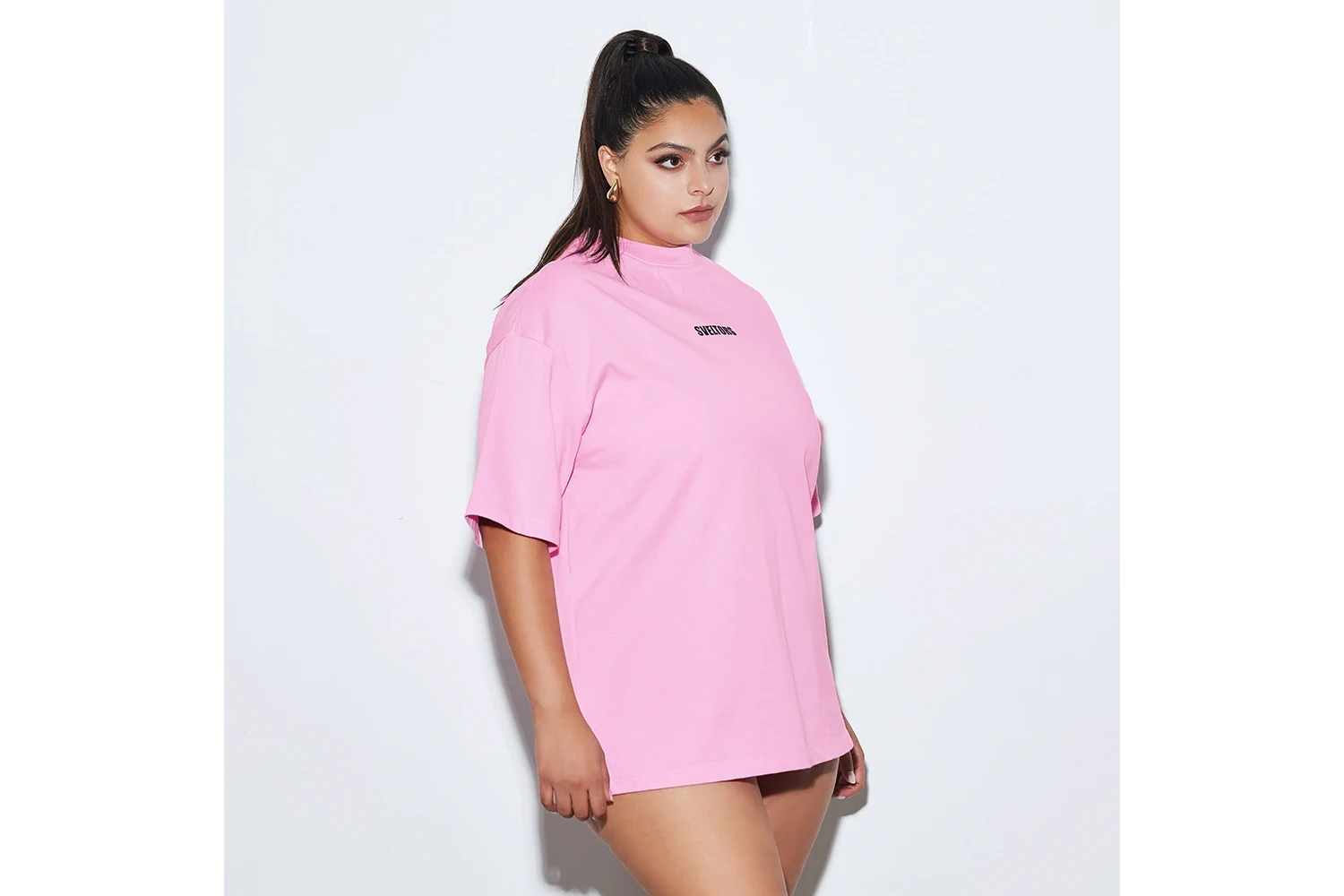
Review the neckline from the front and side while the wearer stands naturally. The neck should be assessed together with shoulder placement and upper-body ease, because changing one area can alter the overall impression. Record where the garment rests and whether the wearer can turn and lift the arms comfortably. A studio image cannot establish that result for the whole proposed size range.
Review coverage during movement
The source describes styling with leggings, shorts, denim and sneakers. Those options support a practical sample session: inspect the full hem, then check coverage while sitting and reaching. A long tee should not automatically be marketed as providing the same dress coverage for every height. Keep the selected styling route explicit in photography and the retail description.
Translate the size chart into an approval record
The published chart gives useful reference measurements for M, L and XL. It lists garment length, bust and sleeve length in centimetres and inches. For a consistent comparison, the table below retains the centimetre values without mixing units or converting them again. Buyers still need to confirm the supplier's measuring points and whether the recorded bust measurement represents the agreed full-garment convention.
| Published size | Length in cm | Bust in cm | Sleeve in cm |
|---|---|---|---|
| M | 72 | 122 | 24 |
| L | 74 | 126 | 25 |
| XL | 76 | 130 | 26 |
Separate offered sizes from measured sizes
The broader size offer lists M through 6XL with custom grading available, while the detailed chart supplies measurements only for M, L and XL. That distinction matters for extended-size development. Missing measurements should be requested, not calculated by extending the visible pattern. Approving a base size does not establish the fit or proportional balance of unreviewed sizes.
Compare ease against the target customer
For a women's oversized mock neck graphic cotton t shirt, bust allowance is only one part of the fit decision. Compare the approved garment measurements with the intended customer profile and styling brief, then review sleeve coverage, arm movement and hem position together. Keep dated sample photographs and measurement notes so a later production sample can be checked against the same reference.
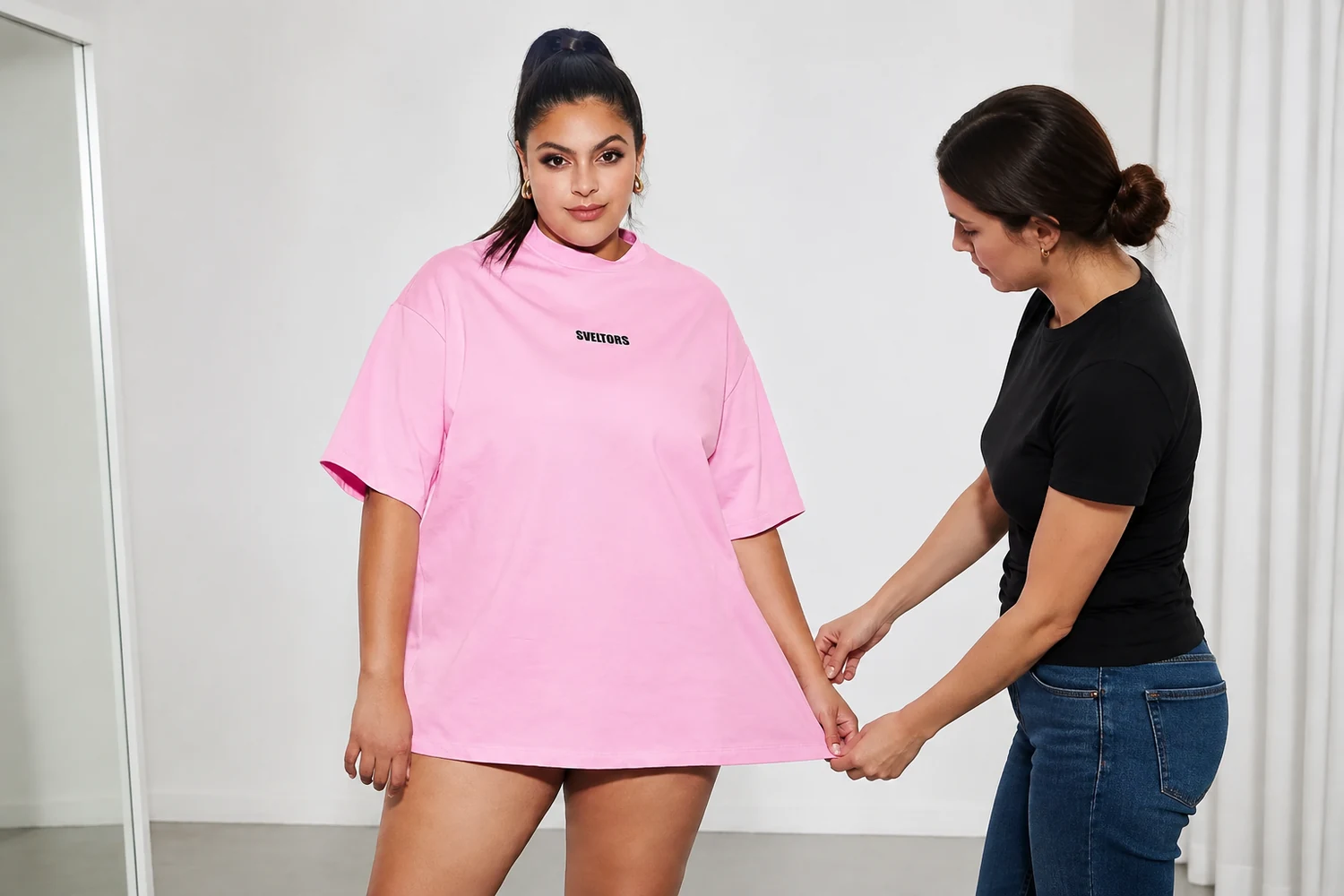
Confirm material and decoration before making claims
Material approval should rest on an agreed specification and the supplied sample, rather than a fabric impression in a photograph. The product title identifies a cotton style, but the page's detailed composition entry and its separate fabric highlight do not fully align. An exact fibre percentage should therefore remain unconfirmed until the supplier resolves that discrepancy. The visible colour and surface cannot prove fibre content or performance.
Inspect fabric behaviour on the sample
Examine the sample under consistent lighting for surface appearance, opacity, drape and seam finish. Ask how the final care instructions will be established, then agree an appropriate evaluation of dimensional change and appearance after laundering. These are review activities, not evidence that this specific garment has passed a test. Do not add claims about shrink resistance, colourfastness or durability without supporting results.
Approve the artwork and its position
The page offers customized logo printing or embroidery and describes branding in the neck area. The approved artwork file, decoration method and placement drawing should identify the exact production location. Review the decorated sample for alignment, local stiffness, puckering and appearance during wear. A reference photograph can show a visual direction, but it does not authorize a different brand's artwork for a buyer's collection.
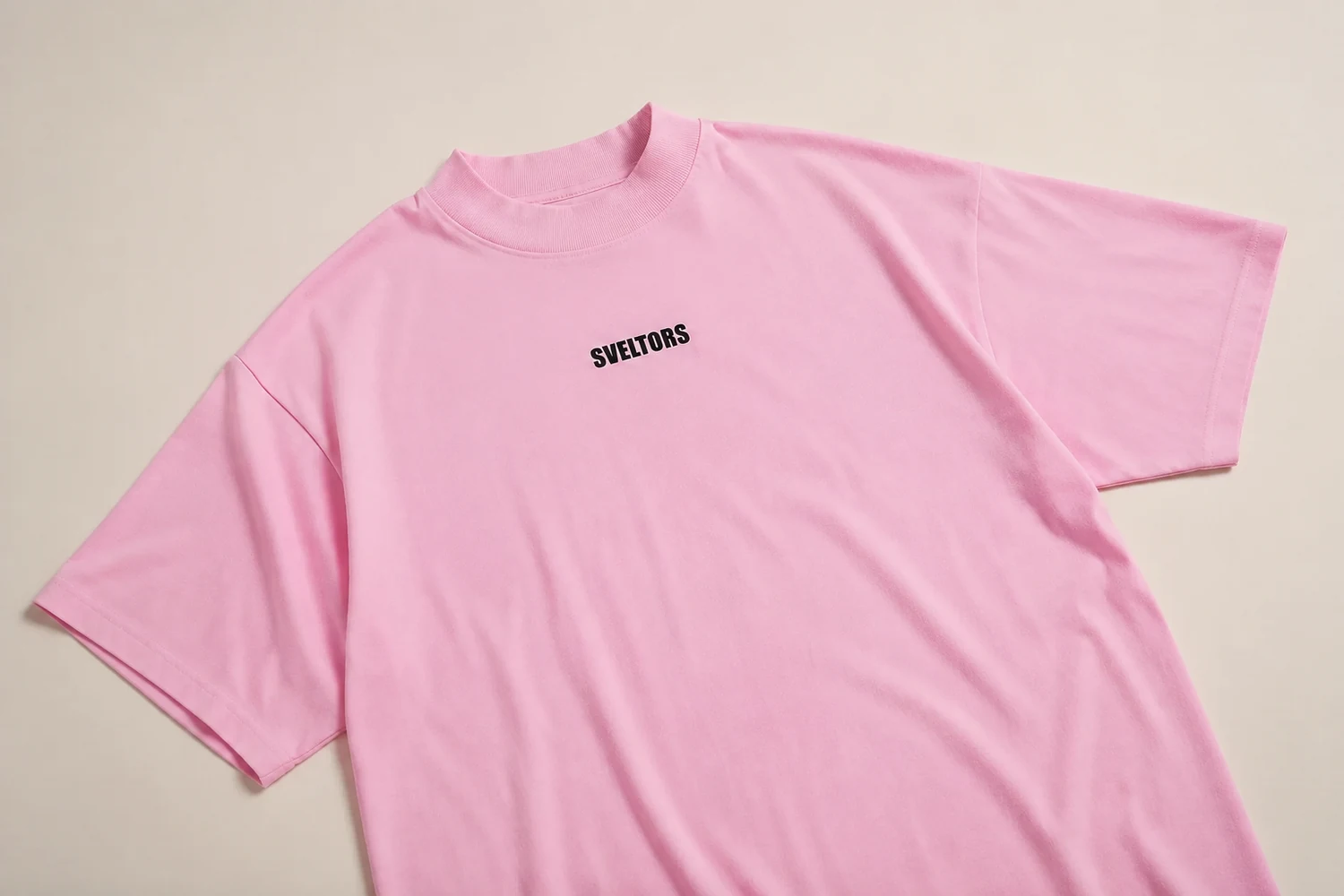
Match the style to a defined assortment
The documented styling uses support casual and everyday assortments, including daily wear, travel and lounging. Buyers can assess how the long relaxed shape works beside existing bottoms and footwear without turning those examples into universal suitability claims. A merchandising review should answer which customer, outfit combination and coverage expectation the style serves, then check that the sample actually supports that presentation.
For private label apparel sourcing, the useful decision is whether the approved silhouette, fit and branding can be expressed in a clear repeat-order specification. Keep sample identifiers, artwork revisions and size charts linked. A retailer can then distinguish a styling change from a manufacturing deviation instead of relying on an old product photograph or an informal description such as oversized.
Use a repeatable sample review sequence
A short review sequence makes approval easier to audit. It should bring the buyer's fit, merchandising and sourcing requirements into one record, with unresolved items visible before bulk production is considered. The sequence below is a proposed working checklist, not a claim about a completed inspection or the supplier's internal quality system.
- Define the use: record the intended long-top or dress styling, target customer profile and coverage expectations.
- Agree the measurements: confirm measuring points, garment dimensions, allowable variation and the full requested size chart.
- Review the garment: inspect neck balance, sleeves, movement, hem position, fabric appearance and seam finish.
- Approve the branding: attach the artwork revision, decoration method, placement drawing and reviewed sample photographs.
- Close the open items: obtain the confirmed composition, care information, pack format and written sample approval before release.
Coordinate the sourcing details around the sample
FROM ATTITUDE lists OEM/ODM service, customized samples, labels, tags and packaging options for this model. These capabilities support a development conversation, but the order-specific scope should be confirmed in writing. Identify which sample is the approval reference and which details remain provisional, especially when an artwork change or an additional size is introduced.
The page also publishes a minimum quantity of 100 pieces per style per colour, a sample window of 7–15 working days and a production lead time of 25–35 days after sample approval. These are listed starting terms, not a guaranteed delivery date for a new order. Confirm the applicable quantity, calendar, approval dependencies and packaging requirements against the actual project.
Frequently asked questions
Does the oversized description remove the need for a fit review?
No. Oversized describes the intended silhouette, while a fit review establishes how that shape works for the target customer. Neck balance, sleeve movement, bust allowance and hem coverage should be assessed together on the approved sample.
Are measurements published for every offered size?
No. The offer extends from M to 6XL, but the detailed chart documents M, L and XL. Buyers requesting other sizes should obtain the relevant dimensions and review samples instead of extrapolating the visible measurements.
Can a specific cotton percentage be used in retail copy?
The page contains inconsistent composition wording. Buyers should obtain a confirmed fibre specification before using an exact percentage in a product listing or label. A soft hand feel and a cotton-related title do not resolve that discrepancy.
What should be checked before approving a graphic version?
A women's oversized mock neck graphic cotton t shirt should be reviewed with the intended artwork applied in the agreed location. Confirm the decoration method, artwork rights, visual alignment and sample appearance before treating a reference image as production approval.
Which styling contexts are supported by the product page?
The page identifies daily wear, travel, lounging and retail collections, with sneakers, leggings, shorts and denim as styling options. Buyers should select the relevant combinations and verify coverage on their intended customer profile rather than implying universal fit.
Bring the Fit Brief to the Sample Review
For model CS3WSY29, share the target measurements, styling route and artwork placement to clarify the next sample review. Resolve the fibre specification and any missing size data before recording final collection approval.