
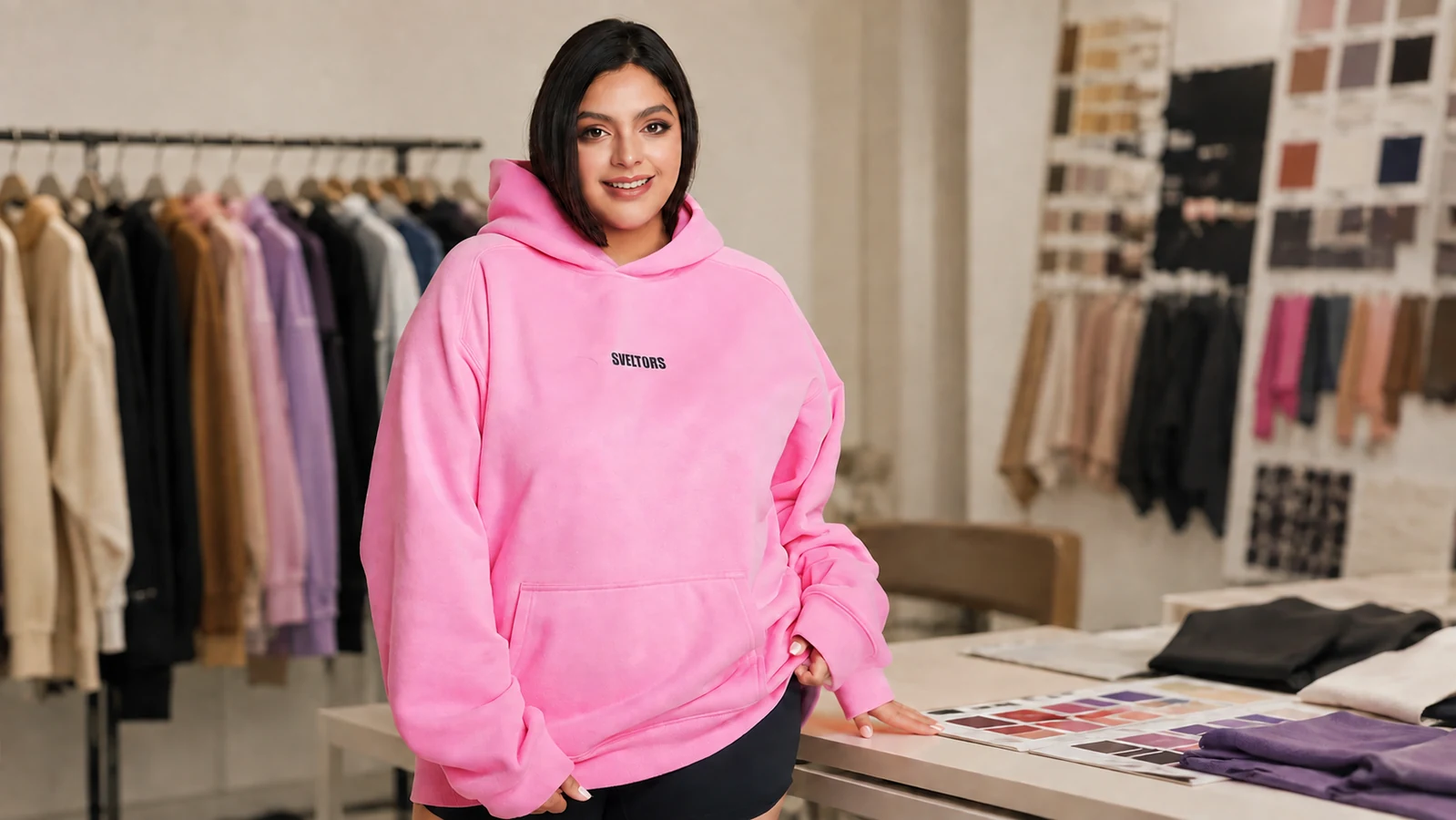
A cozy heavyweight oversized hoodie should be evaluated through verified fiber content, fit dimensions, construction details, customization scope, and order terms.
Begin With the Evidence Buyers Can Verify
The selected model, CS3WSY02, is presented with a 100% cotton composition, a drop-shoulder oversized shape, a reinforced kangaroo pocket, and a clean chest area intended for customized embroidery. Its page also describes high-density fleece, a soft-touch interior, and a structured drape. These details establish the product direction without asking buyers to rely on vague labels such as “premium” alone.
For sourcing teams, the first task is to separate product-specific evidence from assumptions. The page declares cotton composition, model number, seasons, decoration method, service options, packing, minimum order quantity, sampling time, and post-approval lead time. It also contains a material wording conflict between “Knit Fabric” and “Soft Cotton Knit,” so a purchase specification should use the unambiguous 100% cotton declaration and request a physical swatch before assigning a more specific knit construction.
- Identity: confirm model CS3WSY02 on the sample, packing list, and purchase order.
- Fiber statement: verify the declared 100% cotton composition against the sewn label and approved documentation.
- Construction: review the drop shoulder, hood, cuffs, hem, pocket reinforcement, and chest branding area on the physical sample.
- Commercial baseline: record MOQ, sample timing, production timing, and packaging options as supplier declarations that still require written order confirmation.
Map Fit Data to the Intended Assortment
Read garment measurements, not size names alone
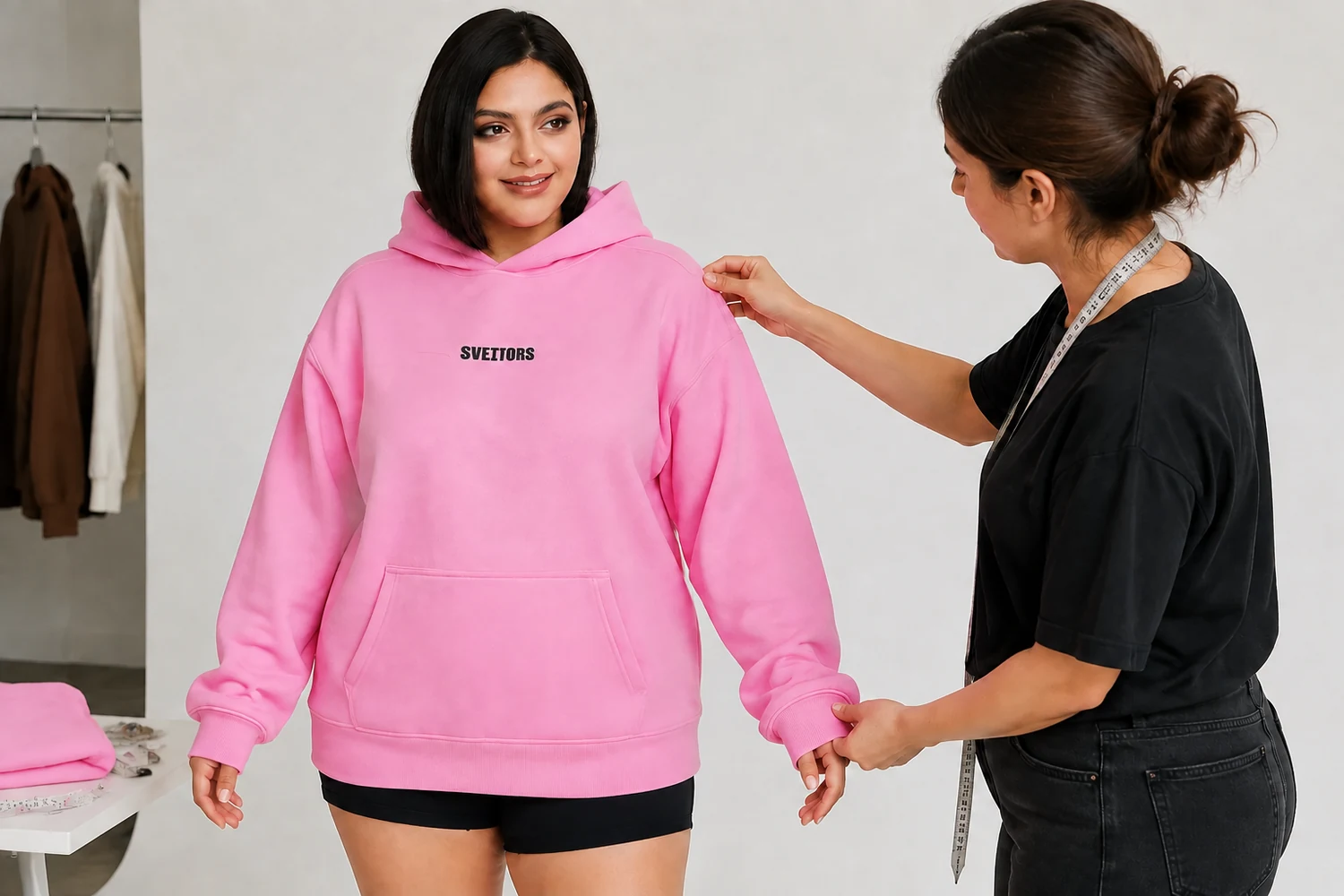
The detailed size chart lists M, L, and XL. In centimeters, length moves from 60.5 to 61.5 to 63, bust from 139 to 144 to 149, and sleeve from 61.5 to 61.5 to 63. Those are garment measurements rather than body measurements. A buyer should compare them with the intended ease, layering plan, and target body data instead of assuming that an M label corresponds to another supplier’s M.
Resolve the documented range before grading
The product page separately declares availability from M through 6XL and says custom grading is available, while the displayed measurement chart stops at XL. That is not evidence for the unlisted 2XL–6XL measurements. Before approving a broad size run, buyers should request the full graded specification, identify the base size, set tolerances, and fit-test representative sizes across the range.
| Decision factor | Verified evidence | Buyer implication |
|---|---|---|
| Composition | 100% cotton declared | Confirm label, swatch, shrinkage, colorfastness, and care basis. |
| M measurements | 60.5 cm length, 139 cm bust, 61.5 cm sleeve | Treat as garment dimensions and compare with intended ease. |
| L measurements | 61.5 cm length, 144 cm bust, 61.5 cm sleeve | Review how bust increases while sleeve remains unchanged. |
| XL measurements | 63 cm length, 149 cm bust, 63 cm sleeve | Fit-test the top documented size before extending the grade. |
Read Construction Before Approving the Sample
Judge structure and comfort separately
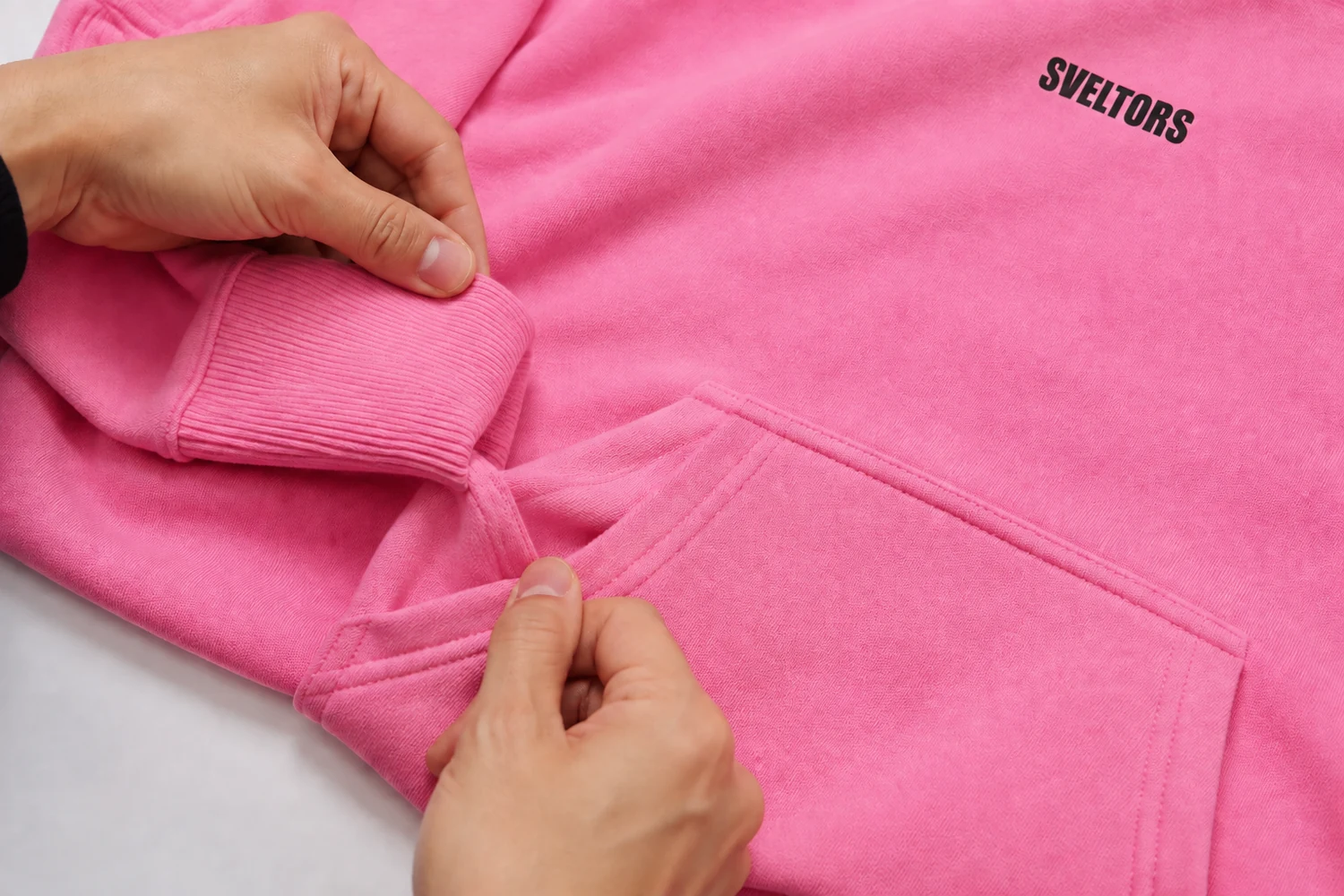
A cozy heavyweight oversized hoodie must balance a roomy shape with controlled construction. The page describes high-density fleece, a soft-touch interior, and structured drape, but it does not state fabric weight in GSM. Buyers should therefore handle the swatch, weigh or test it according to their own specification, and review whether the hood, shoulder line, cuffs, and hem keep their intended shape after wear and care trials.
Inspect the pocket as a working component
The reinforced kangaroo pocket is described as both a hand-warmer and storage area. Sample review should check opening symmetry, bar tacks or other reinforcement, pocket-bag alignment, and whether a phone or keys distort the front. The goal is to confirm that function supports the silhouette rather than pulling it out of shape.
Plan Branding and Order Terms Together
Use the clean chest area deliberately
The page supports customized embroidered logo development and also describes the chest as suitable for printing. Branding review should define artwork size, placement from center front and neckline, stitch density or print method, color references, and approval samples. A buyer planning private label apparel sourcing should also align the main decoration with custom labels, tags, and packaging so every component follows one approved brand specification.
Build the timeline from approvals
The declared commercial baseline is 100 pieces per style per color, samples in 7–15 working days, and production in 25–35 days after sample approval. These figures are not a universal delivery promise. Purchase planning should document when the clock starts, which approval closes sampling, whether customized trims affect timing, how shipping is handled, and what happens when revisions are requested.
- Freeze the brief: confirm composition, silhouette, measurement points, color, decoration, labels, and packing.
- Approve materials: compare the swatch and trims with documented standards before cutting the sample.
- Review fit: measure the garment, test movement and layering, and record any grading corrections.
- Approve branding: sign off artwork, position, method, and appearance on the actual fabric.
- Confirm production: restate quantity, lead-time basis, inspection checkpoints, packing, and shipping in writing.
Put Fit, Fiber, and Branding Through Quality Control
Turn the page claims into checkpoints
A practical control plan links each approved claim to evidence. Composition can be checked against material records and labels; garment measurements can be checked against the signed size specification; silhouette can be compared with the sealed sample; pocket and embroidery construction can be reviewed visually and physically. Because the page calls out heavyweight fabric without a numeric weight, buyers should add their own measurable GSM requirement if that characteristic is commercially important.
Care and labeling deserve the same discipline. For products entering the United States, current FTC guidance says most textile products need fiber content, country of origin, and responsible-company identification, while covered apparel also needs supported care instructions. Destination-market obligations differ, so the responsible buyer should confirm applicable labeling rules and hold evidence for the final instructions rather than copying an untested care statement.
Build a Merchandising Brief Around the Silhouette
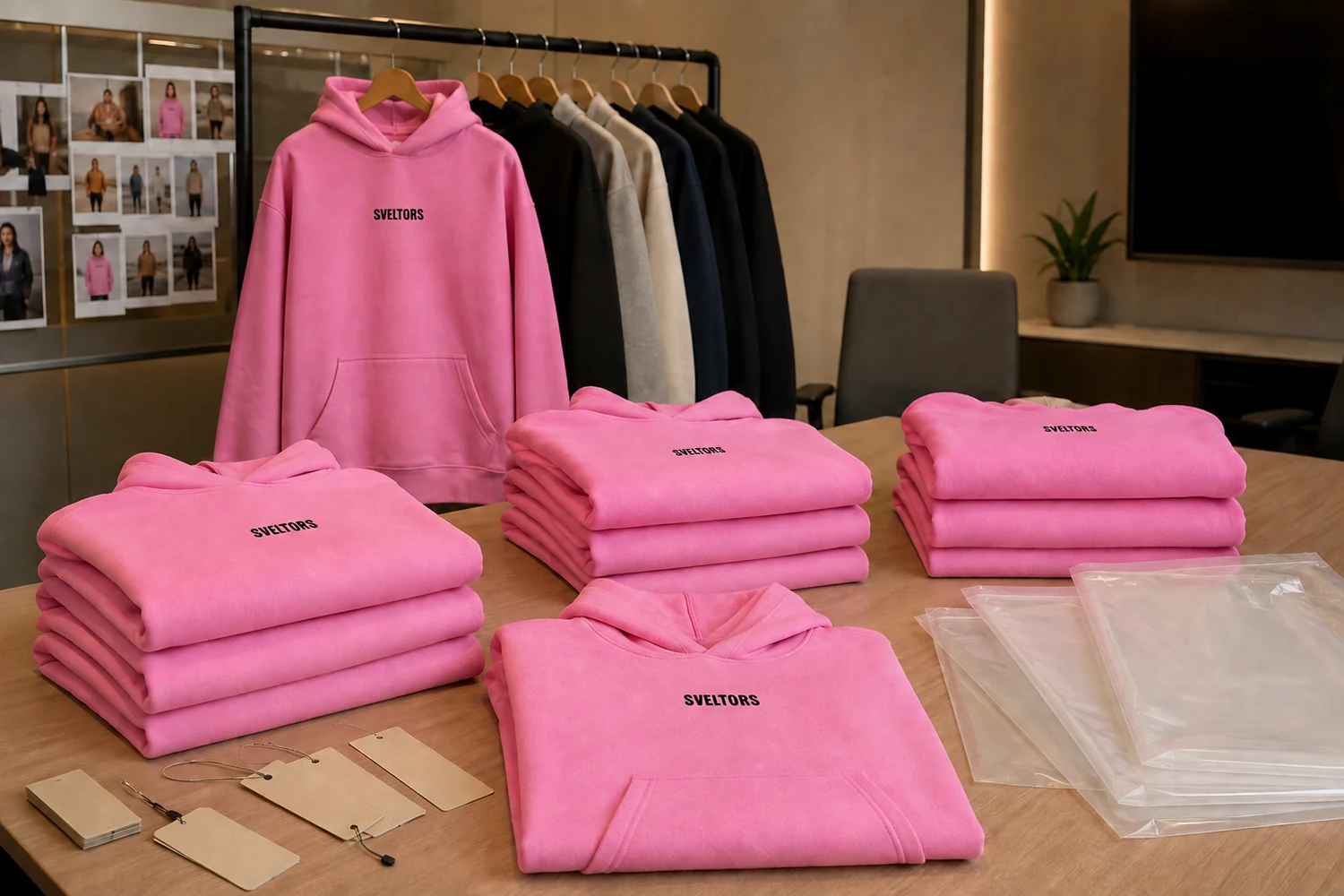
The trendy oversized silhouette, cotton declaration, fleece description, drop shoulders, and kangaroo pocket support a relaxed streetwear position. For cold weather assortments, teams should test how the garment layers and whether its body and sleeve proportions remain intentional across the planned range. The page also lists winter, summer, spring, and autumn, but seasonality should be validated against actual fabric weight, climate, styling, and the retailer’s selling window.
Merchandising decisions should stay connected to production reality. A clean chest can support a restrained mark, a corporate program, or a more prominent graphic, but each direction changes sampling and approval needs. Colorways and packaging are likewise development choices rather than automatic extensions of the photographed sample. The strongest assortment brief identifies the customer, use occasion, target fit, retail calendar, brand treatment, and acceptance tests before a bulk order is released.
Frequently Asked Questions
What composition is declared for model CS3WSY02?
The product page declares 100% cotton. Buyers should confirm that declaration on the approved material record and finished-garment label.
Which sizes have detailed measurements?
The visible chart documents M, L, and XL in centimeters and inches. The page also declares M–6XL availability and custom grading, so measurements above XL should be requested and approved separately.
What is the declared minimum order quantity?
The page states 100 pieces per style per color. Final quantity, color allocation, and any customization conditions should be confirmed in the quotation and purchase order.
Which customization services are listed?
The page lists OEM/ODM service, custom labels, packaging bags, tags, customized samples, and customized embroidered logos. The feasibility and price of a specific artwork or trim still require a production review.
How should buyers interpret the stated lead times?
Sampling is listed at 7–15 working days, and production at 25–35 days after sample approval. Buyers should confirm the approval point, capacity, material readiness, shipping method, and revision impact for their order.
Discuss Your Collection Requirements
Buyers evaluating a cozy heavyweight oversized hoodie can use the verified page evidence as a starting brief, then request the missing graded measurements, swatch checks, branding details, and written order terms needed for a controlled sample review.