
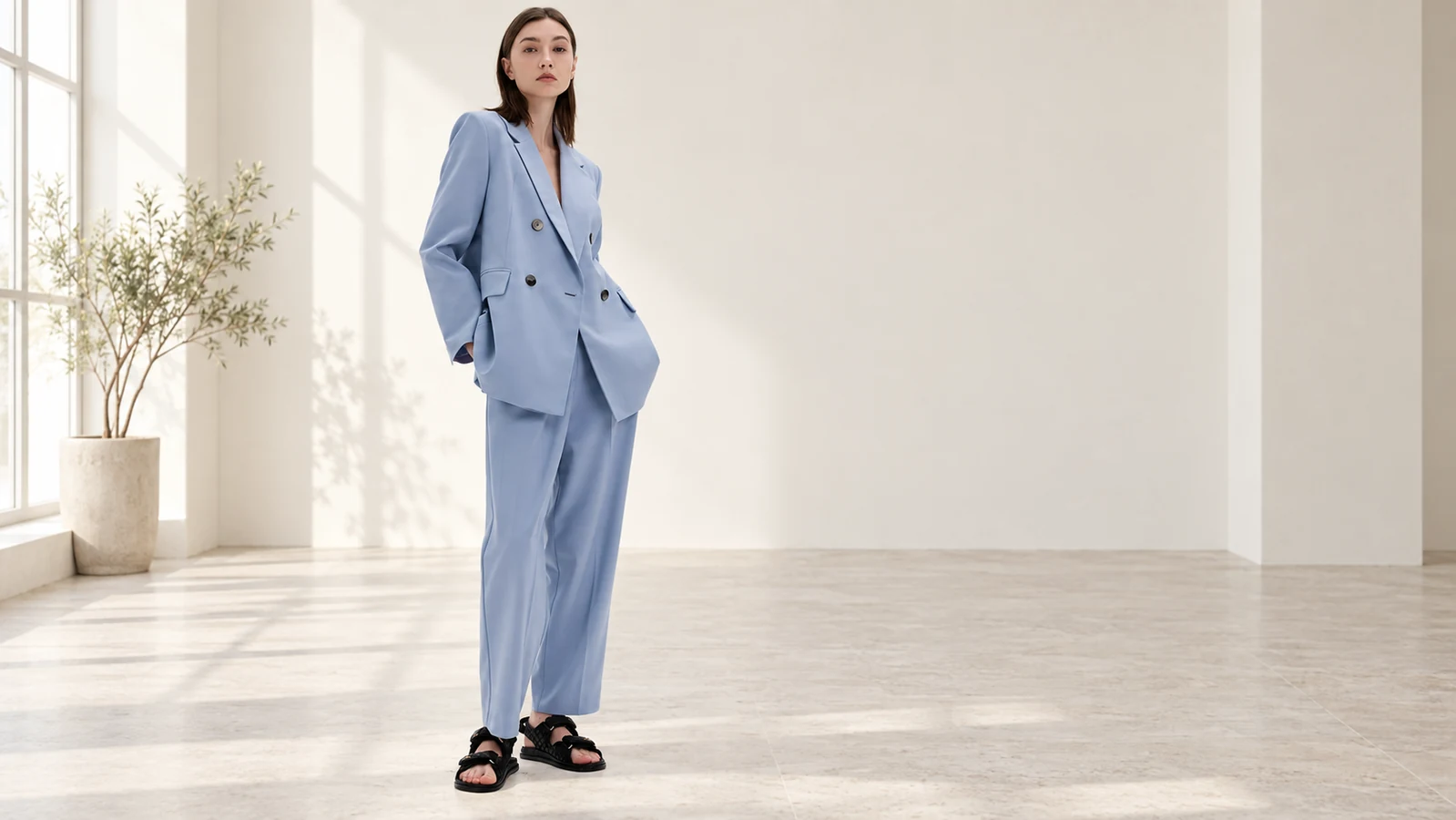
A minimalist light blue women's pant suit needs coordinated fit, a physical color reference and clear fabric specifications before approval for a tailored collection.
Define the role of the coordinated silhouette
Select the set by deciding how the blazer and trousers should work together in the collection. The product page describes a relaxed silhouette, a double-breasted front and matching straight-leg trousers. These details establish the design direction. They do not settle the intended amount of ease or prove that the same proportions will suit every customer.
Assess the jacket and trousers as one outfit
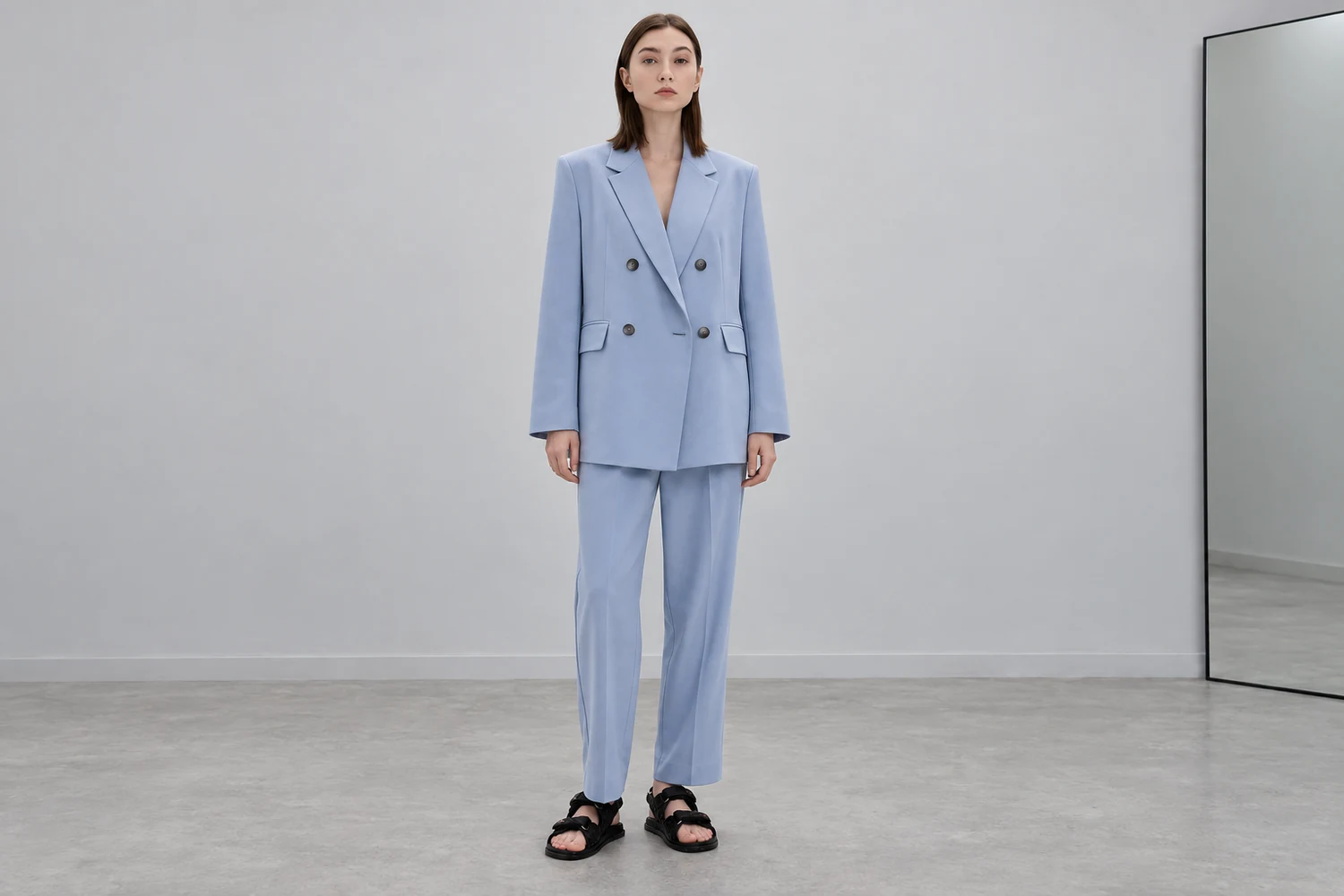
A tailored two piece blazer set should be reviewed as a complete outfit before either component is considered separately. Observe where the jacket finishes against the trouser line, how the front overlaps and whether the overall shape matches the buying brief. Keep the sample styling consistent so changes in shoes or underlayers do not obscure differences between review rounds.
Photograph the front, side and back on the agreed fit reference. Ask reviewers to describe what they see, such as an uneven hem or a lapel that lifts during movement, instead of recording only broad approval. This creates a shared reference for discussing changes without treating a marketing photograph as a finished technical specification.
Check relaxed tailoring during ordinary movement
The oversized blazer direction should be evaluated through deliberate fit checks. Sharp lapels and subtle shoulder shaping are named product highlights, while the trousers are described as fluid and straight leg. Review those features together during standing, sitting and reaching. The purpose is to assess the sample, not to assume comfort or movement performance from the description.
Separate intended ease from unwanted distortion
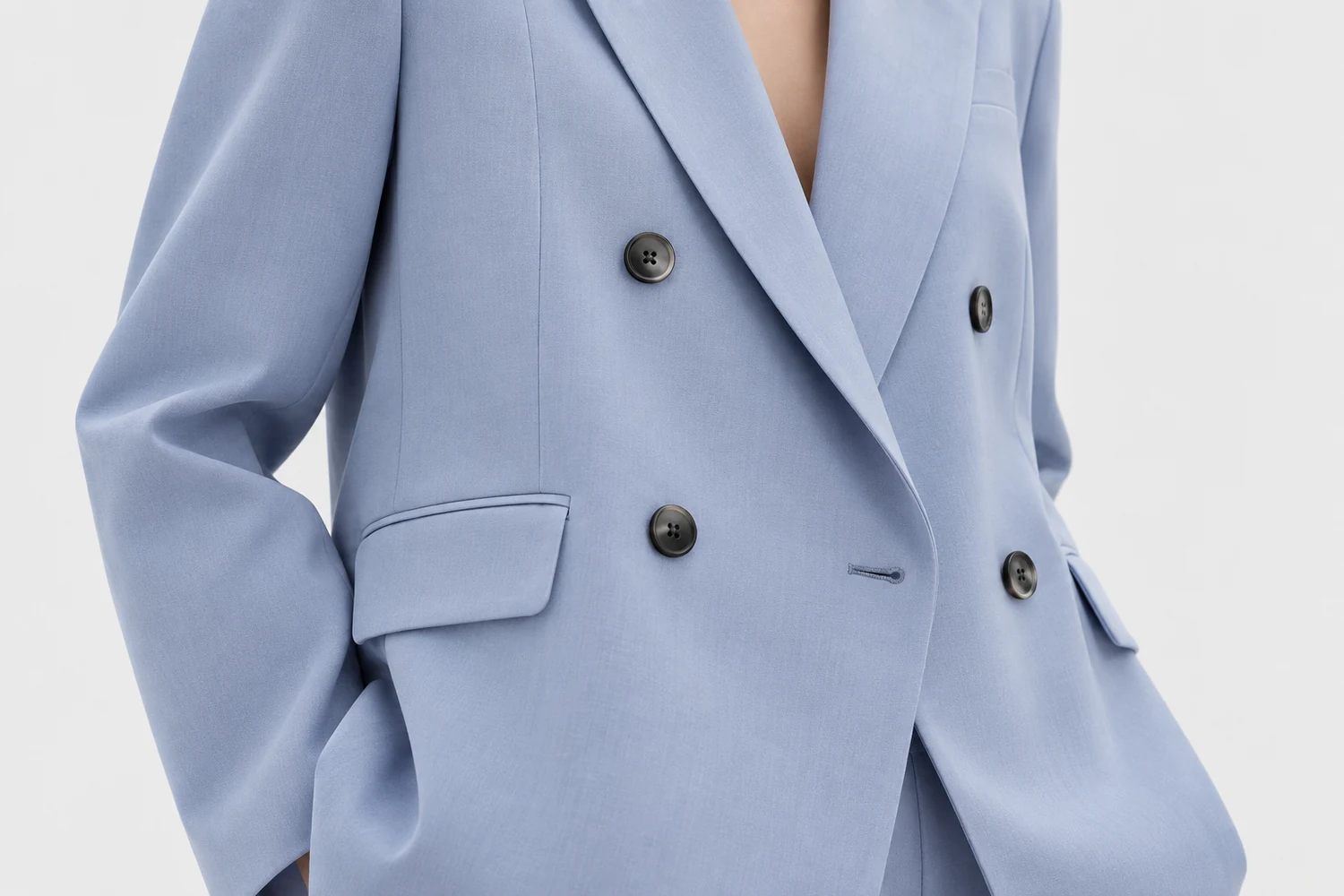
Begin with the shoulder and upper sleeve, then examine the lapel and double-breasted overlap. A relaxed cut can have intentional room while still requiring a clear shoulder line. Note whether the chosen underlayer changes the front balance. Check the fastening in the intended wearing position, and record any adjustment needed before changing the size recommendation.
Review the trouser line with the planned footwear
Trouser length and leg shape should be assessed with the footwear intended for the assortment presentation. Check the side view as well as the front, including the way fabric falls after the wearer sits and stands again. Do not infer waistband construction, pocket capacity or an alteration allowance from a distant photograph; request the relevant sample details when they affect selection.
Resolve the fabric specification before approval
The page contains inconsistent fabric descriptions, so a single confirmed composition should be obtained before preparing retail labels or a purchase specification. The visible light-blue surface and clean tailoring help introduce the style, but neither proves fiber content, fabric weight, lining, recovery or care performance. These remain separate questions for the supplier and the physical sample.
Use a physical reference for the blue shade
Judge shade against an agreed physical reference under consistent viewing conditions. A screen image is useful for introducing the color family, but lighting and display settings can change its appearance. Compare the blazer and trousers together, then record which sample is approved. The reference supports a repeatable discussion; it does not by itself establish tested colorfastness or production consistency.
Examine the lapel edges, button placement and exterior fabric surface at a closer distance. Record visible finish observations separately from performance questions. If washing, abrasion or stretch recovery matters to the intended use, request appropriate supporting information before making those claims. A description of softness should not be converted into an unqualified promise about wear throughout the day.
Turn published measurements into a fit brief
The minimalist light blue women's pant suit needs an agreed measurement method as well as a size label. The page lists a size offer and custom grading, but its displayed chart contains inconsistent conversions and a mixed blazer-and-trouser structure. Buyers should request a corrected, complete chart rather than treating every displayed figure as ready for order approval.
Keep each measurement tied to its garment component
Record blazer and trouser measurements in separate sections of the technical brief. Define where each measurement starts and finishes, whether it is a garment or body measurement, and the condition in which the sample is measured. Any tolerance should be agreed explicitly. A correction to one component should trigger another review of the coordinated outfit.
The following checkpoints translate the product evidence into an approval discussion. They distinguish what the page establishes from what still needs agreement. Use the same checkpoints on each sample round so the final decision is based on comparable observations, not a changing mixture of styling impressions and incomplete measurements.
| Review factor | Product-page evidence | Approval checkpoint |
|---|---|---|
| Blazer silhouette | Relaxed double-breasted design | Confirm shoulder line, overlap and intended ease. |
| Coordinated trousers | Matching straight-leg design | Review length, movement and balance with the jacket. |
| Size development | Custom grading listed | Obtain corrected component charts and measurement methods. |
| Fabric selection | Descriptions require reconciliation | Agree the composition, physical reference and care basis. |
Connect sample approval with assortment planning
For workwear and tailored assortments, establish the intended presentation before deciding whether the set is suitable. The product offers a relaxed alternative within coordinated tailoring, but a dress code and a customer fit profile are collection decisions. Review the sample against those requirements, including the planned underlayer and the way the jacket will normally be fastened.
For casual and everyday assortments, the page explicitly supports wearing the matching trousers separately. Evaluate that option using the actual sample and the proposed styling. A separate-piece presentation needs its own fit and color review; approval of the full suit does not automatically settle how either component will work alongside other garments.
- Define the intended customer, outfit role and sample size before the review.
- Approve the coordinated silhouette and record any component-specific changes.
- Resolve fabric descriptions and request a corrected measurement chart.
- Keep the accepted sample, shade reference and labeling instructions together.
For private label apparel sourcing, the listed OEM/ODM, custom-label and customized-sample services provide a basis for a focused development conversation. Confirm which requested changes are included in the final sample, and agree packaging requirements separately. Keep commercial terms attached to the accepted specification so a later style revision does not silently change the order basis.
Frequently Asked Questions
What design details are established by the product page?
The page identifies a light-blue coordinated blazer and trouser set with a relaxed double-breasted jacket, sharp lapels and matching straight-leg trousers. These are useful design references for selection. They should be checked against the sample before final approval, especially when custom grading or other requested changes alter the proportions.
Can the published size chart be used without clarification?
A corrected chart is needed because the displayed information mixes garment components and includes inconsistent unit conversions. Ask for separate blazer and trouser measurements, clear measurement points and agreed tolerances. Select the approval sample using that clarified information instead of relying on a size label alone.
Does the page establish one reliable fabric composition?
No single composition should be adopted from the conflicting descriptions. Confirm the intended fabric directly and retain the accepted physical reference with the specification. Fiber content, care instructions and performance claims should follow the confirmed material and supporting evidence, rather than the appearance of the website photographs.
What should accompany a private-label sample request?
Include the intended outfit role, target fit, requested size range and the garment details that must remain unchanged. Add the shade reference and any labeling or packaging requirements. The page lists relevant customization services, but the supplier still needs to confirm the exact requested scope before the sample becomes an order reference.
Prepare the Light-Blue Suit Approval Brief
A minimalist light blue women's pant suit can move toward approval once the coordinated fit, shade and fabric specification agree. Review the SS202020-SS202021 product details, collect the outstanding measurements and document the accepted sample before confirming the collection version.