
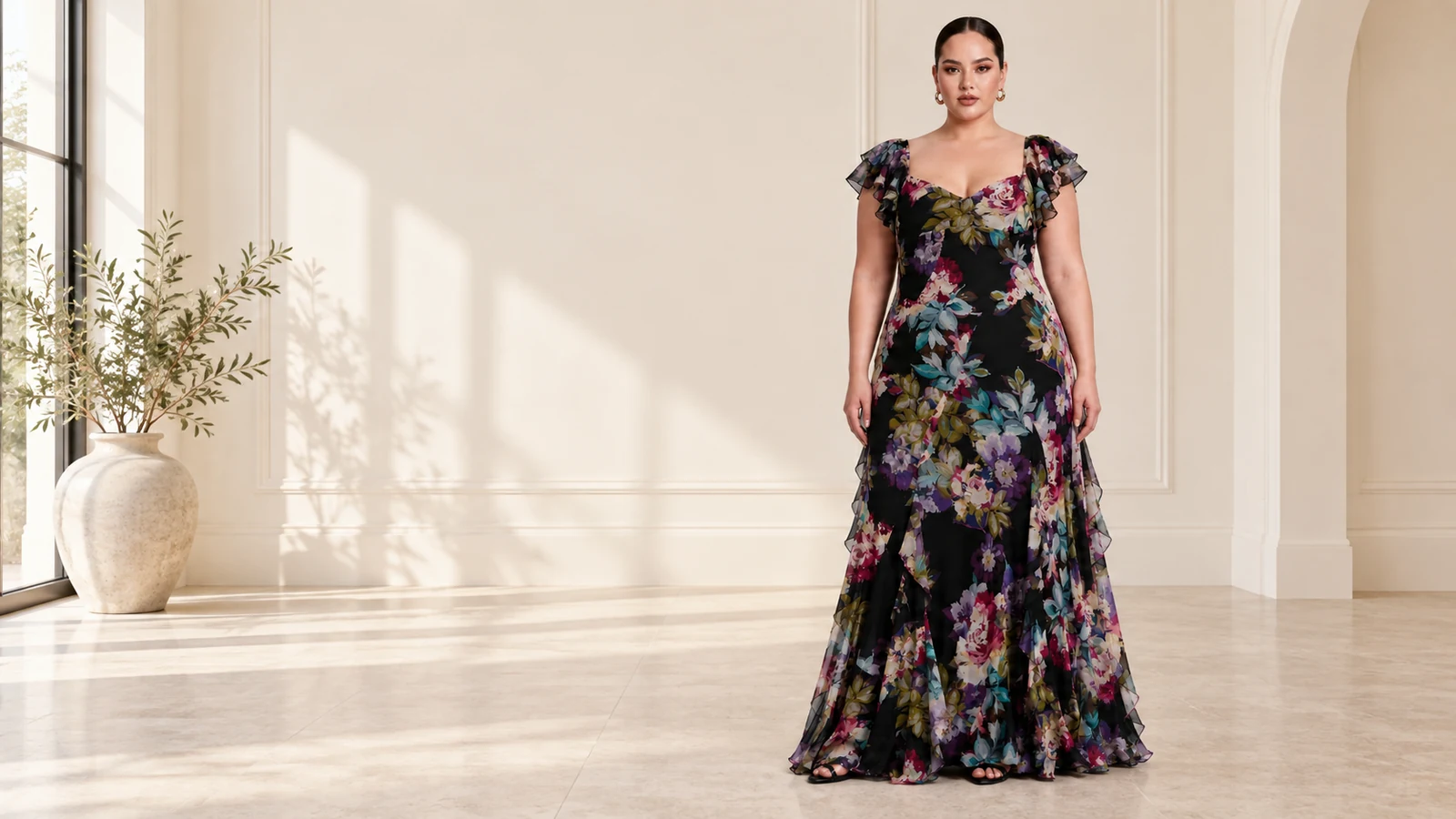
A plus size floral print chiffon maxi evening dress needs sample checks for neckline fit, print balance and skirt movement before joining a formal occasionwear collection.
FROM ATTITUDE model ATT10 combines a sweetheart neckline, flutter sleeves and a dark-ground floral pattern. Its product page identifies chiffon fabric, polyester composition and a flowing long silhouette. These details help buyers decide what to evaluate, but they cannot replace a physical fit and appearance review. A useful selection process connects the intended collection role with a clearly identified sample and written approval points.
Start with the occasion and the complete silhouette
The dress is positioned for wedding-guest, evening and formal use. Within evening and occasion assortments, its long skirt and floral contrast offer a specific visual direction. Buyers should decide where that direction belongs in their own collection before discussing changes. The venue, expected movement and desired level of coverage should guide the sample brief rather than a broad promise of suitability for every event.
Review length with the intended styling
Evaluate the hem with the footwear planned for fit review and collection presentation. Observe the wearer standing, walking and turning naturally so that the assessment includes movement as well as the front view. A full-length skirt needs an agreed finish point for the intended customer. Record that decision alongside the garment measurement instead of relying on an image where the floor or shoes may be partly concealed.
Separate collection direction from individual preference
A plus size floral print chiffon maxi evening dress should be selected against an identified customer and fit brief. Some customers may prefer more coverage or a different amount of ease. Those preferences require clear decisions during development. Describe the accepted silhouette and the intended use in neutral terms, without assuming that one neckline or skirt shape will suit every wearer in the size range.
Approve the neckline and sleeve relationship on a sample
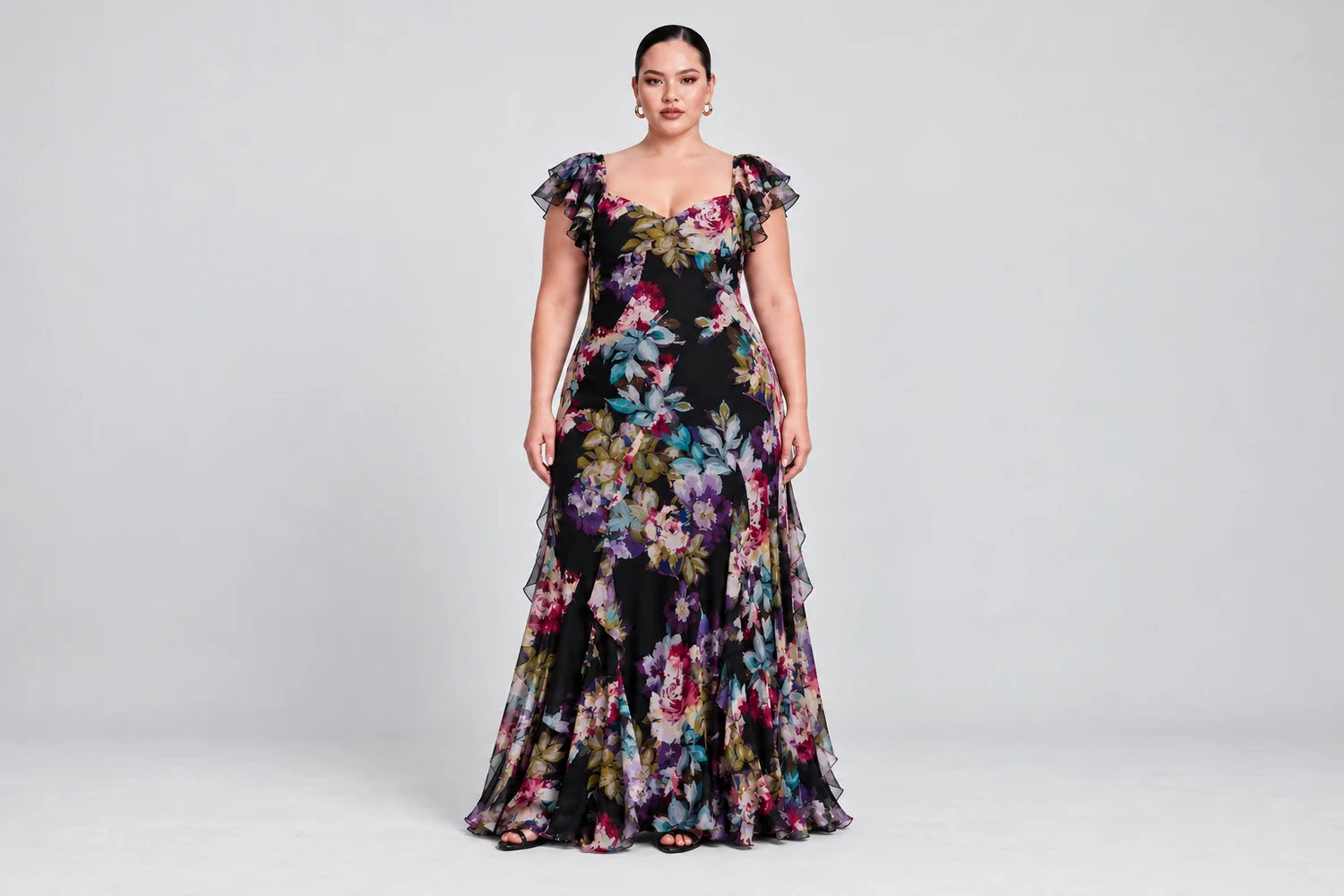
The elegant sweetheart neckline is a named product highlight, and its shape is visible in the source image. Review its position together with the shoulder and sleeve outline. An approval photograph should show how these elements relate on the intended fit reference. The result provides a useful design record, while the physical review establishes whether adjustments are needed for the collection version.
Check coverage during ordinary movement
The product describes romantic flutter sleeves with a sheer, layered appearance. Assess their coverage when the wearer raises an arm, reaches forward and sits. The sample should also reveal whether the neckline remains where the buyer intends. These are observation points for fitting, not evidence of universal comfort. Record any requested change precisely so that the next sample can be compared with the same conditions.
Keep visual approval and construction approval connected. The flutter edge, shoulder placement and neckline curve contribute to the design as a group; changing one can alter the overall impression. Ask the supplier to identify the revised sample when a change is made. A clear version reference helps prevent the original photograph from being treated as approval for a garment with different proportions.
Use a physical reference for the floral print and chiffon
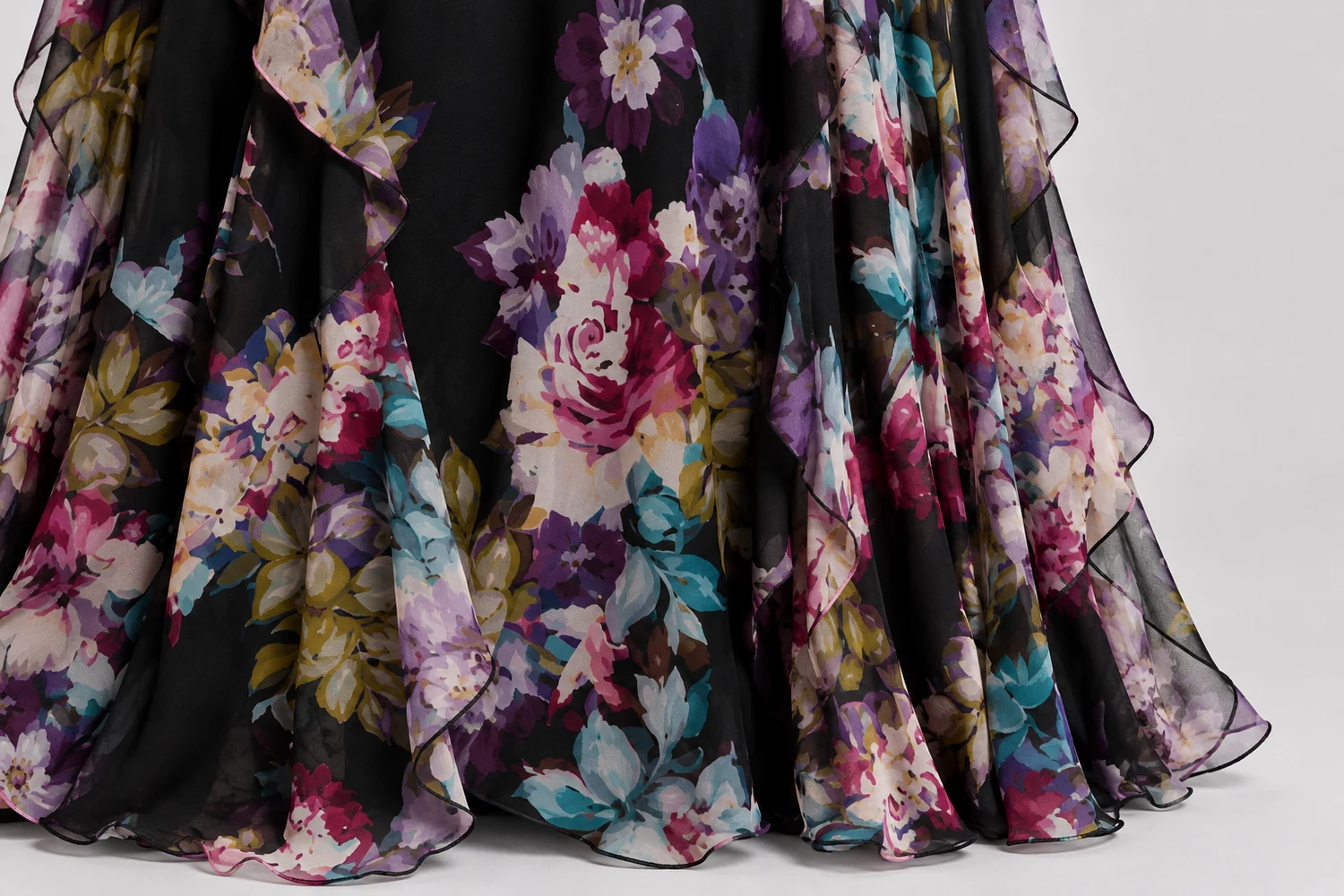
The dark background and multicolor flowers are central to this style. Review the scale, balance and placement of the pattern across the bodice, sleeves and skirt, using the actual garment as the reference. Screen images help explain the direction but are insufficient for approving production color. A buyer should agree which appearance variations are acceptable before relying on the print in collection photography or retail descriptions.
Distinguish color comparison from performance testing
AATCC publishes a procedure for visually comparing textile color differences with a standard. That provides general context for discussing a repeatable approval process; it does not show that ATT10 has been tested. Buyers and suppliers should agree on the physical reference and review conditions. Separate this appearance decision from colorfastness requirements, which need their own appropriate evidence and acceptance criteria.
The page declares chiffon fabric and polyester composition, while the highlights describe a flowing skirt with subtle ruffles. Inspect the material, edge finish and drape directly. Do not infer fabric weight, lining construction, stretch, care instructions or tested durability from the photograph. If any of those properties matters to the planned assortment, request the specification and evaluate a representative sample before approval.
Read the published size chart as a starting point
The visible chart lists XL, 2XL and 3XL, while the size offer extends further and mentions custom grading. The table below reproduces the published centimetre length and bust values. Waist data is omitted because one centimetre-to-inch pairing is inconsistent. Obtain a corrected complete specification before approving that dimension, and avoid treating the displayed sample sizes as proof of fit throughout the entire offer.
| Published size | Length (cm) | Bust (cm) | Required follow-up |
|---|---|---|---|
| XL | 135 | 115 | Confirm measurement method |
| 2XL | 137 | 126 | Review against the target fit |
| 3XL | 139 | 132 | Confirm the full grading specification |
Agree on measurement points and revision control
Confirm how length and bust are measured, the condition of the garment during measuring and the tolerances used for approval. Do not assume that a listed bust value is a flat width or a body measurement. Additional sizes need their own specification. Keep the chart, fit reference and accepted sample version together so that later revisions can be checked against the correct record.
Size review should cover the relationship between dimensions and appearance. A neckline adjustment may affect the upper silhouette, while a length change can alter the way the floral pattern finishes near the hem. Recheck the relevant visual details after a revision. This keeps measurement approval connected to the garment the buyer intends to offer, rather than reducing the decision to a size label alone.
Bring the accepted design into a sourcing brief
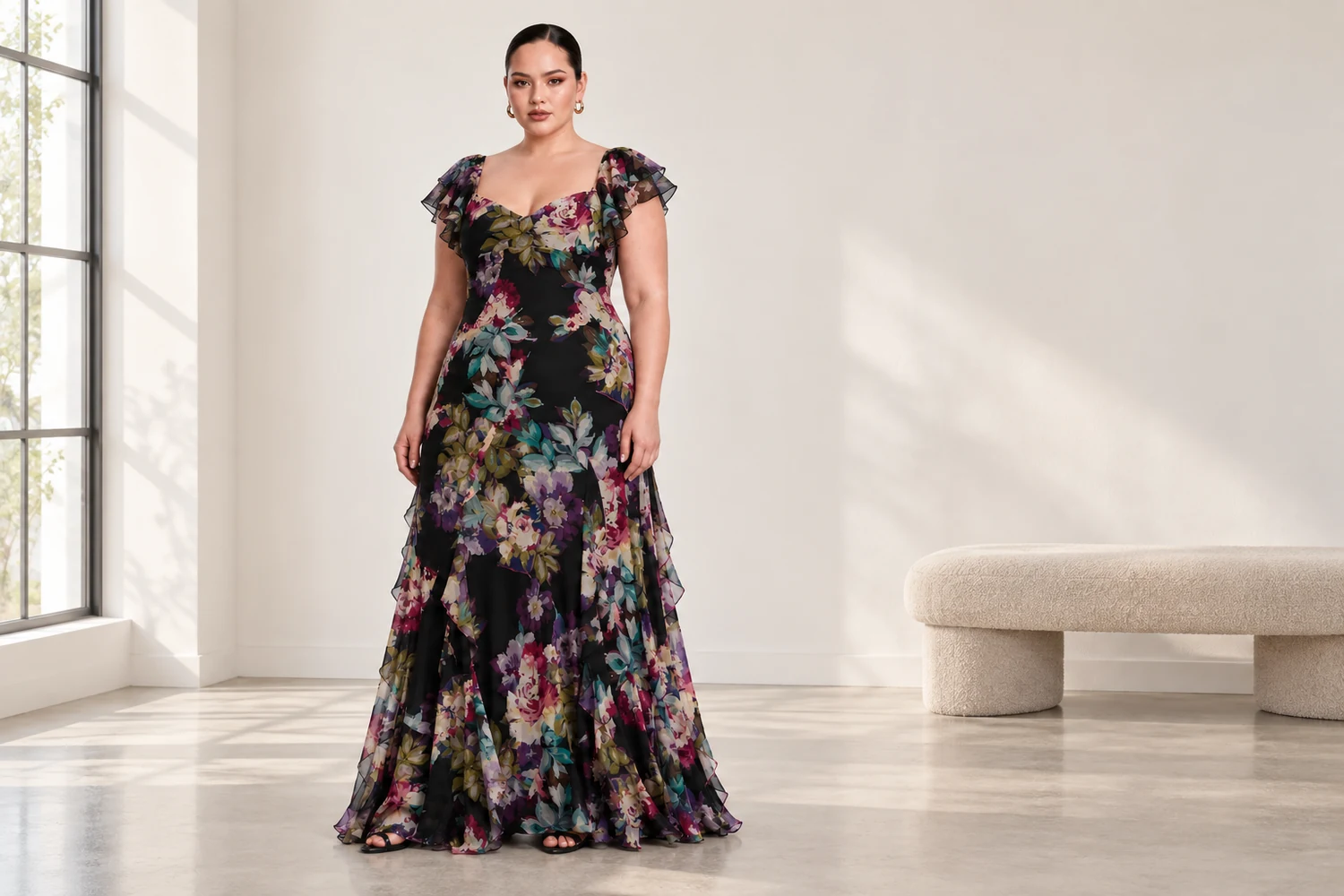
The listed OEM/ODM, customized-sample and custom-label options support private label apparel sourcing discussions. Define which features of the reference are accepted and which need development before requesting a revised sample. The availability of these services does not establish every customization option or commercial term. Buyers should confirm the proposed changes and the current order requirements directly with the supplier.
- Collection role: describe the intended occasion, customer and styling reference.
- Design approval: identify the neckline, flutter sleeves, skirt outline and accepted sample.
- Print reference: agree on the physical floral pattern and color comparison conditions.
- Size specification: resolve missing sizes, waist-data correction and measurement methods.
- Order details: confirm labels, tags, packaging and any outstanding commercial terms.
The source contains different packing descriptions, so the final packaging instruction should remain a written confirmation item. Keep it separate from garment approval until resolved. A complete brief should distinguish accepted details, requested changes and unanswered questions. That separation gives the supplier a practical basis for the next sample discussion and helps the buyer avoid approving assumptions as if they were confirmed specifications.
Frequently Asked Questions
Does the product image establish production color?
No. It provides a visual introduction to the floral pattern. Approve a physical reference and agree on comparison conditions with the supplier. Color consistency and colorfastness are separate questions; neither should be inferred from the campaign photograph.
Can the visible size chart cover the whole collection?
No. The displayed measurements cover selected sizes. Request the remaining specifications, clarify how each dimension is measured and resolve the waist-data inconsistency. Custom grading availability does not remove the need for an approved size specification.
Does chiffon composition establish care performance?
No. The page identifies fabric type and composition, but those facts do not establish a washing method, shrinkage allowance or tested colorfastness. Confirm care instructions and any relevant performance evidence for the actual fabric and garment.
What should buyers take to a customization discussion?
Bring the intended collection role, the reviewed sample, the accepted print reference and a list of changes. Add the complete measurement requirements and final label and packaging instructions so that the supplier can assess the proposed version clearly.
Build the Floral Occasionwear Sample Brief
A plus size floral print chiffon maxi evening dress can move toward selection when fit, print and skirt movement have an agreed reference. Review the ATT10 product details, document the accepted sample and resolve the remaining specifications before confirming its place in the collection.