
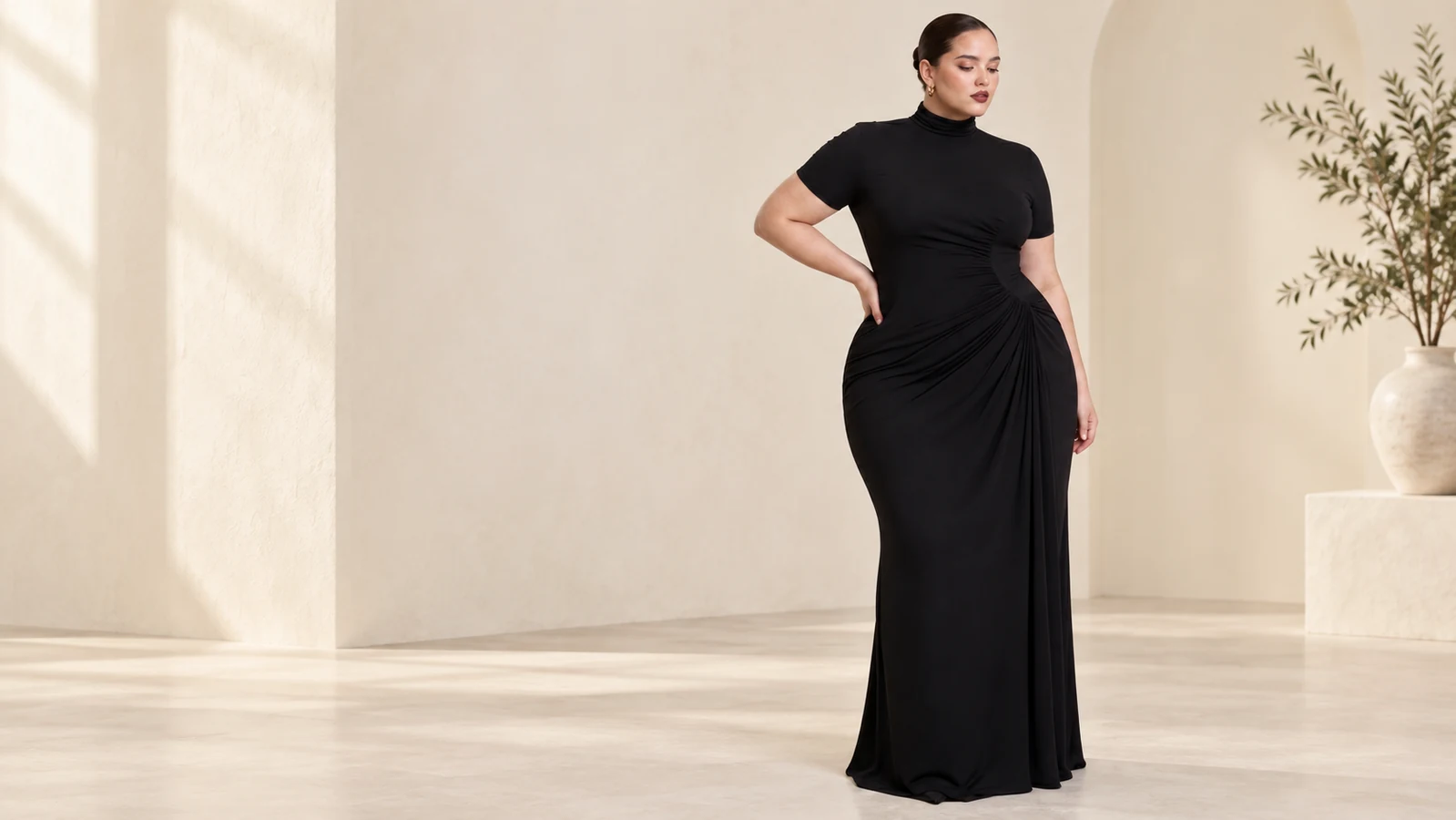
A plus size ruched mock neck maxi dress can support an occasionwear assortment when its neckline, waist drape and full-length proportions match the approved sample brief.
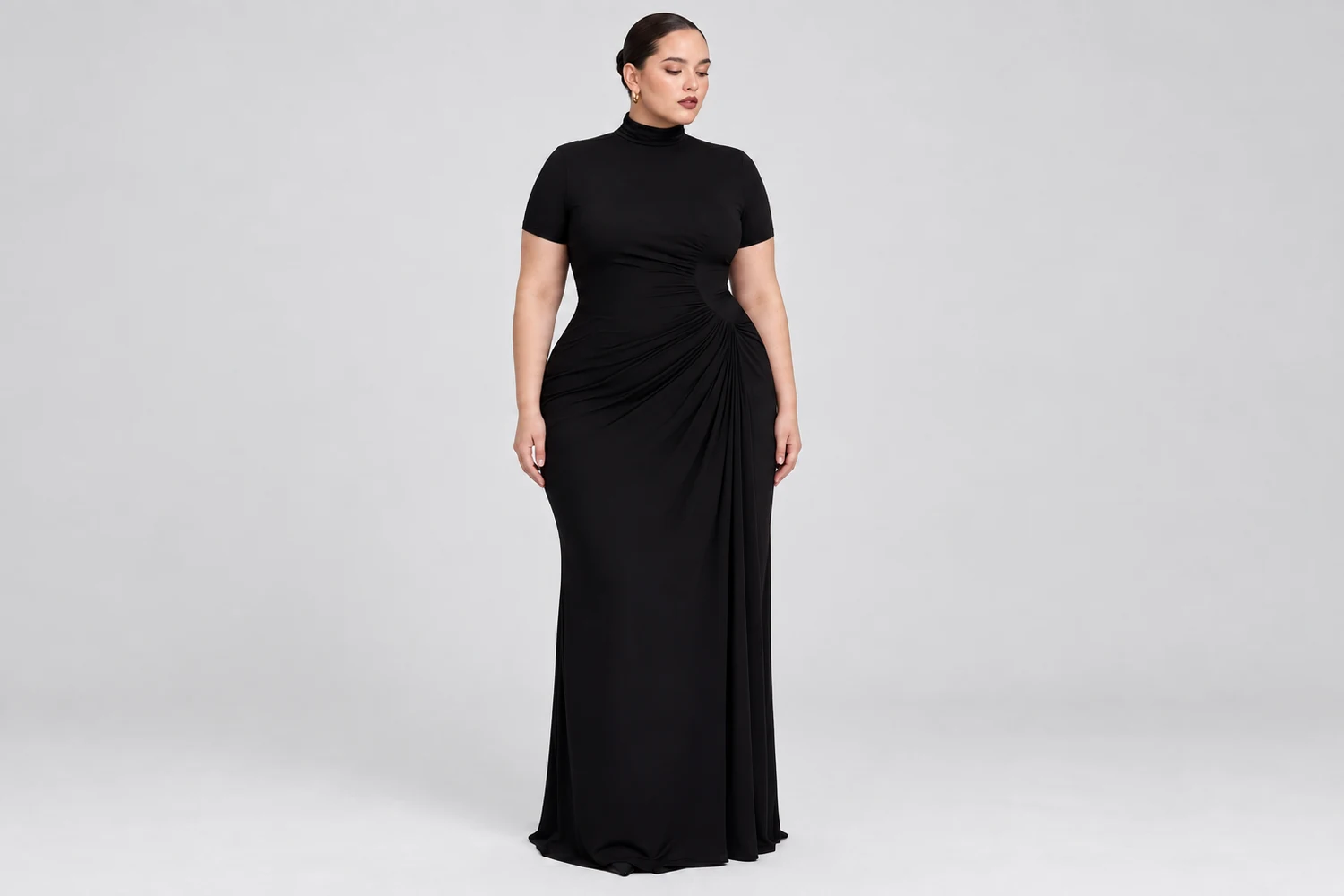
FROM ATTITUDE model ATT06 provides a reference for buyers evaluating a fitted long dress with short sleeves and asymmetric gathering. The product page identifies evening and formal uses, a knitted fabric construction and customization services. Those details establish a starting point for selection. The next step is to compare the physical garment with the intended customer, collection role and agreed measurement requirements.
Define the occasion before approving the silhouette
The dress has a clear role in evening and occasion assortments, where neckline coverage, waist detail and length influence the overall presentation. The source mentions formal occasions and evening events. Buyers should translate that positioning into a specific collection brief, considering the venue, expected movement and styling choices rather than treating an event category as a universal suitability claim.
Review the complete outfit in context
Assess the sample with the footwear planned for the collection photography or fit review. Check where the hem finishes when the wearer stands naturally and walks. A full-length garment may look resolved in a static image while needing adjustment for the intended use. Record the accepted length and styling conditions so that subsequent reviews compare the same presentation.
Keep fit preference separate from size labels
A plus size ruched mock neck maxi dress should be evaluated against the target fit, not a general promise about how every wearer will look. Body proportions and preferred ease affect the result. Use an identified fit form or wearer for sample approval, then document the accepted silhouette. This gives the supplier a clearer reference than subjective requests for a more flattering appearance.
Inspect the neckline and gathering together
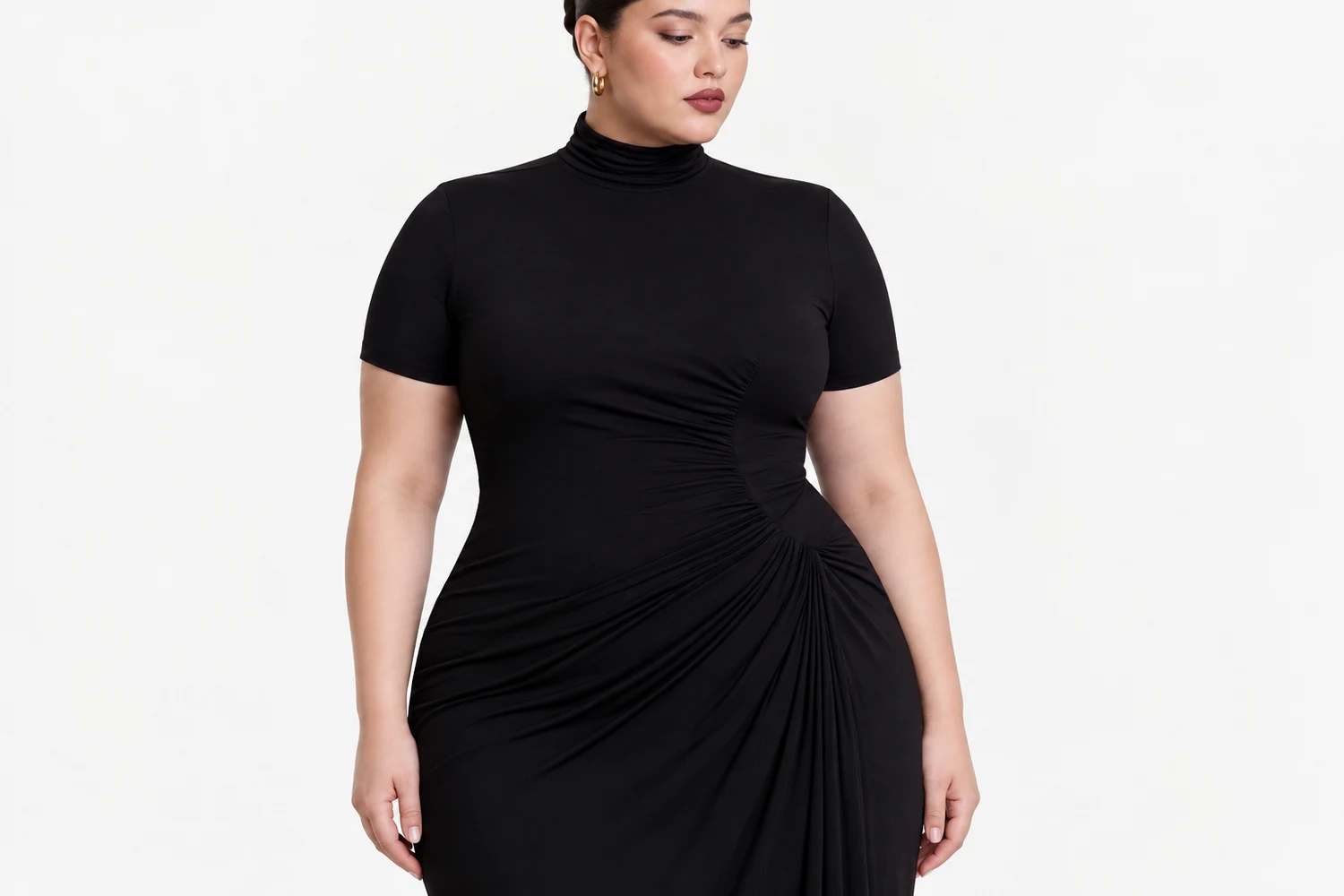
The high neckline and side gathering are defining details. Their relationship determines how the garment sits across the upper body and where the drape begins. The ruched waist design deserves a specific approval point, including its position and the direction of the folds. Buyers should inspect the sample from the front and a gentle side angle under consistent light.
Check the collar during normal movement
Review whether the mock neckline remains in the intended position when the wearer turns the head, reaches forward and sits. The short sleeves should be assessed at the same time, because upper-body movement can change the way the fabric hangs. A photograph cannot establish comfort, so record the observations on the actual sample without converting them into a claim for every customer.
Record the accepted drape rather than a generic shape
Compare the gathered area at rest and after movement. Note whether the folds return to the approved arrangement and whether the gathering sits at the intended height. The aim is to define the design reference, not to demand identical folds in every photograph. Keep a clear distinction between intentional draping and an unintended pull that needs a construction or fit adjustment.
Use the available chart without inventing missing measurements
The displayed chart provides entries for XL, 2XL and 3XL, while the broader size offer includes additional sizes and custom grading. The following table reproduces the published centimetre length and bust values only. Waist measurements are excluded here because one centimetre-to-inch pairing is inconsistent. Buyers should obtain a corrected, complete chart directly before approving that dimension.
| Published size | Length (cm) | Bust (cm) | Approval question |
|---|---|---|---|
| XL | 135 | 115 | Confirm measurement method |
| 2XL | 137 | 126 | Review against target proportions |
| 3XL | 139 | 132 | Confirm fit on the intended size reference |
Agree on how each point is measured
Confirm the measurement points, whether the fabric is relaxed and how the gathered area is positioned during measuring. Do not assume that a listed bust value is a flat width or a body measurement. The supplier should define the method and tolerances used for sample approval. Missing sizes require their own specification rather than an extension of the visible progression.
Keep the chart and the approved sample linked through a clear revision reference. A change to the neckline or gathering may alter how a measurement should be interpreted. When a revision is proposed, record which dimensions and visual details were rechecked. This helps prevent an older chart from being used to approve a newer garment version with different proportions.
Treat fabric performance as a separate approval question
The product describes stretch knit fabric and a smooth surface. Those descriptions help buyers choose what to inspect, but they do not provide a quantified stretch limit, recovery result or fabric weight. Evaluate the actual material for the intended fit and use. Keep descriptive language about comfort or drape separate from performance statements that would require additional evidence.
Review the garment before and after agreed care
The sample should be assessed under the care conditions agreed for the actual fabric. AATCC publishes a method for evaluating garment dimensional changes after home laundering; this offers general context for a testing discussion, not proof that ATT06 has passed a test. Buyers and suppliers should select an appropriate procedure and acceptance criteria before relying on any care-performance statement.
Check the neckline, gathered waist and hem as well as the main garment dimensions. These areas contribute differently to the finished appearance, so a single overall observation may miss an important change. Keep the accepted fabric reference and the review record together. Do not infer a washing temperature, drying method or shrinkage allowance from the product photograph or another dress.
Prepare a focused development and sourcing brief
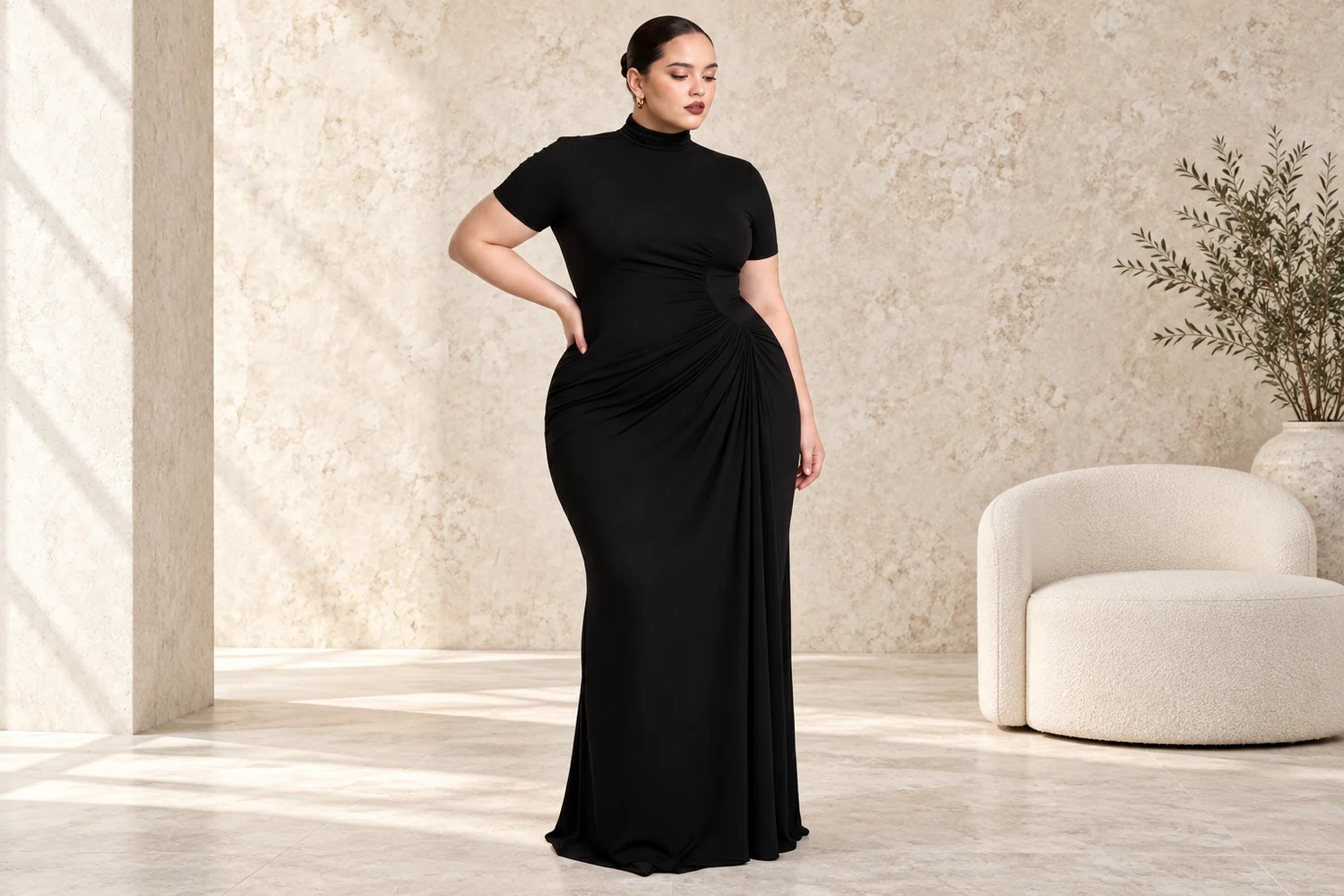
The page lists OEM/ODM services, customized samples, labels and tags. For private label apparel sourcing, these options support a discussion about the proposed collection version. The brief should explain which features are already accepted and which need development. Availability of customization does not establish the feasibility or commercial terms of every requested change.
- Define the use: identify the occasionwear role and intended customer fit.
- Approve the design: record the neckline, sleeve outline and gathering placement.
- Resolve sizing: obtain the complete chart, corrected waist information and measurement method.
- Confirm material: agree on the fabric reference and any required performance evaluation.
- Close the order details: confirm labels, tags and the final packing instruction in writing.
The source contains different packing descriptions, so packaging should remain an open specification point until confirmed. Commercial terms also need confirmation for the actual order and any revised design. Keep the final sample approval separate from those outstanding items. A useful sourcing record makes it clear what the buyer has accepted and what still requires a supplier response.
Frequently Asked Questions
Does the dress suit every formal setting?
The page positions it for evening and formal occasions, but suitability depends on the intended setting, styling and customer preference. Buyers should review the sample within their own collection brief, including movement and hem clearance with the planned footwear.
Does the chart cover the complete size offer?
No. The displayed measurements cover XL, 2XL and 3XL, while the size offer is broader. Request the remaining specifications directly. Do not extrapolate missing sizes or assume that a published label establishes the same fit across different brands.
Does stretch fabric remove the need for fitting?
No. Stretch is a material characteristic, while fit also depends on garment dimensions, construction and the intended ease. The page does not provide a measured stretch or recovery result. Review neckline position, gathering and length on an appropriate sample.
Which details need written confirmation before ordering?
Confirm the complete measurement chart, waist-data correction, material reference, applicable care requirements and packaging. Where customization is requested, include the accepted labels, tags and design revisions. The approval record should identify the exact sample version being ordered.
Prepare the Occasionwear Sample Decision
A plus size ruched mock neck maxi dress can move toward assortment approval once its neckline, drape and length have been reviewed together. Use the ATT06 product details to prepare a focused sample brief, resolve the remaining specification questions and document the version intended for the collection.