Evaluate a chic back cutout blazer suit set by reviewing shoulder structure, back coverage and both garment measurements against a clear collection brief.
Start with the intended silhouette and coverage
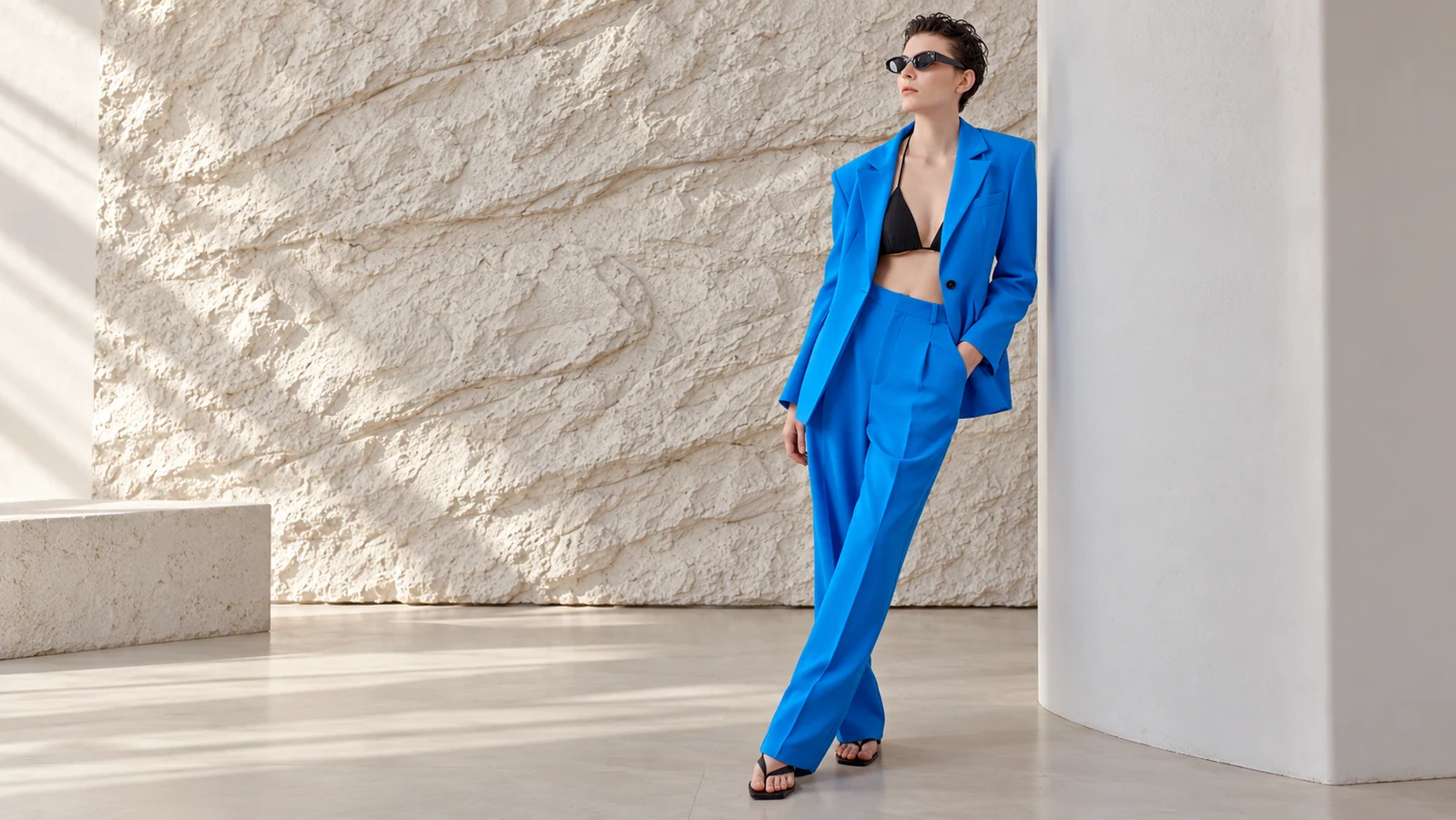
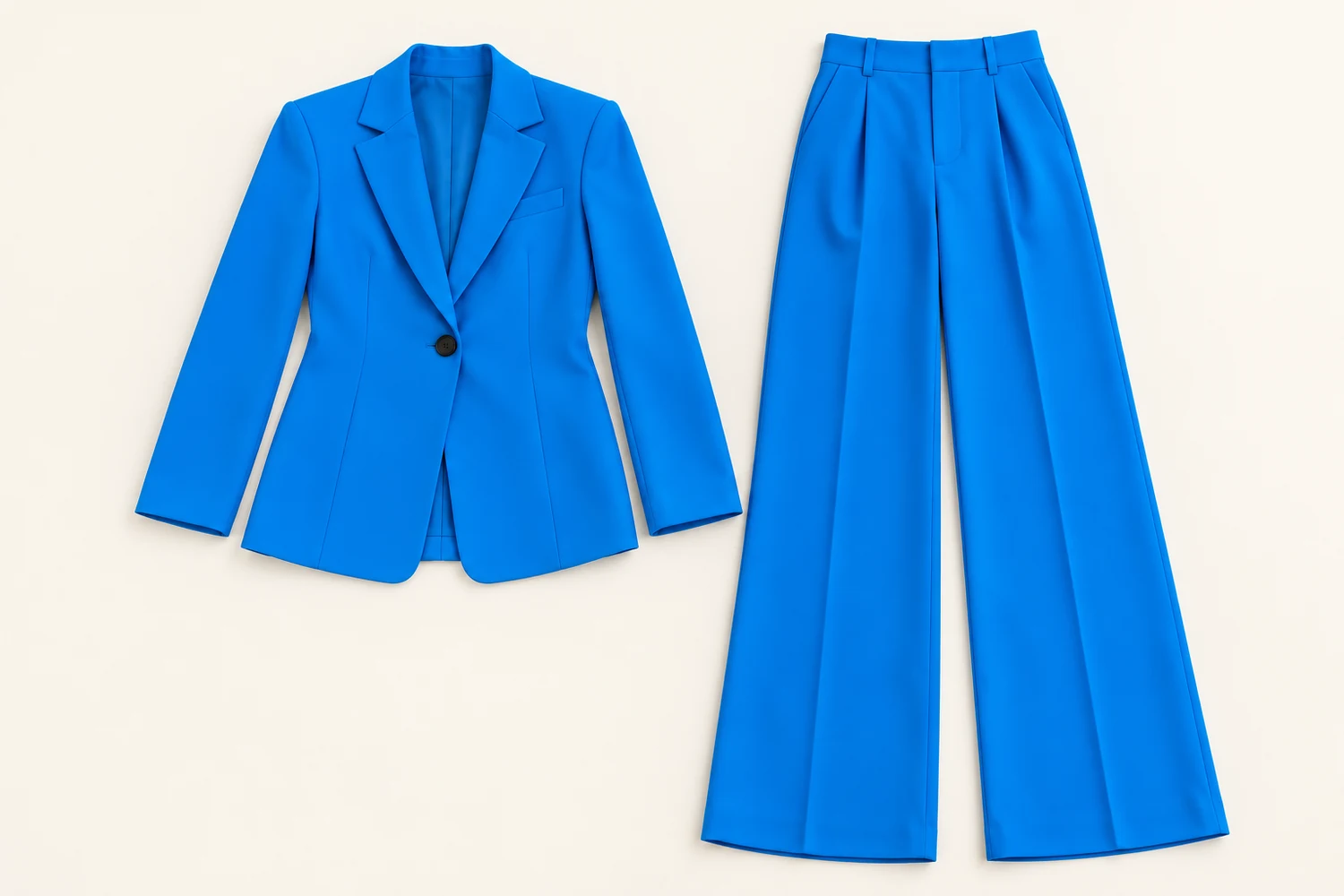
The defining combination is a structured blazer, an open-back feature and matching wide-leg trousers. FROM ATTITUDE identifies this two-piece style as model CS2203TZ34 -1. A buyer can use those documented features to decide what the sample must demonstrate, rather than treating a coordinated photograph as a complete approval record. The jacket and trousers need to support the same collection purpose while fitting the intended wearer individually.
Define the collection role
For workwear and tailored assortments, first establish the expected coverage and presentation. A back opening changes the review compared with a conventional closed-back jacket. Its suitability depends on the specific brief and wearing context; a tailored front does not establish that the style meets every workplace dress requirement. Record whether the proposed capsule calls for visible back detail and how that detail should appear when worn.
Keep the reference specific
The highlights describe electric blue and soft pastel pink, while the selected hero presents the blue version. Keep the chosen color reference attached to the sample request so different options are not confused. Identify the garment separately from its photographic styling. An image can guide visual discussion, but it does not establish which styling accessories are supplied with an order.
Review shoulder structure and the back opening together
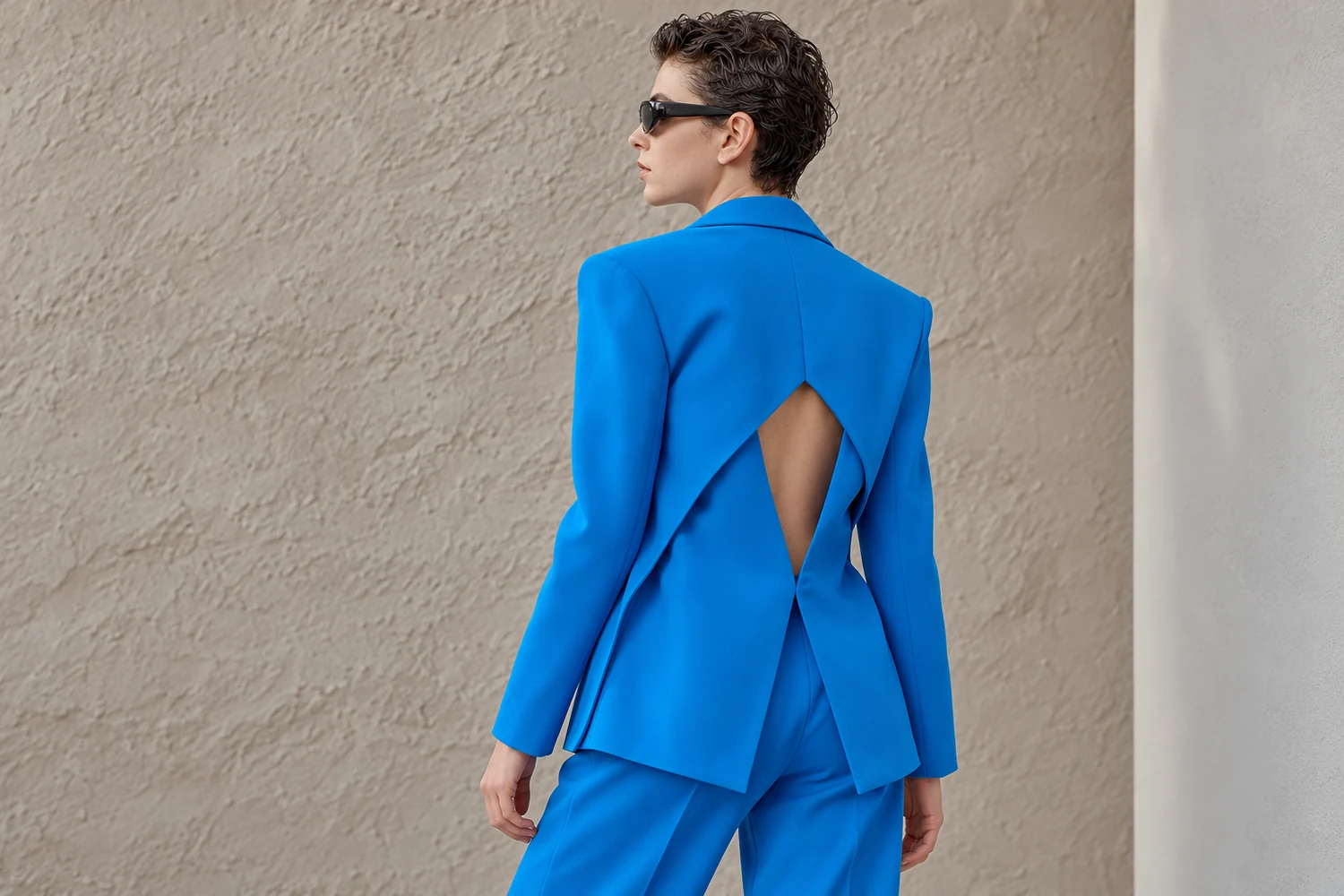
The page describes strong shoulders, notched lapels and a geometric triangle cutout with a draped effect at the back. These are connected review points: the upper structure frames the jacket, while the opening determines the rear presentation. Inspect the sample from the front, side and rear with the intended posture and underlayer, keeping photographs consistent enough to compare comments across views.
Observe the upper fit
Check where the shoulder line sits on the intended wearer and how the lapels settle when the arms rest naturally. Then observe ordinary arm movement and a seated position. Note any pulling or shifting as a sample observation, rather than assuming that a structured appearance proves comfort. The sleeve position should be reviewed with the jacket in its intended wearing configuration.
Assess the opening as a design detail
For this chic back cutout blazer suit set, rear coverage deserves its own approval comment. Compare the visible opening and drape with the product reference while standing and seated. Confirm that the chosen underlayer works with the intended presentation. A photograph does not establish fastening strength, lining construction or movement performance, so questions about those details should remain open until the supplier confirms them.
Use the published blazer measurements without extrapolation
The displayed blazer chart provides S, M and L measurements in centimeters. The table below reproduces those entries without conversion. It supports a focused discussion about proportion, but it should not be treated as a complete body-size recommendation. Buyers need confirmation of how each measurement is taken and whether the chart describes the current sample version.
| Blazer size | Shoulder (cm) | Bust (cm) | Sleeve (cm) | Length (cm) |
|---|---|---|---|---|
| S | 47 | 93 | 59 | 70 |
| M | 49 | 97 | 60 | 72 |
| L | 51 | 101 | 61 | 74 |
Confirm the measurement basis
Ask for a measurement diagram and an agreed tolerance for each required point. Keep body measurements separate from garment measurements when discussing the desired ease. If a sample differs from the agreed specification, record the actual value and requested correction. The published numbers alone do not determine a suitable fit for every wearer or explain the measurement method.
Check the trousers independently
The high waisted wide leg trousers require their own fitting and measurement review. Inspect the waist position, hip area and hem with the intended footwear, then compare them with a supplier-confirmed trouser chart. Do not infer trouser fit from the blazer size label. The page lists XS through XL and custom grading, but missing measurements for a required size still need confirmation before approval.
Separate visual fabric review from performance claims
The specification declares 100% polyester and identifies spring and summer. These statements describe the product listing; they do not by themselves establish care instructions, stretch, lining or suitability for a particular temperature. Request a confirmed fabric description and sample when the exact surface, weight or construction matters to the collection. Keep those confirmations attached to the specific style and chosen color.
The vibrant fabric described in the highlights should be assessed on the actual blazer and trousers together. Compare their visible color under consistent lighting and review the front folds, lapel edges and trouser pleats without relying on screen brightness. Note whether any difference needs clarification. Appearance approval and performance testing are separate decisions; do not turn an attractive sample into an unsupported promise about wrinkle resistance or colorfastness.
Build one approval record for both pieces
For private label apparel sourcing, the page states customized samples, OEM/ODM and custom-label services. These options support a development discussion, but the requested scope still needs supplier confirmation. A useful record keeps the current reference, required sizes and proposed changes together, so the next sample can be reviewed against an explicit brief rather than a collection of disconnected messages.
- Identify the set: use the model reference and chosen color, and distinguish the blazer from the trousers in each comment.
- Record the wearing review: describe shoulder position, back coverage and trouser clearance under the intended presentation.
- Confirm missing information: request measurement definitions, required size rows and any unresolved fabric or construction details.
- Close the review: retain the supplier response and the approved sample version before making the collection decision.
A chic back cutout blazer suit set can move forward when the documented silhouette, fitting observations and confirmed requirements agree. If one piece needs adjustment, review the resulting proportions of the pair again. Keep optional development requests distinct from the current product description, and use the revised sample as the reference for any later assortment or purchasing discussion.
Frequently Asked Questions
What makes this style different from a closed-back suit?
The product highlights identify a geometric back cutout with a draped effect, combined with structured shoulders and notched lapels. Buyers should assess the rear coverage as well as the tailored front before deciding whether the set suits the intended collection.
Does the blazer chart cover every listed size?
The visible blazer measurements cover S, M and L. XS, XL and custom grading are also listed, but buyers should request the relevant measurements rather than extending the published rows or assuming an identical fit relationship.
Can the two pieces be approved from one fitting view?
A front view shows only part of the design. Review the back opening and side profile as well, and assess the trouser waist and hem independently. Keep comments specific to the piece and the observed wearing position.
Does polyester composition establish the care method?
No care method is confirmed by composition alone. Request the supplier-approved care information for the actual fabric and construction. Keep material identification separate from assumptions about washing, pressing or appearance after repeated wear.
Can a buyer discuss a customized sample?
The listing states support for customized samples and OEM/ODM services. A buyer can provide a color reference, size requirements and proposed changes, then ask FROM ATTITUDE to confirm the development scope before evaluating the next sample.
Prepare the next review for CS2203TZ34 -1
Review the product details and reference views, then share the intended collection, required size range and specific fit or coverage questions with FROM ATTITUDE. Use the confirmed answers and the physical sample to decide whether both pieces are ready for the next approval stage.