Evaluate a snake print open back pleated maxi dress by matching its bodice, back coverage and published dimensions to the intended collection and sample brief.
Compare the collection brief with the documented design
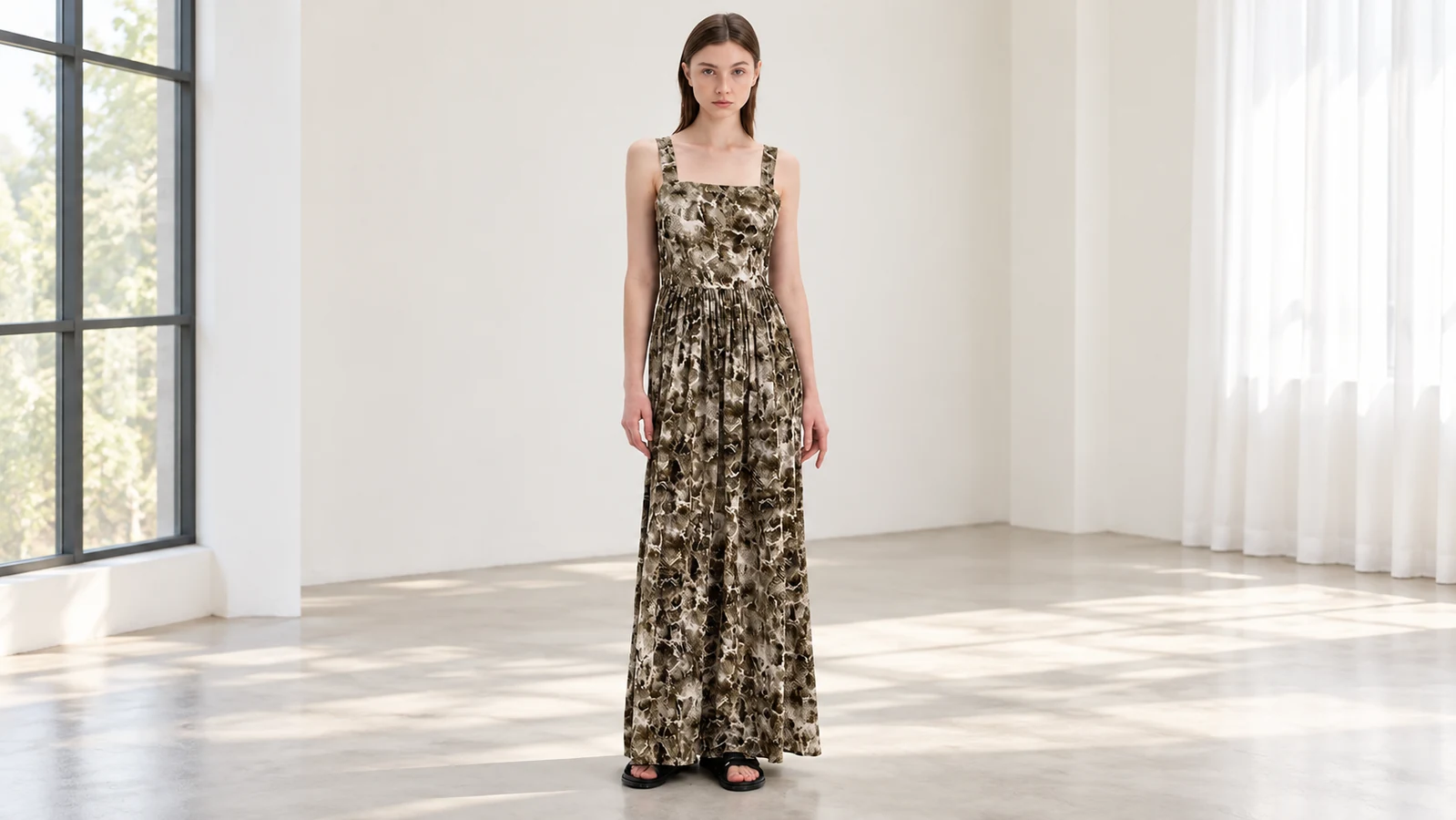
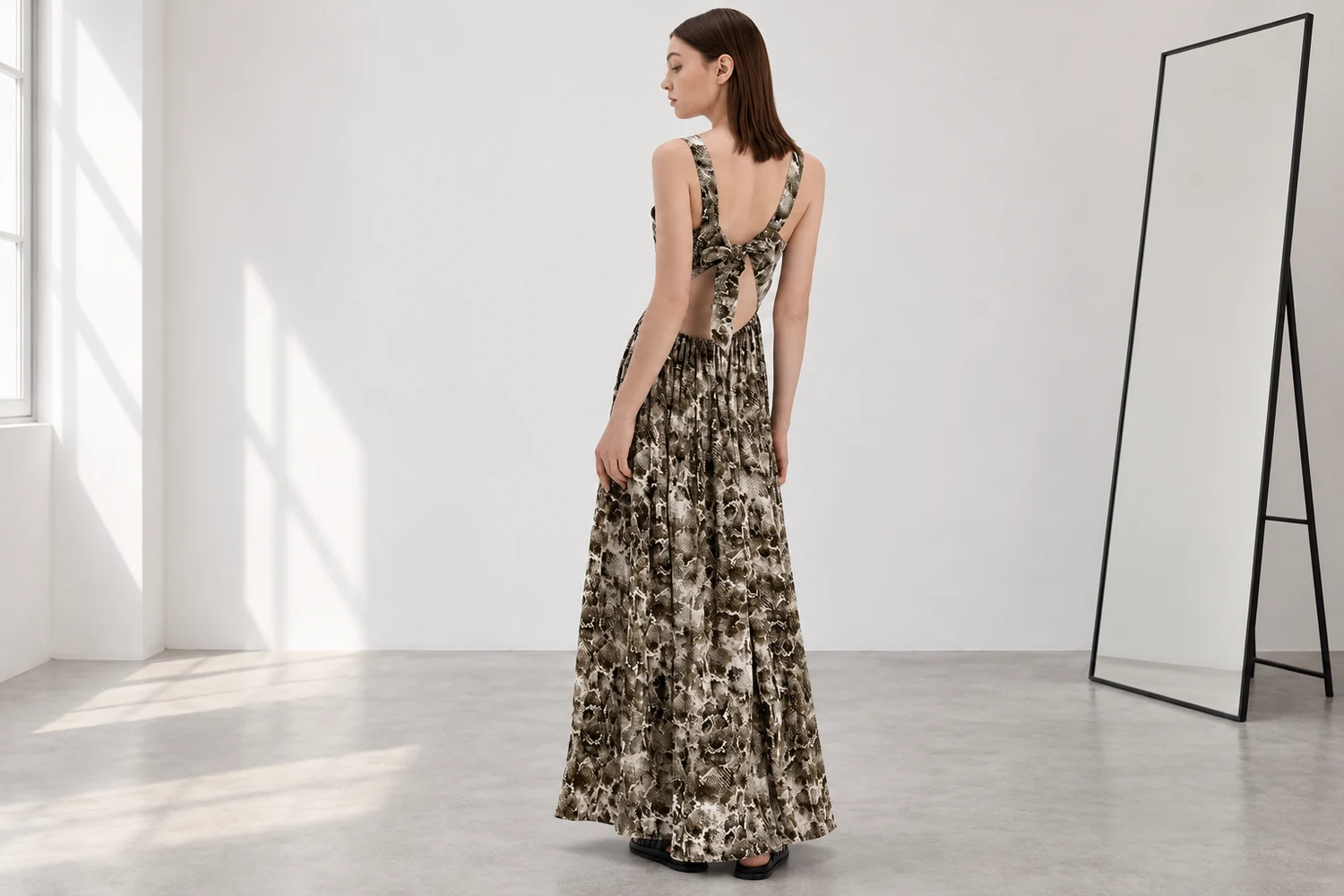
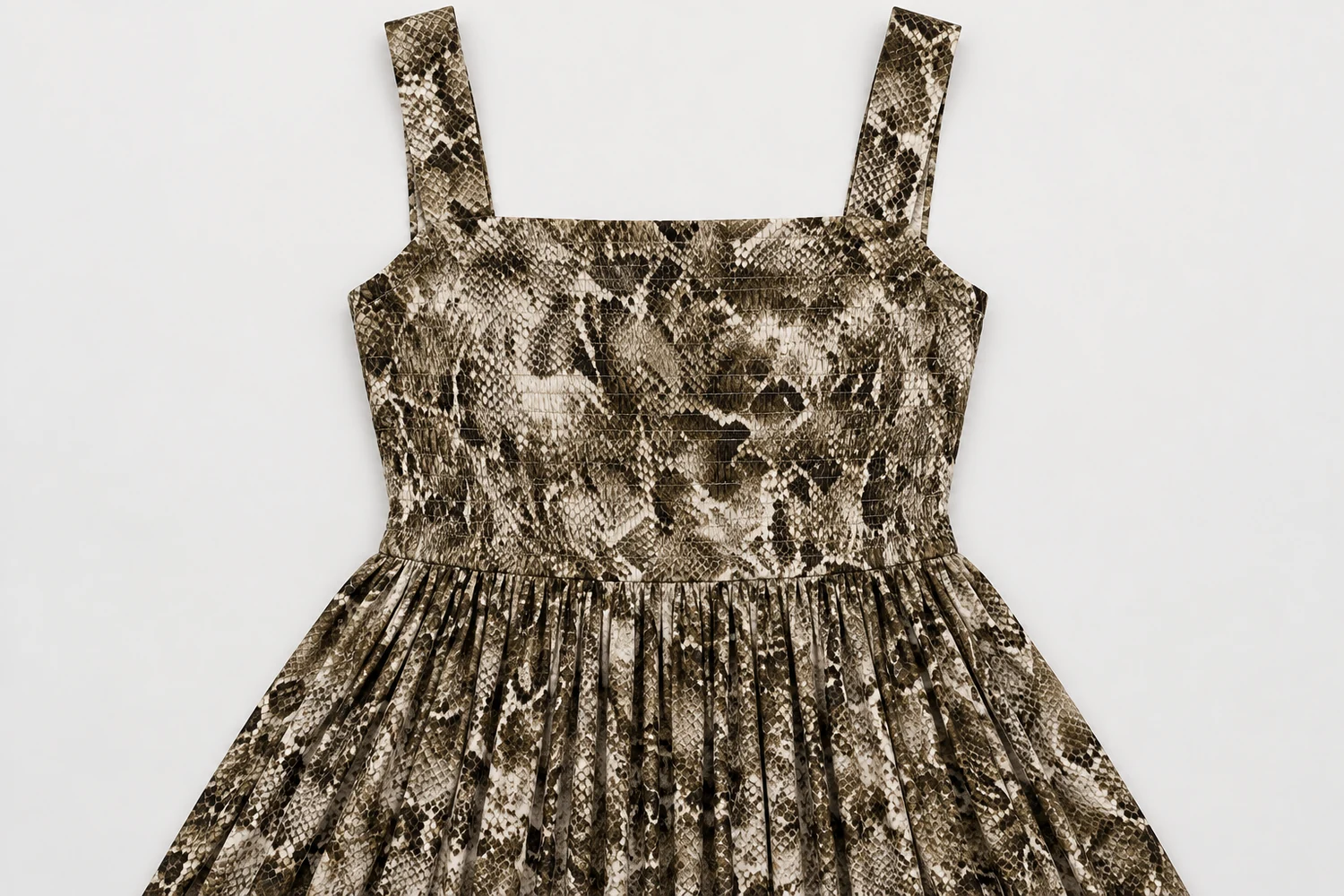
FROM ATTITUDE model SS20208 brings together an all-over snake print, a fitted smocked bodice, an open back with an adjustable bow tie, and a flowing pleated skirt. These details provide a clear starting point for a resortwear selection review. The product summary names resort collections, while the highlights also describe vacation, occasion and casual uses. A buyer should first decide which of those settings the intended assortment actually serves.
Separate the visual decision from the fit decision
Print, exposed back and skirt movement define the visual brief; they do not establish whether a sample fits the intended customer. Approve the appearance reference separately from the measurement and wearing review. That separation lets the team identify whether a proposed change concerns the look, the fit or both, instead of treating a successful photograph as final approval.
Set a clear boundary for the intended setting
A business focused on workwear and tailored assortments should treat this style as a separate resort or leisure proposal, not assume office suitability from the maxi length. The back opening remains a central design feature. Record the required coverage in the brief so that the buying team can decide whether the original design belongs in the planned capsule.
Review bodice fit and the bow together
The smocked upper section and back tie should be assessed as a connected arrangement. The page describes flexibility in the fitted bodice and adjustability at the bow, but gives no quantified adjustment range. The useful comparison is between the approved reference and the actual sample under the intended wearing conditions, with observations recorded rather than assumed.
Observe the bodice at rest and during movement
Review front neckline position, shoulder placement and the transition into the skirt while the wearer stands naturally, sits and moves the arms. Note where the fabric lies smoothly and where it pulls or shifts. The term smocked does not establish a verified stretch percentage or support level. Those characteristics need separate confirmation before they become sales copy or acceptance criteria.
Check back coverage in the proposed tie position
For a snake print open back pleated maxi dress, the rear view is part of the buying decision. Observe the opening and bow from a neutral rear angle, without a pose that hides the side edges. Record the preferred tie position and any requested change. An attractive bow in a photograph does not establish fastening performance during a full wearing review.
Use the published dimensions without filling the gaps
The displayed chart supplies length, bust and waist values for S, M and L. The table below reproduces only those centimetre rows, with identical measurement columns for each size. The size listing also mentions XL and custom grading, but no XL dimensions appear in the displayed chart. Request that missing row instead of extending the visible pattern mathematically.
| Published size | Length (cm) | Bust (cm) | Waist (cm) |
|---|---|---|---|
| S | 148 | 86 | 72 |
| M | 150 | 90 | 76 |
| L | 152 | 94 | 80 |
Confirm what each measurement describes
Ask whether the listed figures refer to the garment or the body and how each measurement is taken. For the upper section, clarify whether measurements are relaxed or extended. A shared measurement diagram and agreed tolerances make sample comments easier to interpret. Do not import a tolerance or ease allowance from another dress simply because both have a fitted bodice.
Review the hem with the intended presentation
Compare the sample length with the intended wearer and fitting footwear, then observe clearance while standing and walking. The published length alone does not predict where the hem will finish on every customer. If a length change is requested, document its effect on the overall proportion before approval; the sample and final chart should describe the same version.
Keep fabric and pleat approval separate from appearance
The specification declares polyester fabric with 100% polyester composition and lists spring and summer. The highlights describe a lightweight pleated skirt with flowing movement. Those statements support a material and seasonal discussion, but do not establish lining, opacity, care instructions or resistance to creasing. Check the physical sample and request the relevant information before making additional promises.
For casual and everyday assortments, an inspection can compare the print and fold appearance in the standing garment with the same areas laid flat. Look at the waist transition and the visible pleat rhythm, then record any difference from the approved reference. Confirm the intended care procedure before evaluating appearance after care; a new sample alone cannot demonstrate retention over repeated use.
Turn assortment and sourcing questions into an approval record
The style may enter a review of evening and occasion assortments because occasion use is explicitly mentioned on the page. Selection still depends on the event brief, back coverage and desired presentation. Keep proposed styling separate from the supplied garment specification, and avoid claiming that a print or silhouette meets every dress code.
For private label apparel sourcing, the product page lists OEM/ODM services, customized samples and custom-label options. Buyers can use those stated services to frame a development inquiry. A list of available services is not approval of a particular modification, so retain the original reference and obtain written confirmation of every requested change before moving to the next stage.
- Define the use: Name the intended resort, vacation or casual capsule and record any coverage requirements that may rule the design in or out.
- Fix the reference: Identify SS20208, retain the approved print view and distinguish requested alterations from the existing garment features.
- Close measurement gaps: Confirm the measurement basis, missing sizes, proposed grading and how the sample will be compared with the approved chart.
- Record the decision: Keep fit observations, fabric questions and supplier responses together, with a clear list of accepted details and unresolved points.
This record makes the next sample review specific. A buyer evaluating a snake print open back pleated maxi dress can identify whether an outstanding question concerns back coverage, the upper fit, skirt length or appearance after care. Commercial arrangements and final packaging should be confirmed separately for the actual order, without converting unverified assumptions into product claims.
Frequently Asked Questions
Does the displayed size chart include XL?
No. The size listing mentions XL, but the displayed measurement rows cover S, M and L. Request an approved XL row and a clear measurement basis before including that size in a purchase specification or customer-facing chart.
Does smocking mean that one size fits several customers?
The page describes a flexible smocked bodice, but does not publish an adjustment range or support a universal fit claim. Select against confirmed dimensions and a wearing review. Do not substitute the presence of smocking for the required size assessment.
What should a buyer verify about the open back?
Check whether the visible opening suits the collection brief, then assess the sample in the intended tie position. Record coverage and movement observations. The bow is an adjustable design detail; its appearance alone does not prove fit or fastening performance.
Can the polyester declaration determine care instructions?
No care method is established by the composition entry alone. Obtain the supplier-confirmed care information for the actual garment and any agreed appearance checks. Keep material composition separate from claims about washability, pleat retention or lining.
Can a brand request a custom sample?
The product-specific specification states that customized samples and OEM/ODM services are supported. Provide the reference, required sizes and proposed changes, then confirm the sample scope with FROM ATTITUDE. Approval should refer to the reviewed version and documented requirements.
Match SS20208 to the next sample brief
Review the SS20208 product details alongside the proposed capsule, then send FROM ATTITUDE the required sizes and the specific fit or coverage points that need confirmation. Use the response to decide whether the design should advance to a sample review.