Evaluate a chic back cutout blazer suit set by checking shoulder balance, back coverage, trouser proportions and the size chart before selecting a sample.
Start with the silhouette and intended coverage
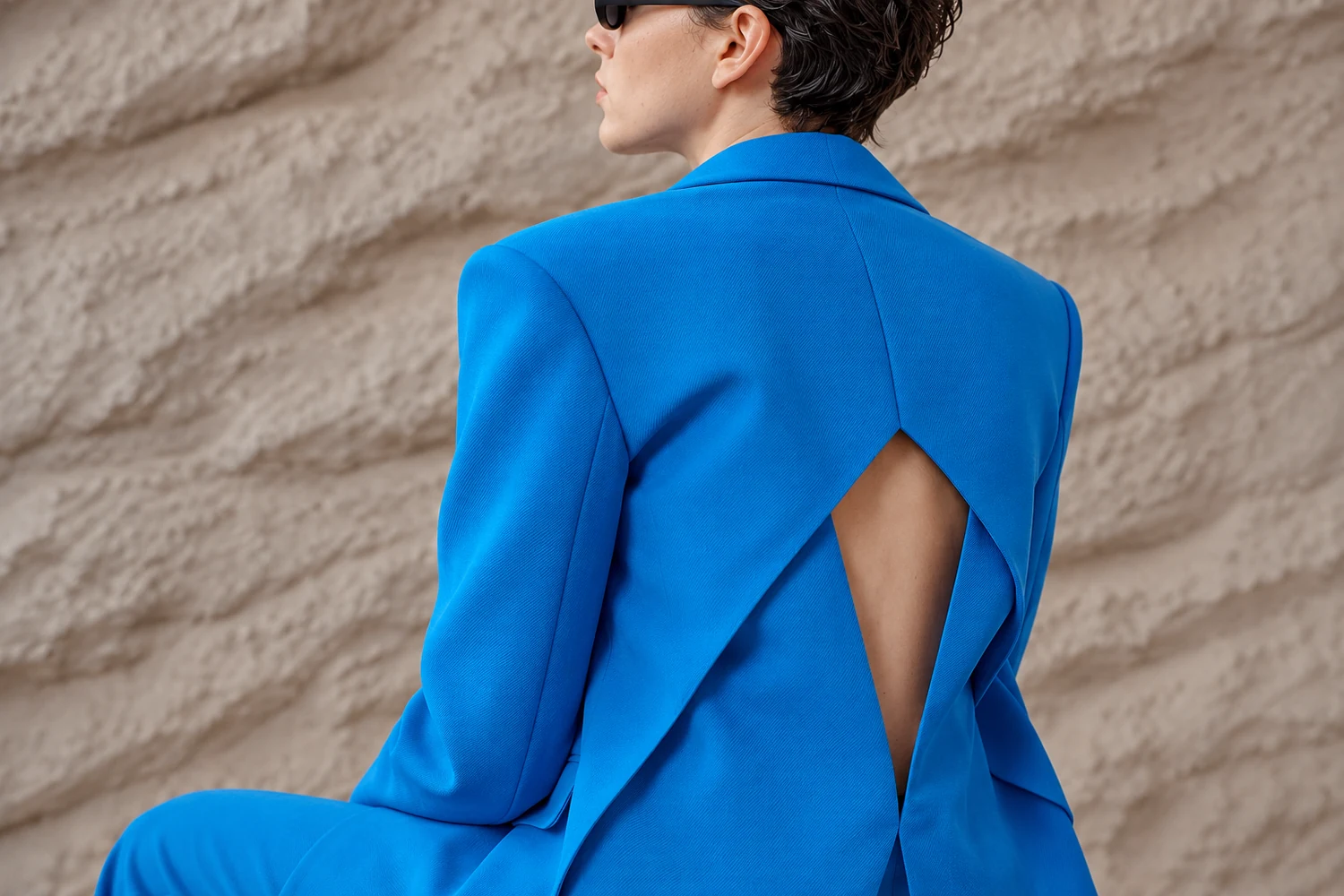
The defining choice is whether a sharply structured front and an open rear suit the planned collection. The product details identify strong shoulders, notched lapels and a geometric triangular back cutout with a pleated drape effect. Those features give buyers specific elements to evaluate, rather than relying on a general description of elegance.
Read the jacket from both directions
A front photograph shows the lapels and shoulder line, but it cannot explain the exposure created by the rear opening. Review front, side and back views with the intended underlayer. A brand planning conservative office styling may need a different coverage approach from a collection built around occasion dressing. That is a merchandising decision to make before approving photography or size quantities.
Treat the trousers as part of the same decision
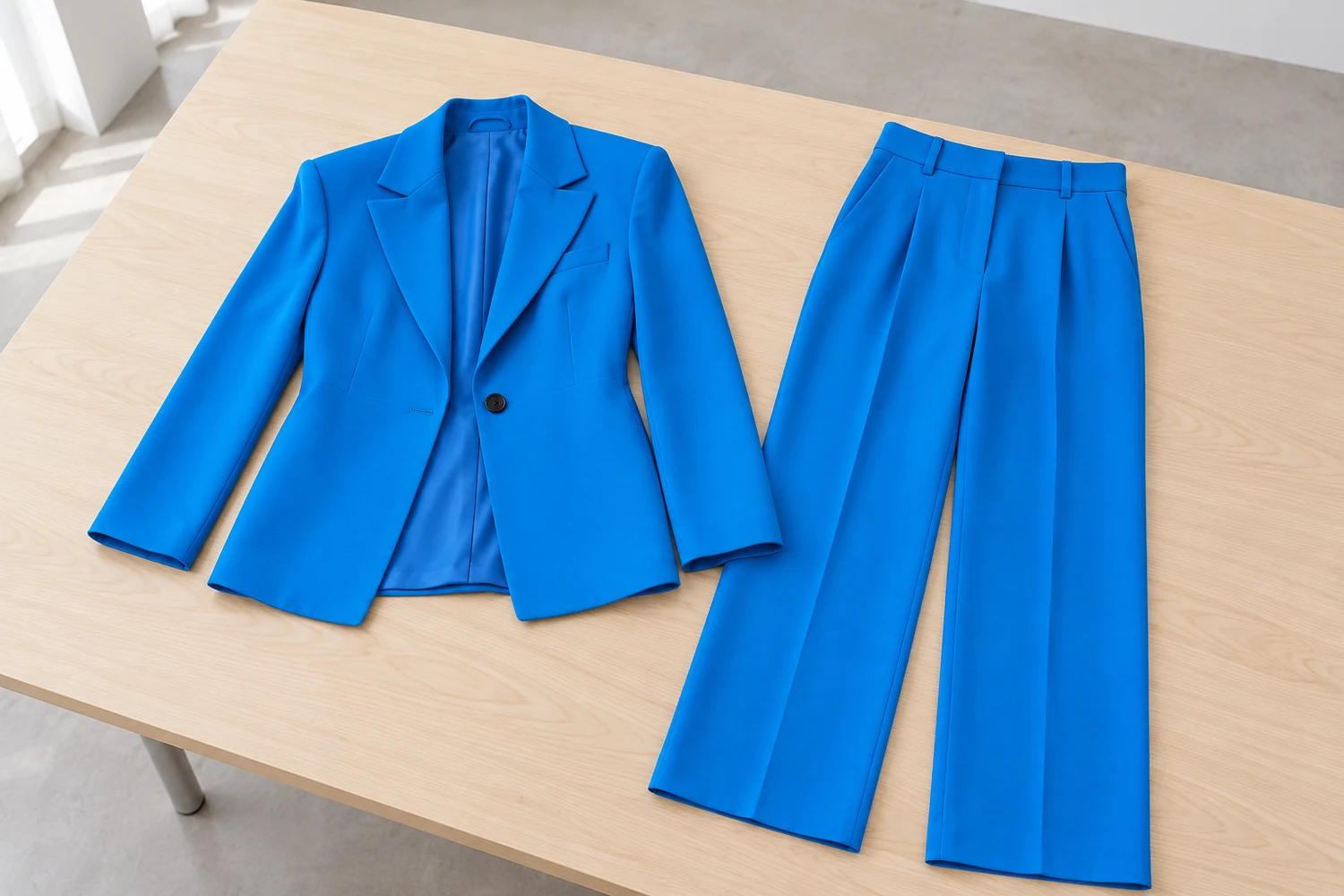
The listed high waisted wide leg trousers create a long silhouette beneath the blazer. Assess jacket length and trouser rise together: an acceptable jacket fit does not establish that the matching trousers will work for the same customer. For a chic back cutout blazer suit set, the coordinated proportion is as relevant as the appearance of either piece separately.
Use the published measurements as a starting point
The product page provides the blazer measurements below for S, M and L. These are source-listed reference values in centimeters, not a new body-size conversion chart. Confirm the measuring method with the supplier and compare the physical sample with the agreed specification before making a fit judgment.
| Blazer size | Shoulder (cm) | Bust (cm) | Sleeve (cm) | Length (cm) |
|---|---|---|---|---|
| S | 47 | 93 | 59 | 70 |
| M | 49 | 97 | 60 | 72 |
| L | 51 | 101 | 61 | 74 |
Separate size availability from measured coverage
The listing names XS through XL and says custom grading is available, while the displayed blazer chart gives the measurement rows reproduced above. Buyers should request the missing size specifications before extending a size plan. Neither a letter size nor a photograph establishes suitability for a particular body shape, market or extended-size customer group.
Check movement as well as standing appearance
Use a fitting model representative of the intended customer and assess the sample against the agreed measurements. Review how the shoulders sit, how the sleeves behave when reaching and how the trousers feel when sitting. Record the underlayer and footwear used for the review so that later comparisons describe the same conditions. Treat any proposed adjustment as a sample-development request, not an existing product feature.
Inspect the back opening and visible construction
The rear opening deserves its own inspection because it changes both appearance and coverage. Examine the cutout in a neutral standing position and during ordinary movement. The product description supports the triangular design; it does not establish how that opening will behave on every wearer or with every underlayer.
Check panel position without assuming a fit outcome
Observe whether the rear panels sit as intended when the jacket is worn at the correct size. Compare the opening with the approved sample view, and note any pulling or displacement during movement. Discuss the result in relation to the target silhouette instead of treating a wider or narrower opening as automatically better. A clear photograph of the issue can make the sample review more precise.
Confirm the material through the actual sample
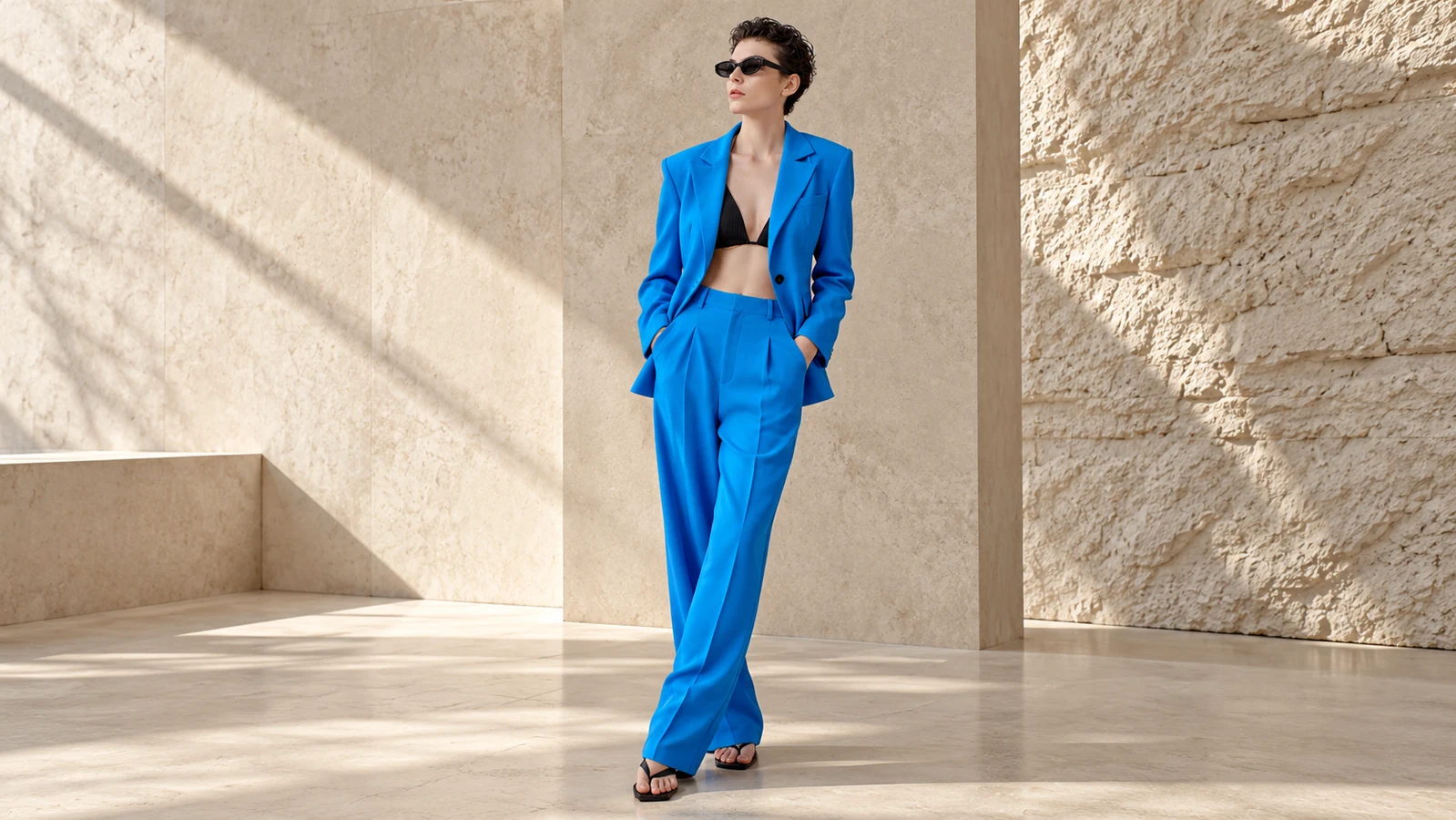
The vibrant fabric is visually central to the electric-blue version shown here. Screen images can help communicate the desired appearance, but they do not establish hand feel, exact color matching or care performance. Request the proposed material and color reference, then document any agreed checks. Avoid turning a visual impression into an unverified claim about stretch, breathability or resistance to creasing.
Match the style to a realistic assortment role
For workwear and tailored assortments, this set can be assessed as a statement option within a broader collection. The structured jacket provides a familiar tailoring reference, while the rear opening changes the styling decision. Buyers should define where that combination belongs in the range rather than presenting it as suitable for every workplace or occasion.
The product highlights mention electric blue and pastel pink. The images in this article focus on the blue version, so a pink program needs its own sample and color review. If the collection will present the pieces separately as well as together, check both proposed outfits before approving imagery. Separate styling does not establish separate ordering availability; that commercial detail needs confirmation.
Build a focused sample and sourcing brief
The listing supports OEM, ODM, custom-label and private-label discussions, along with customized samples. For private label apparel sourcing, start with the intended wearer and the aspects of this particular set that need confirmation. A concise brief can distinguish a request to reproduce the shown design from a request to develop a modified version.
- Identify the style: reference model CS2203TZ34 -1 and the blue version, with front and back views.
- Define the fit review: provide target measurements and ask for the complete jacket and trouser charts.
- Describe the intended styling: record coverage expectations, layering and the planned hem position.
- Confirm development scope: agree any grading, labeling or design changes before assessing the next sample.
Keep the approved sample, measurement comments and color reference together so that all parties review the same version. Ask separately for current order quantities, timing and delivery terms for the proposed program. Those commercial confirmations should follow the actual specification; they should not be inferred from the campaign images or from another style in the range. Assign each open question to a specific sample revision, and keep unresolved points visible until they are answered. This prevents an attractive styling image from being mistaken for approval of measurements or production details.
Frequently asked questions about this two-piece set
What makes the back construction distinctive?
The product details describe a geometric triangular cutout with a pleated drape effect. Buyers should inspect the rear view on the sample and review coverage with the intended styling, because the opening is central to the design.
Does the listed size range confirm fit for an extended-size collection?
No. The listing names XS through XL and custom grading, but the available blazer chart does not establish a complete extended-size specification. A brand needs its target measurements and an agreed sample assessment before making that positioning decision.
Can the blue photographs confirm the pink version?
They confirm the visual reference used for this blue campaign, not the appearance of a pink production sample. Pastel pink is named in the product highlights; request its color reference and sample separately before approving that option.
Should the jacket and trousers be evaluated independently?
Check their measurements separately and their proportions together. A two-piece presentation can look coherent while still requiring different fit adjustments in each piece. Confirm the supplier's available size combinations before making ordering assumptions.
What should be sent with a sample inquiry?
Include the model reference, chosen color, intended size range, target measurements and coverage expectations. If custom labels or pattern changes are requested, describe them explicitly so that the sample response addresses the proposed development scope.
Review the next sample with a defined fit brief
Use the chic back cutout blazer suit set product details to prepare a focused sample discussion with FROM ATTITUDE. Confirm the complete size charts, intended back coverage and selected color before deciding whether this style meets the collection brief.